New Zealand man fights off shark, stitches own wounds and then goes to pub for a beer
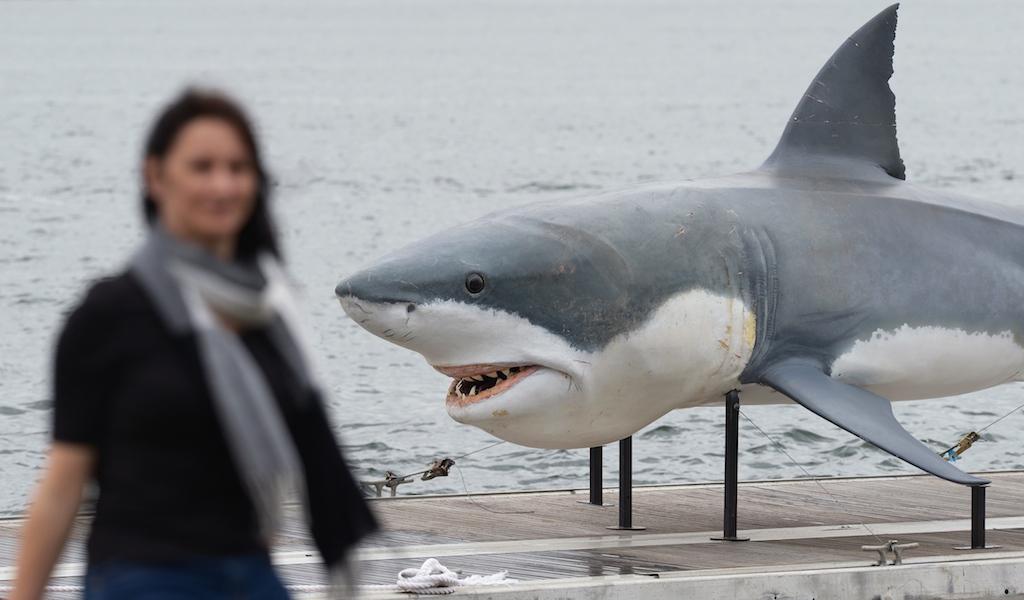
A woman walks past a 24-foot-long great white shark replica floating in Sydney Harbour on Nov. 26, 2013.
When New Zealander James Grant went spear fishing last weekend, it didn’t take long for him to become the bait.
The 24-year-old had just caught his first fish in Colac Bay in New Zealand’s southern coast when he felt “something latched onto my leg.”
“I thought it might have been one of my diving buddies, turned around… big shark had latched on,” Grant told the BBC.
What happened next will ensure Grant’s story lives on as one of the great fishermen tales in the region.
Grant — a doctor at the Southland Hospital in Invercargill — said he drove off the shark with a knife and then returned to shore where he stripped off his wetsuit and used his medical experience to stitch up the lacerations with his own first-aid kit.
And then he went to the pub for a couple of anesthetizing beers.
"I sort of tacked it together with a couple of stitches. I think it must have been adrenaline at the time because it wasn't too bad putting them in — but I wouldn't usually do that," Grant told New Zealand Radio.
You can listen to the audio here.
"We cleaned up the fish in the parlor that we've got out there and then headed to the Colac Bay pub and had a bit of a beer."
Grant couldn't positively identify the type of shark that bit him, but the nature of his wounds suggest it was probably a sevengill shark, which grow up to 10 feet long.
The story you just read is accessible and free to all because thousands of listeners and readers contribute to our nonprofit newsroom. We go deep to bring you the human-centered international reporting that you know you can trust. To do this work and to do it well, we rely on the support of our listeners. If you appreciated our coverage this year, if there was a story that made you pause or a song that moved you, would you consider making a gift to sustain our work through 2024 and beyond?