Madagascar heads to the polls in historic election
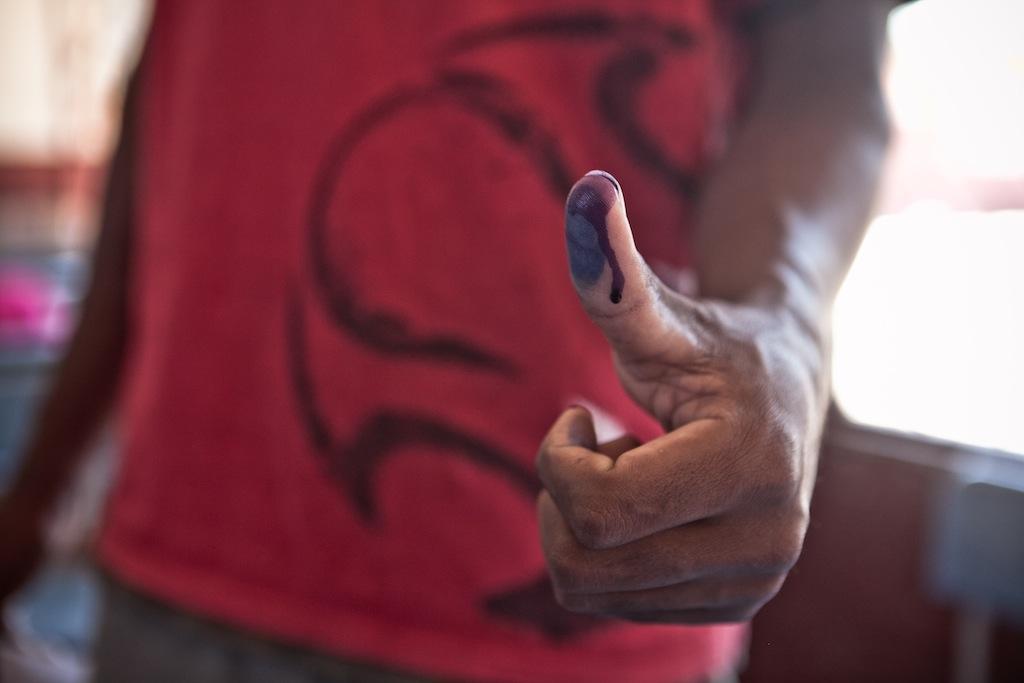
A man shows his inked finger after voting at a polling station on October 25, 2013 in Tamatave, on the eastern coast of Madagascar.
This Madagascar does not have frolicking lions and zebras escaped from New York Central Zoo.
This Madagascar has been subject to swarms of locusts, a bubonic plague scare and coup d'etats.
Residents of the island nation began voting Friday in the first presidential election since Andry Rajoelina seized power in 2009.
Thirty three candidates are running to replace the former disc jockey, who said he would respect the Madagascar electoral court's decision to exclude him from the ballot.
Marc Ravalomanana, one of Rajoelina's chief rivals, is also barred from running, though he was ousted in the 2009 coup.
Only six of the candidates are considered serious contenders.
There is no date to announce the election's results and candidates must win 50 percent to avoid run-off elections in December — unlikely when there are 33 candidates.
More from GlobalPost: Rats, locusts and hungry children: Can elections save Madagascar from the abyss?
The hope is that these elections will stabilize the economy and bring order back to the impoverished country.
Rajoelina's coup saw aid to Madagascar from the World Bank, European Union and International Monetary Fund frozen, killing economic growth and scaring away tourists.
Now, nine out of 10 of Madagascar's 22 million people live on less than $2 per day, making it one of the world's poorest conflict-free countries.
Rajoelina tried to allay fears after he cast his ballot, saying that constitutional order needed to be restored. "The crisis has lasted too long," he was quoted as saying.
"The results come from the choice of the people, we must accept it," he added.
Although Rajoelina said the challenge was to carry out the "transition in peace," there were reports of a senior government official being killed and a voting station being set on fire Friday.
Every day, reporters and producers at The World are hard at work bringing you human-centered news from across the globe. But we can’t do it without you. We need your support to ensure we can continue this work for another year.
Make a gift today, and you’ll help us unlock a matching gift of $67,000!