China: Thick smog in Harbin
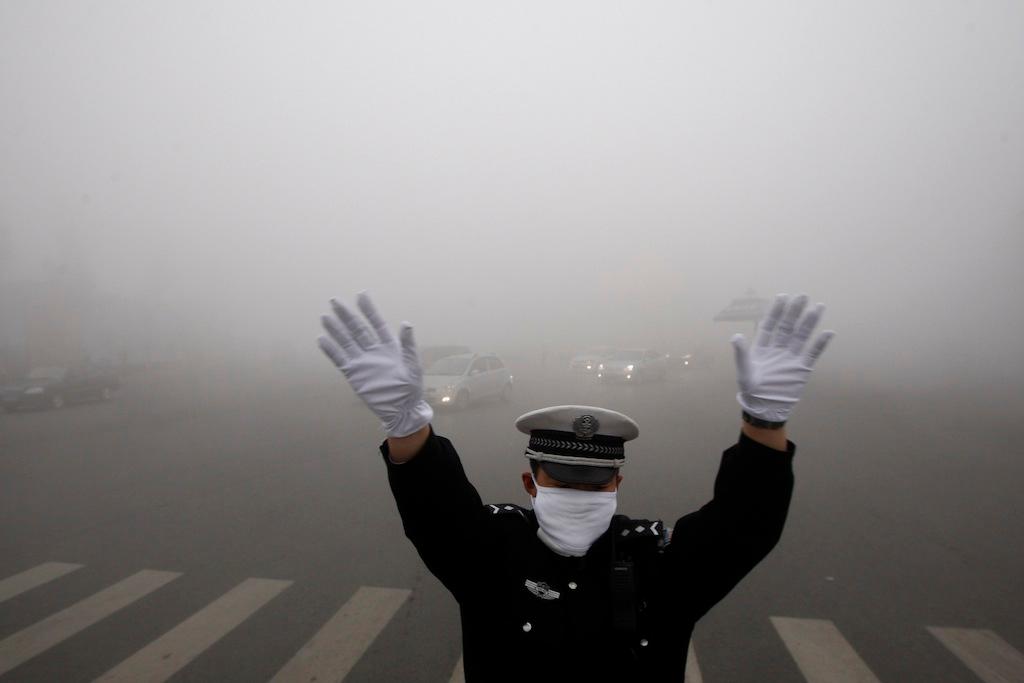
A policeman directs traffic in thick smog in China’s northeastern city of Harbin on Oct. 21, 2013.
Classes were suspended, planes were grounded and traffic was reduced to a crawl as visibility was reduced to 33 feet in some areas.
An index measuring PM2.5, or particulate matter with a diameter of 2.5 micrometers (PM2.5), reached a reading of 1,000 in some parts of the city, which is the capital of Heilongjiang province.
A level above 300 is considered hazardous, while the World Health Organization recommends a daily level of no more than 20.
While schools and the airport closed due to the dangerous air quality, it was business as usual elsewhere in the city, which meant people walked, cycled or drove to work as usual.
Every day, reporters and producers at The World are hard at work bringing you human-centered news from across the globe. But we can’t do it without you. We need your support to ensure we can continue this work for another year.
Make a gift today, and you’ll help us unlock a matching gift of $67,000!