Public radio’s longest-running daily global news program.
©2026 The World from PRX
PRX is a 501(c)(3) organization recognized by the IRS: #263347402.
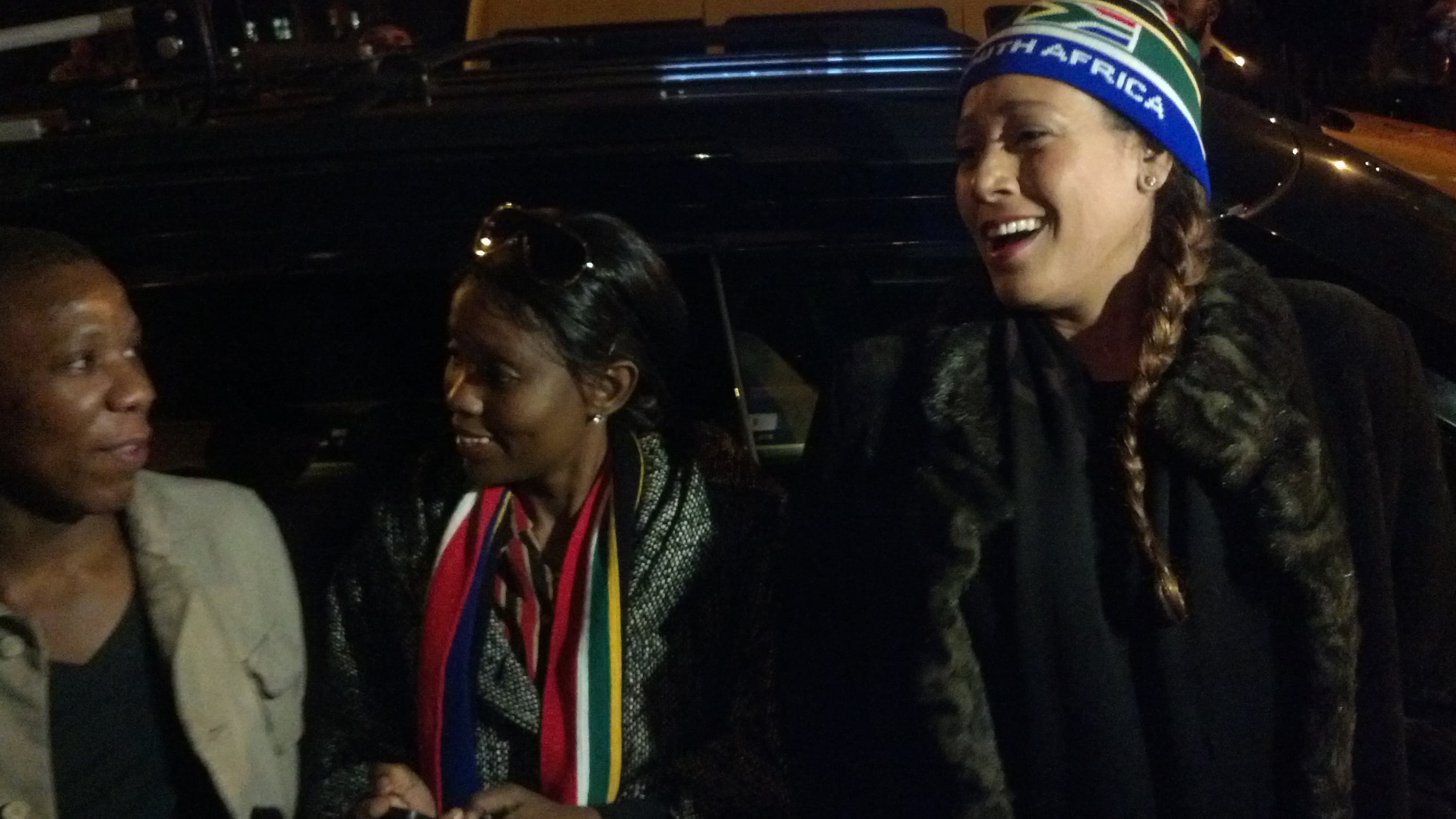
It was just one small remembrance in one part of the world. But the crowd that spontaneously gathered at a restaurant in Brooklyn to honor Mandela showed the effect that he had on people who never met him.
Celebrating Mandela’s life at the Madiba restaurant in Brooklyn.
In 1999, a white South African, Dennis Dupree, opened a restaurant in Fort Greene, Brooklyn along with his brother and sister-in-law. They named it Madiba, the clan name used by many South Africans to refer affectionately to Nelson Mandela.
When people in Brooklyn heard the news of Mandela's death, many quickly gathered at Madiba.
“We want to rejoice what the man has given us, we want to rejoice his legacy," said Dennis Dupree. “We're going to throw lanterns up in the air very shortly.”
Opening a business in a historically black neighborhood, says Dupress, was a long road with "a lot of gravel." The restaurant owners not only used Mandela's nickname, but found inspiration in his philosophy: “Humility, strength, and not giving up — and not seeing race, color, or creed. We want to keep that going.”
Russell Bullock, a local artist, is a Madiba regular. “I'm originally from the south, so I understand a true black man's struggle. And to really see and understand what had happened to this man and to be that strong and come out and then become president? Who's the toughest? Who's the baddest? Got to be Nelson.”
Nelson Mandela was extraordinary because he was both a tough guy and a conciliator — he fought and he forgave. Dupree says South Africa needs more of the same. “If we can find a president in this day and age who can just show a togetherness… We need another one.”
And with that, people crowded together on a Brooklyn street, lit their flying lanterns, pushed them aloft and waved Madiba goodbye.