PRX is a 501(c)(3) organization recognized by the IRS: #263347402.
Russia stalls in Donbas, as battlefield deadlock deepens
Last year, Russia made slow but steady gains on the front line in eastern Ukraine. But now, effective deployment of Ukrainian drones, along with a host of other factors, have slowed the progress of Russian troops. Emil Kastehelmi, a military analyst with the Finnish think tank Black Bird Group discusses the implications with The World’s Host Marco Werman.
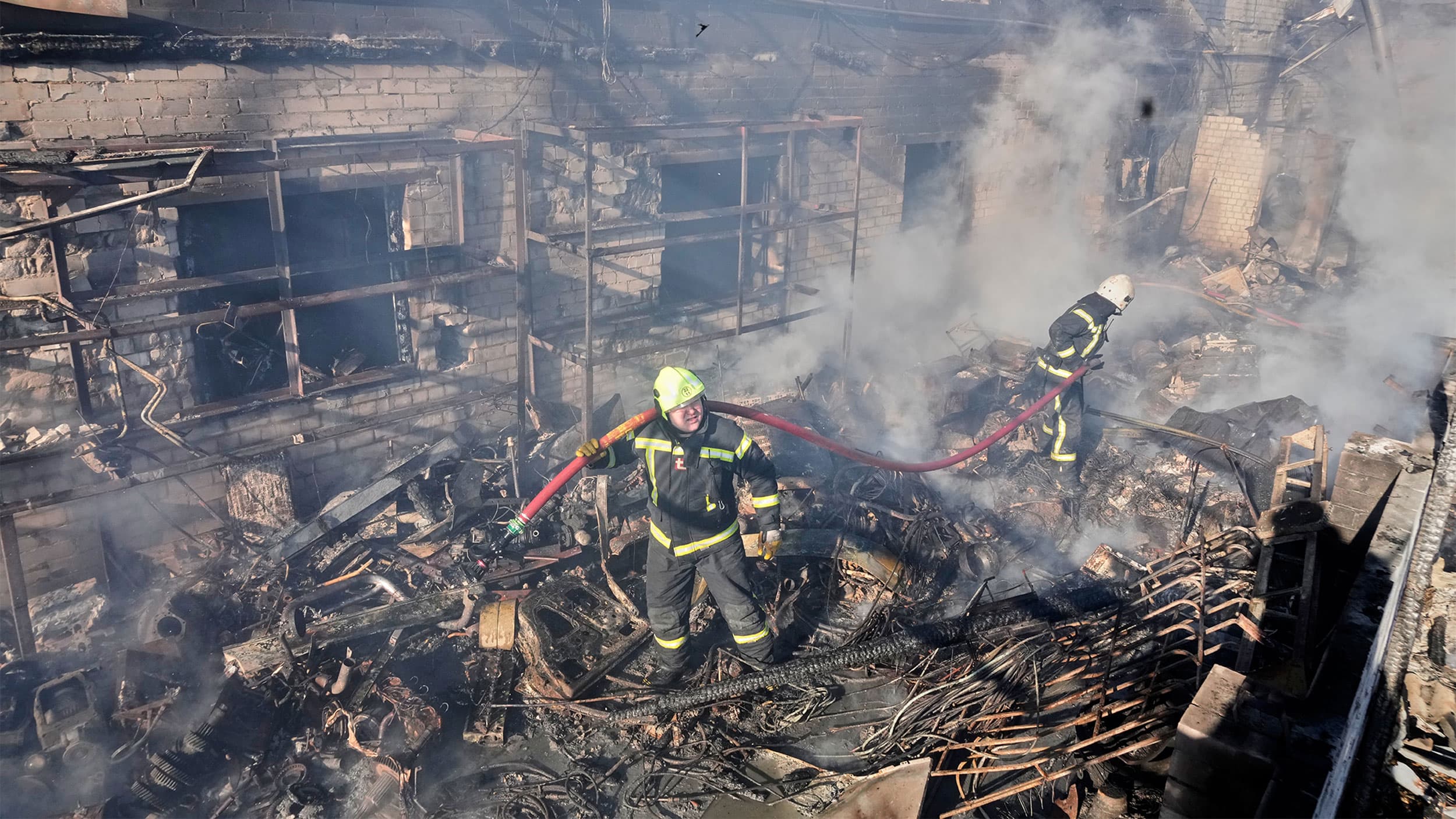
Firefighters put out the fire in a residential neighborhood following a Russian missile and drone attack, in Brovary, close to Kyiv, Ukraine, March 14, 2026.
Efrem Lukatsky/AP/File photo
Residents of Kyiv withstood one of the biggest Russian missile and drone attacks yet recently, but all eyes have been on the Donbas. That’s a region in eastern Ukraine, and it’s not just a battlefield — it is the political and symbolic prize Russia wants to claim in its war against Ukraine.
Around May 2025, Russia was making territorial gains in the Donbas. Now, though, some say the region is up for grabs. To tackle this, The World’s Host Marco Werman spoke with Emil Kastehelmi, a military analyst with the Finnish organization Black Bird Group. He’s been closely tracking movement on the battlefield.
Kastehelmi said that “during the last few months, Russian momentum has slowed down very significantly. This spring, the Russians have not achieved practically anything on the battlefield. It might sound like a big statement, but it is true. They are only making very small and gradual gains, only small tactical victories, but can’t accumulate them into any larger success.”
Marco Werman: And which side is paying a higher cost at this point?
Emil Kastehelmi: It’s the Russians. The Russians are using so-called “infantry-heavy tactics,” which means that their casualty ratio is also high. The Donbas frontline sounds like it’s swarming with drones.
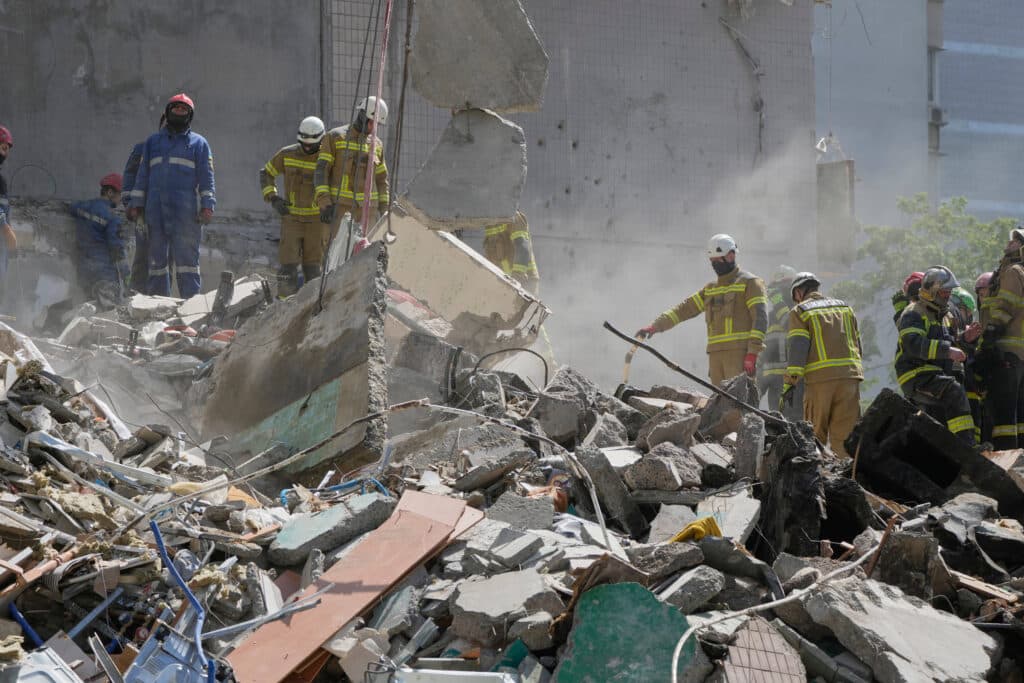
Rescuers clear the rubble after a Russian missile hit an apartment building during massive air attack in Kyiv, Ukraine, May 14, 2026.Efrem Lukatsky/AP
Some have described the skies as saturated. What is it like for soldiers on both sides where every move seems to be recorded from the sky?
One could describe the situation as a digital scanning of the battlefield. So, it’s a constant issue on the front, and because of this, there’s this so-called gray zone, which has been expanding, in which neither side may have firm control of the land. There may be intermingled troops in this gray zone, which is also described as an extended kill zone. So, in this kind of battlefield environment, it’s difficult to make any significant gains in one way or another.
I see that Russia has rolled out a new elite drone unit called Rubicon. What will that do?
Rubicon is described as an elite drone unit. However, singular units can’t alter the general situation that much. They can make it really difficult for defending a Ukrainian unit at a certain location, but singular units, they are not wonder weapons either. Rubicon is good, but it’s difficult to scale these kinds of elite units in a way that they could be effective at the whole front line at the same time, which would be needed in order to gain some more momentum.
So, Ukraine has been hitting oil installations and other targets deep inside Russia. Are those strikes hitting Russia where it hurts most? Have they given Ukraine any significant advantage?
These strikes don’t give them significant advantage on the front lines, of course. However, this is a way where Ukraine can hit Russia’s economy. And the Ukrainians, of course, know that they are fighting a stronger enemy, which has more resources, more manpower. So, they are trying to adapt to that. One thing that they are very heavily focusing on at the moment is unmanned aerial vehicles, also unmanned ground vehicles, so ground drones, so to say. And the usage of these has also spiked during 2023.
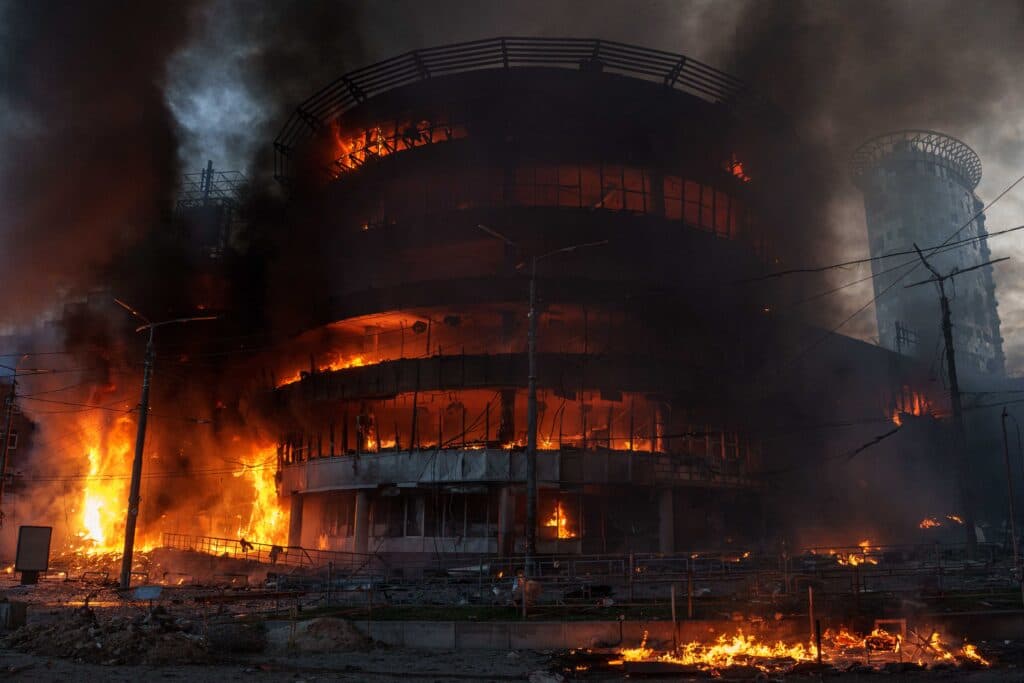
A commercial building burns after a Russian attack in Kyiv, Ukraine, May 24, 2026.Evgeniy Maloletka/AP
So Emil, earlier when I asked you which side is paying a higher cost, what are the numbers on the Russian side? Because we’re hearing all kinds of crazy things.
That’s a good clarification. So, we’re talking about 30,000 dead, injured and missing in action. That’s like a general ballpark. And at the moment, it seems that the Ukrainians have been able during the last couple of years also reduce their own casualties gradually.
So, you said on the Russian side, 30,000 casualties every month, that includes injured and dead. What’s the rate on the Ukrainian side?
Again, really difficult to say, but generally I’d estimate that the so-called exchange ratio is somewhere between like one Ukrainian dead for maybe 3 or 4 Russians. Generally, Ukraine doesn’t, of course, naturally publish any of these numbers publicly.
Right. Totally understand that. Is the Kremlin meeting its recruiting targets?
Last year, it was able to meet the recruiting targets, but there are some indications at the moment that at least during the first months of 2026, there might have been some issues in meeting the recruitment targets. But we shouldn’t expect the Russians to run out of manpower anytime soon.
What about Ukraine’s ability to recruit? Because reports suggest it is facing high rates of desertion.
Ukraine has a manpower issue and it faces a lot of desertion cases also at the moment. Ukraine has recognized also publicly that there is such a problem. And they’re trying to work in making the conditions better for the individual soldiers so that they would not desert from their units. Many of the units are fighting understaffed, unfortunately, at the moment.
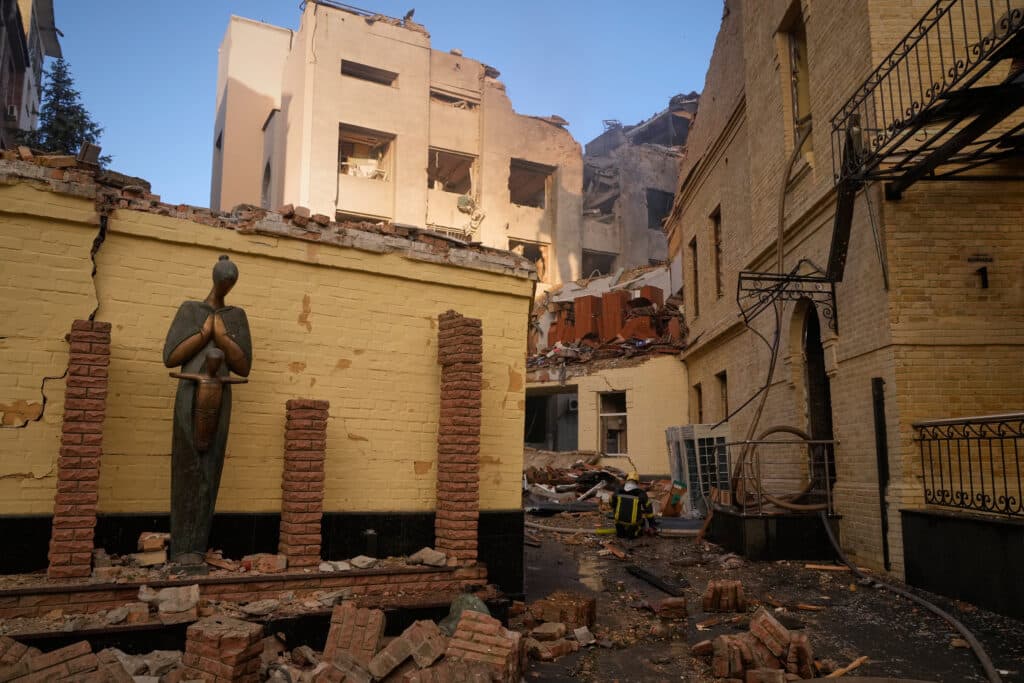
Firefighters work on the scene of a damaged building of the Museum of Chernobyl after a Russian missile attack in Kyiv, Ukraine, May 24, 2026.Efrem Lukatsky/AP
We’re seeing in real time how much seems to depend on the seasons. With spring and summer, as you said, come these leaves on the trees, and that foliage means it’s harder for Russia to accurately strike Ukrainian targets with these remote-controlled drones. This is when ground troops have to get reactivated on the front lines. At the same time, Russia is running out of live bodies to do that fighting. So, what is going to happen?
Ukraine will be on the defensive. They may try smaller tactical counterattacks here and there, but generally the Russians will have enough manpower despite possible recruiting problems to continue these attacks, at least through the summer. But then it’s difficult to say how the situation will change the next fall because it’s always difficult to do very long forecasts in this war.
In your opinion, Emil, what is the biggest misconception about this war now in its fifth year?
Even though the Ukrainians are the underdog here in this war, they have been doing relatively well, especially this year. I’m not sure if the general public has understood how little the Russians have actually advanced in 2026. That’s something to observe in the future: “Is Russia actually able to gain at least some momentum again, or will the summer offensive be an operational catastrophe?” So, it can look pretty bad for the Russians if they are not able to find new ways to gain success.
Parts of this interview have been lightly edited for length and clarity.