Public radio’s longest-running daily global news program.
©2026 The World from PRX
PRX is a 501(c)(3) organization recognized by the IRS: #263347402.

Most people have heard of the Underground Railroad, which helped enslaved people escape to the US North, but “Mexodus” is a new musical that brings to light a forgotten history of people fleeing slavery to Mexico.
Brian Quijada and Nygel D. Robinson perform in “Mexodus” about an Underground Railroad that went southward toward Mexico.
The history of the Underground Railroad, which helped bring enslaved people from the American South to the North, has been well documented, but there was another Underground Railroad that went southward — to Mexico.
It’s been estimated that up to 10,000 former slaves took that journey. And it’s the subject of a new musical called “Mexodus,” written by and starring two actor-musicians who bring this history to vivid life.
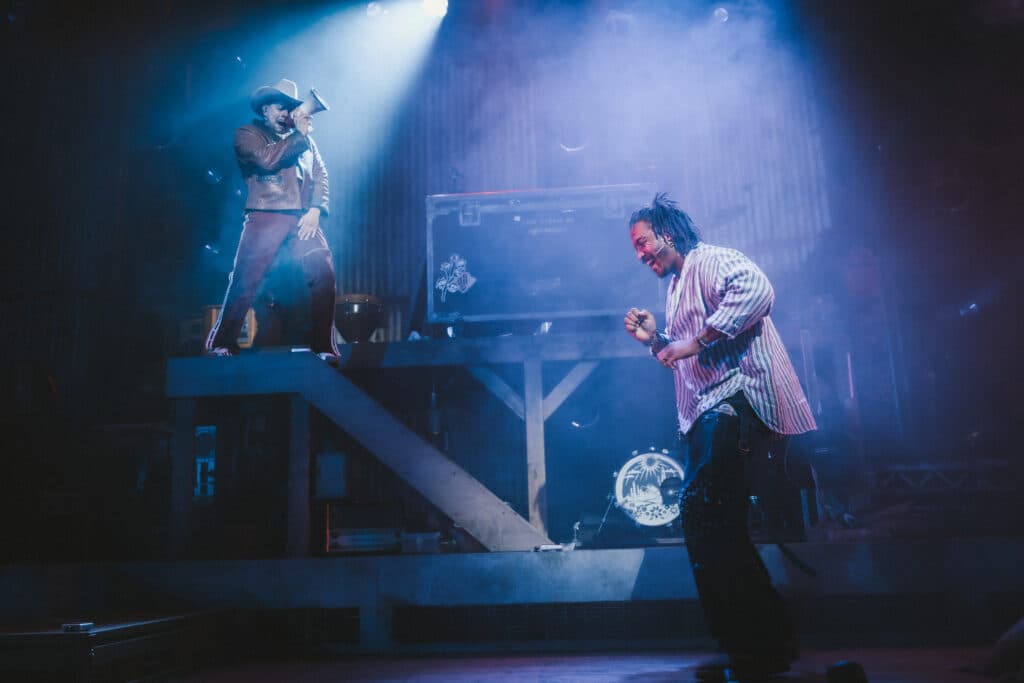
The set looks like an old warehouse, and two actors in contemporary dress bound onstage. One, Nygel D. Robinson, picks up an upright bass and starts playing. Then, he puts the bass down, but the audience keeps hearing it.
It’s the beginning of the looped accompaniment that he and his fellow performer, Brian Quijada, laid down for the opening number of “Mexodus.” They add guitar, keyboard, percussion and vocal licks.
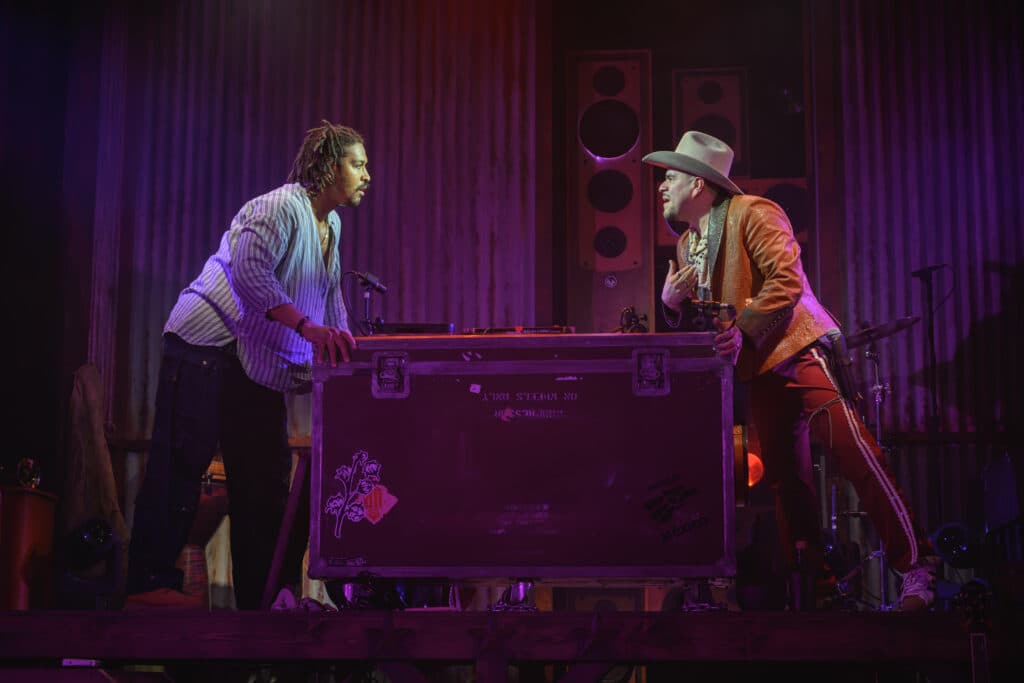
In the next five and a half minutes, the audience learns not only about the two actors but also about the story they’re going to tell and the way they’re going to tell it.
“The first instinct with looping, if you’ve never seen it, is that there is a wizard behind the curtain,” said Quijada. “And I think it was necessary for us. A lot of the show is educating, not only about the history, but also on how you’re going to experience this music making.”
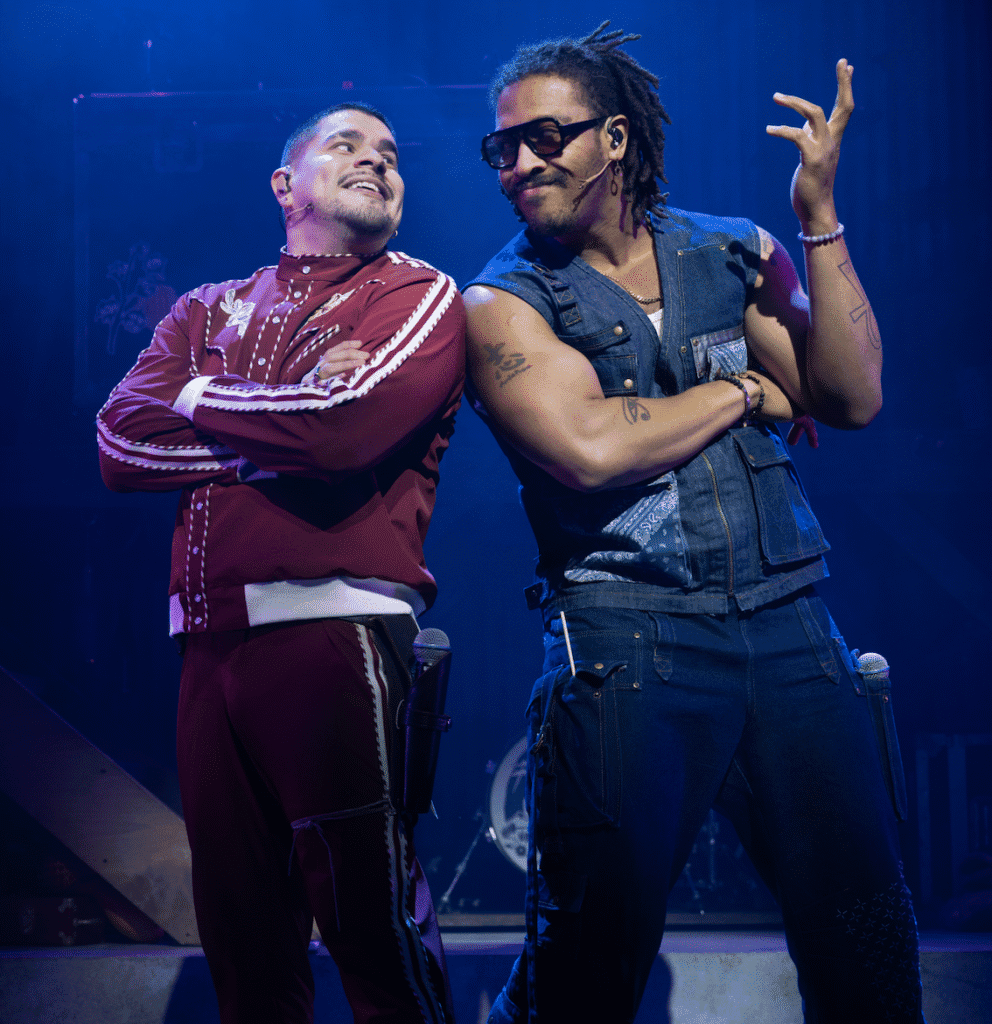
Both artists met at a conference in early 2020. Quijada said he had wanted to do a piece about the Underground Railroad to Mexico and had done a lot of research, but knew he couldn’t do it alone. “And then, when I met Nygel, and I saw Nygel speak about and play all these instruments, I was like, ‘Wow, this guy might be the perfect collaborator to make this happen.’”
Robinson said he was immediately sold. “And I’m like, ‘You know what? Let’s do it, dawg. This is a crazy idea.’ And Brian was like, ‘We should loop it,’ and I’m like, ‘OK.’”
Throughout the pandemic, the two worked via Zoom to create a story featuring characters composed of real historical figures.
“I play Henry, who’s an enslaved man who’s around 20 years old,” Robinson explained, “and was split from his family eight years prior from Kentucky and had to go down to Texas. And he finds himself in a situation where it’s either to kill and run away or be killed, and he chooses to kill and run away.”
Henry flees and crosses the Rio Grande River into Mexico. He almost drowns but is saved by Quijada’s character, Carlos. Quijada said Carlos is “an ex-soldier who fought in the Mexican-American war, who was a medic and, basically, abandons his men out of knowing that they were losing the war.”
After Henry recovers from his injuries, he and Carlos work together on a farm and become unexpected friends, although Henry’s past catches up with him, putting the pair in danger.

“Mexico abolished slavery 30 years before the United States did,” said director David Mendizábal, who didn’t know about this history when he was asked to work on the project, “which is not to say that there isn’t a complicated relationship with race. But it was sort of like, “Yeah, that makes sense, you know, why don’t we know about this?”
Before it was staged, Robinson and Quijada posted songs online. And, although this is a story set in 1851, the themes have been startlingly relevant.
“We released the first track a few days after the murder of George Floyd, and so that was, I think, at the forefront of our minds as we were releasing this music,” Quijada explained. “This racial reckoning that was happening in America at the time.”
Mendizábal explained that the “Mexodus” theme is “todas estamos juntos en eso” or “we’re all in it together,” which he said “is really a value that lives at the heart of the piece.”
Nygel D. Robinson said the theme remains relevant in 2026.
“In this show, I think we’re trying to show you that softness will probably be a lot stronger than harshness and hardness. Just like being vulnerable, and picking up a guitar and playing with your friend can do so much more than fighting.”
Audiences can see these two actors and friends pick up guitars — and a lot of other instruments — in “Mexodus”off-Broadway at the Daryl Roth Theatre in New York through June 14. The cast recording is also being released as an Audible Original on April 16.