Public radio’s longest-running daily global news program.
©2026 The World from PRX
PRX is a 501(c)(3) organization recognized by the IRS: #263347402.

An iconic café in the heart of Baghdad has witnessed decades of change to Iraq’s history. Through it all, the place has remained a constant — a place for intellectuals and other customers to reflect and connect — a tradition its owner hopes to hold onto.
At the Martyrs’ Café in Baghdad, long wooden benches are covered with a red kilim design, like a 19th century coffeehouse.
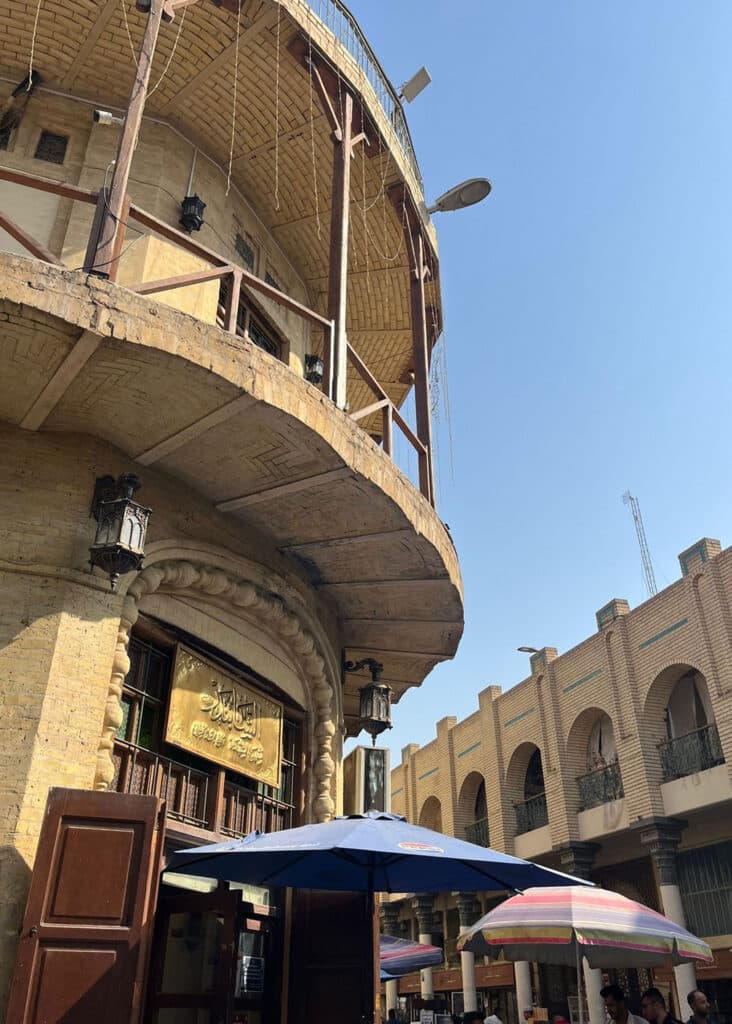
Omar Al-Khashali’s life is woven into the fabric of the Martyrs’ Café — a cornerstone building perched at the end of a street devoted to booksellers and publishers — in the heart of Baghdad’s old city center.
“It’s like the little house of Iraq,” he said, through an interpreter.
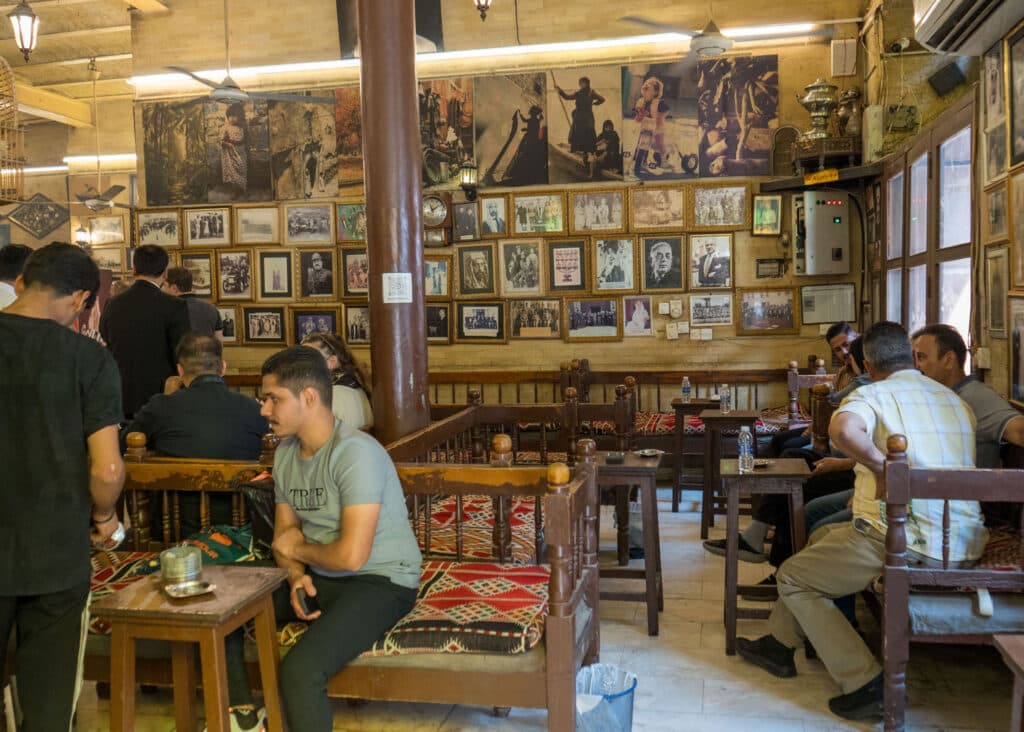
Long wooden benches are covered with a red kilim design, like a 19th century coffeehouse. The walls are lined with black-and-white photographs that point to a nostalgia for Iraq’s last century. Visits by kings. Famous writers. Men who sang maqam — traditional poetic stories that are memorized and sung, in a kind of narrative history.
“I’ve found myself here, and I can’t leave,” Khashali said with a smile.
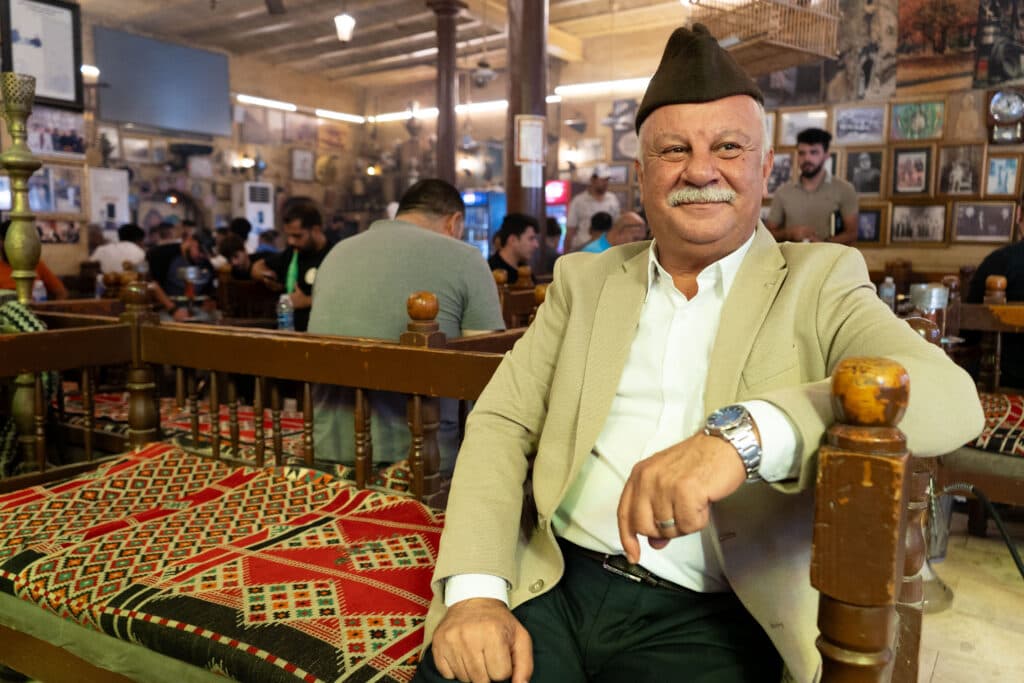
Wearing a cream suitcoat, Khashali seemed to lean into his role as proprietor of the café with a youthful energy that belied his years. He greeted longtime regulars like family, and practiced his Turkish with visiting foreign businessmen.
For curious foreign tourists, Khashali eagerly catalogues the early history of the café; how the building was first a printing press owned by the Shabandar family — who imported the steel from Belgium and commissioned professional masons to build the high ceilings that kept the space cool in the summers. He pointed out ventilation shafts incorporated into the inner walls, which prevent the café from getting too smoky when customers enjoy a hookah or two.
Khashali’s family took over ownership of the café in 1963. As a child, Khashali and his brothers would stay in the cafe from morning until night while their father managed the place.
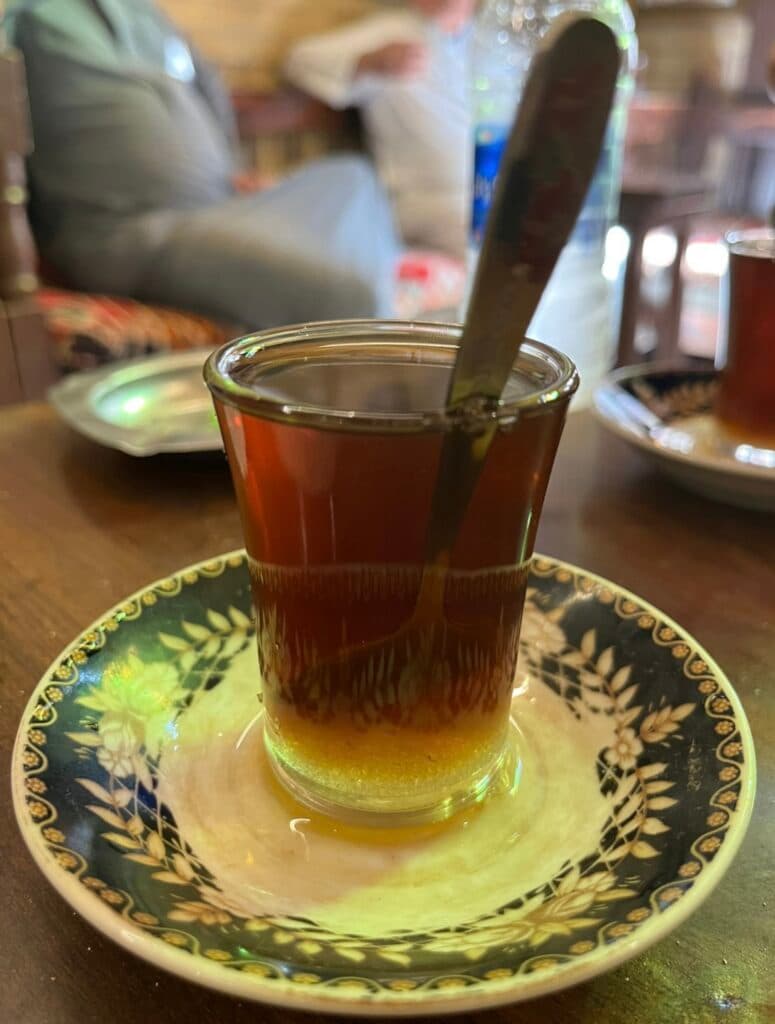
As children, they would offer water to customers — as waiters carried hourglass-shaped cups of hot tea on circular trays. Back then, they called it “Shabandar Café.” Today, there’s an attempt to preserve its iconic history.
“There were temptations to change it, or sell part of it,” Khashali recalled. After all, the building is in the heart of Baghdad’s historic district. Over the years, rival entrepreneurs must have salivated over the possibility of turning it into a swanky hotel or other moneymaking venture.
“But my father resisted, and he insisted on keeping it as it always was,” Khashali said.
Khashali has carried on this legacy in full. He keeps the menu simple: Arabic coffee, black tea or a sour tea made by simmering dried black limes for hours. And while guests can smoke out of tall hookah pipes, they are not permitted to play backgammon because it’s too noisy. Khashali wants his guests to have conversations instead, maybe make a new friend.
“I have to preserve this place,” Khashali explained. “Because without it, all traditional places will change.”
Before Google, the concentration of booksellers on nearby Al-Mutanabbi Street functioned as a kind of one-stop shop for scholars and writers. If a certain publication wasn’t available, you could find someone who knew how to get it. Afterwards, many would stop for a glass of tea at Shabandar, which quickly developed a reputation for being a hub for Baghdad’s intellectuals, artists and political thinkers.
Café regulars remember certain rules from years long gone. How certain writers would have a specific bench where they would always sit — and shoo away anyone else who tried to take their place.
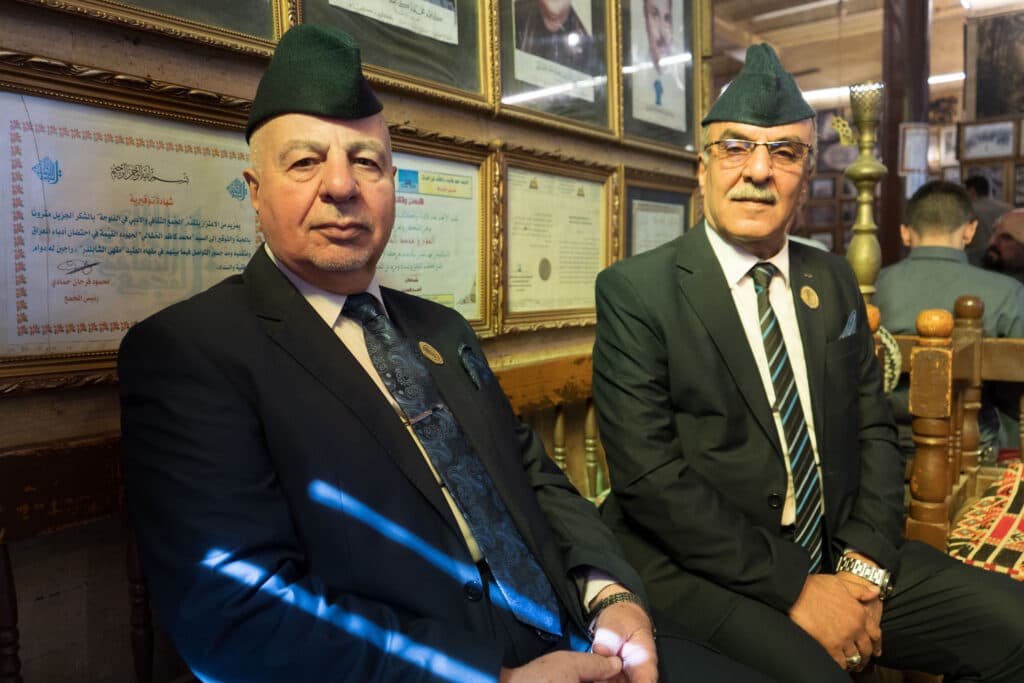
Ahmed Kassim Al-Ameen recalls how younger men wouldn’t sit in the café if their father or older brothers were there. It was a gesture of respect.
His friend, Jamal Abdullah Al-Kasab, recalls coming every day to drop off a packed lunch for his father, a barber who worked nearby. “I grew up here,” he said.
On a recent visit to the café, they wore the triangular felt hats of Baghdad’s effendiyya — an urban class of educators and students in the 20th century that helped shape nationalist and political movements.
“Many important things happened here, so we come to be a part of the place,” Kasab said.
Over the course of the last century, the Shabandar café has witnessed Baghdad’s most triumphant moments. It has also endured through the city’s most difficult times, including the long reign of Saddam Hussein, Iraq’s deposed former president, the disastrous US invasion of Iraq and an insurgency by ISIS militants.
“This café represents the history of Iraq, and the suffering of Iraq,” explained Iraqi journalist Awadh Al-Taie
In 2007, four years into the US invasion, al-Qaeda militants drove a booby-trapped car full of explosives to Shabandar Café. Al-Taie was one of the first on the scene of the bombing, which killed at least 30 people and wounded more than 100.
Among the dead were Omar Al-Khashali’s four brothers and nephew.
Khashali was his father’s only son to survive that day. But he and his father, Muhammad Al-Khashali, decided to repair the café and re-open it.
In response, Al-Taie said the community rallied in support. If al-Qaeda wanted to target readers, intellectuals and creatives with its attack, Al-Taie wanted to fill Shabandar café, to show they couldn’t be stopped.
“And we succeeded,” Al-Taie said. “Al-Qaeda is gone, and we remain.”
Omar Al-Khashali’s father printed large photographs of his sons and grandson who died in the bombing. He hung them on the wall, and renamed Shabandar to the Martyrs’ Café.
Khashali remembers how his father would say, “I forgive, but I do not forget.”
The US invasion lasted until 2011, displacing millions of Iraqis and leaving the country’s economy in tatters. In 2016, at the height of the ISIS insurgency, Khashali was kidnapped and held for ransom in Baghdad. After his family paid a ransom, he escaped to Turkey.
Three years ago, Khashali returned to Iraq to take care of his father, who had become ill. His father Muhammed Al-Khashali, the longtime owner of the café, passed away in January, at the age of 93. Thousands of people came to his funeral to pay their respects.
“My father represented the legacy of this place,” Khashali said. “The whole world knew him.”
Today, when he goes to work, his family’s portraits watch over him.
“There’s a soul in this place,” Khashali said. “I am sure that my brothers and father are listening.”
Translations and additional reporting by Awadh al-Taie.
