Public radio’s longest-running daily global news program.
©2026 The World from PRX
PRX is a 501(c)(3) organization recognized by the IRS: #263347402.

Forty years ago, Shenzhen, China, was little more than a cluster of villages, home to a few hundred thousand people. Today, it holds roughly 20 million residents and ranks among the world’s fastest-growing megacities. Yet, unlike other urban centers that have ballooned at similar speeds — Mumbai or Lagos, for example — Shenzhen has largely sidestepped the air pollution, overcrowding and failing infrastructure that often accompany rapid expansion. In the second of a five-part series, The World’s Jeremy Siegel explores how the city has been able to avoid the problems typically associated with megacities.
Shenzhen has roughly 20 million residents and ranks among the world’s fastest-growing megacities.
On a sweltering day just shy of winter, Wenxin — who goes by Wendy and only shared her first name — sat behind a laptop inside a small milk tea shop located within a grand shopping mall. At 20-something years old, she represents a generation of Chinese residents that have grown up entirely within Shenzhen’s experimental bubble. Her parents were migrants who went there for work opportunities. She, herself, works remotely, drifting between cafes and air-conditioned public spaces.
“I probably work from a different shop every day,” Wendy said. “It’s easy,” even in summers when Shenzhen’s heat can be unbearable.
That convenience is by design. Shenzhen has more than 800 malls, many connected directly to metro stations through underground tunnels. The metro itself is clean, expansive and climate-controlled down to temperature-categorized train cars. It only opened in 2004 but has already become the fifth-longest system in the world.
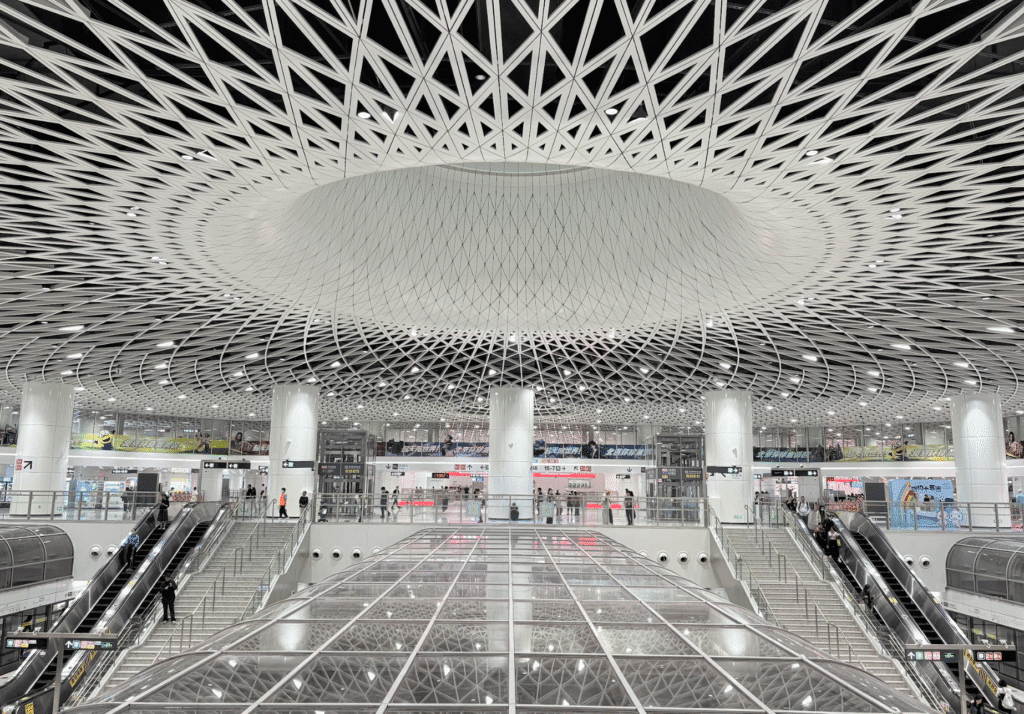
Shenzhen is constantly growing and its infrastructure is expanding along with it.
“Just here where we’re sitting, almost every building around us didn’t exist when I came here first,” said Daniel Camilo, a Portuguese expat who arrived in the city after the 2008 financial crisis.
“It was really hard to get a job back in Portugal, and I’ve been living here ever since,” he said. “I’ve been working in tech basically the whole time I’ve been here.”
Camilo’s experience is, in many ways, emblematic of the Shenzhen experience. The city is built on manufacturing, foreign investment and, more recently, homegrown technology giants.
Architect Ole Scheeren, whose work has shaped much of Shenzhen’s ultramodern skyline, calls it an “incredibly young” city — both in age and in population. That youthfulness is evident in the families crowding public parks and the abundance of green space, the highest per capita of any major Chinese city. Nearly all transportation is electric, keeping smog low and streets quieter than in many other urban centers.
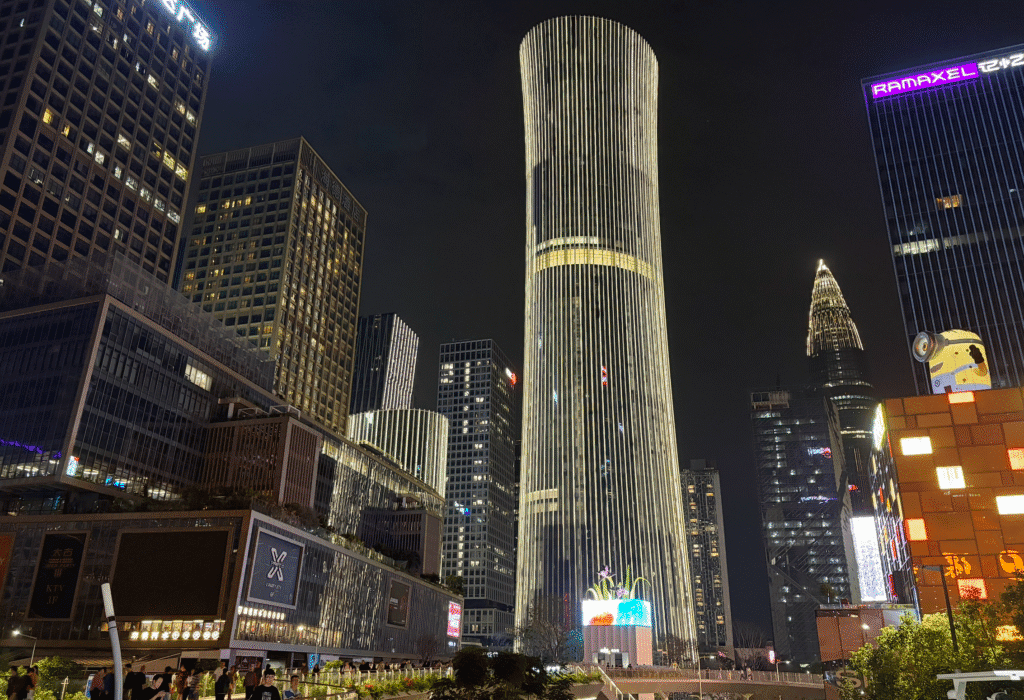
Scheeren credits open-minded city planners for much of the metropolis’ distinctive look. Shenzhen’s planning department, he said, encouraged architects to “have the courage to confront the future” rather than settle for safe, conventional designs. Unlike older megacities, Shenzhen began essentially from scratch in 1980, giving designers and engineers what amounts to a blank canvas.
But the city’s advantages rest heavily on China’s political system. Beijing invested enormous resources in Shenzhen’s infrastructure, accelerating projects that would take decades elsewhere.
“That’s one of the benefits of China’s system,” said finance professor Jinfan Zhang. “The central government has this capacity to build infrastructure very quickly, very efficiently.”
Those efficiencies, however, come paired with some tradeoffs. Surveillance is ubiquitous. Cameras equipped with facial recognition systems greet riders at every metro gate, and security checks are routine.
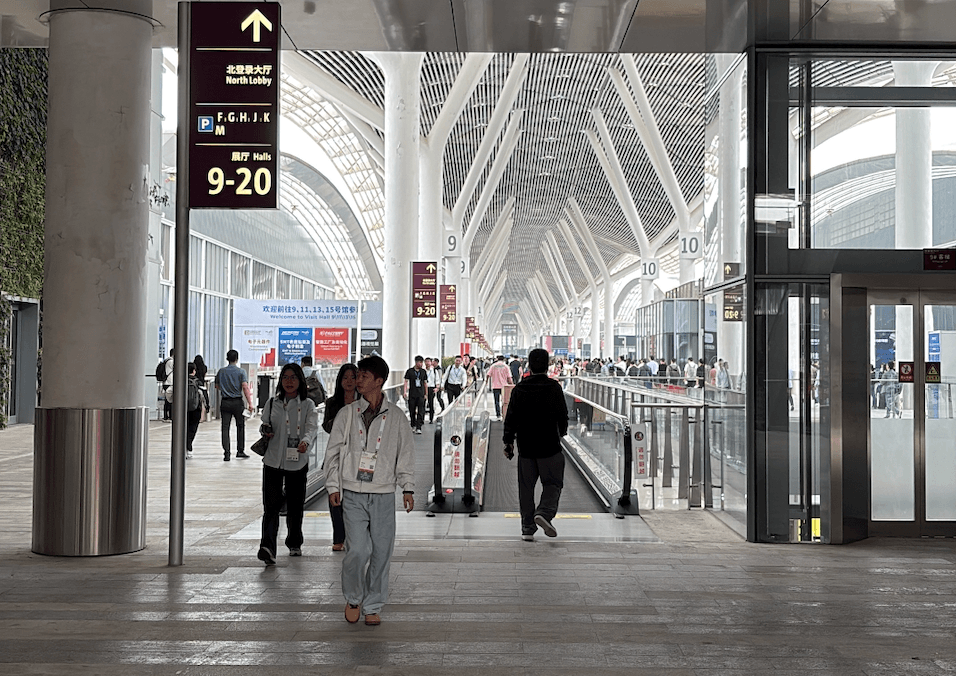
Culturally, Shenzhen is often dismissed by Chinese peers as bland — a place where young workers, bound by the grueling “9-9-6” schedule (9 a.m. to 9 p.m., six days a week), have little time to enjoy the city’s amenities.
“My lifestyle here is pretty … homey,” Camilo admitted. “There are a lot of things I don’t even recognize as extraordinary, as opposed to someone who comes here for the first time.”
Dan Wang, author of “Breakneck: China’s Quest to Engineer the Future,” notes that Shenzhen lacks the deep cultural heritage of older cities like Shanghai or Beijing. But what it does possess, he says, is an unmatched entrepreneurial energy.
“It is a place of fantastic hustle,” Wang explained. “A city where people sketch out a business plan over dinner and begin executing it the next day.”
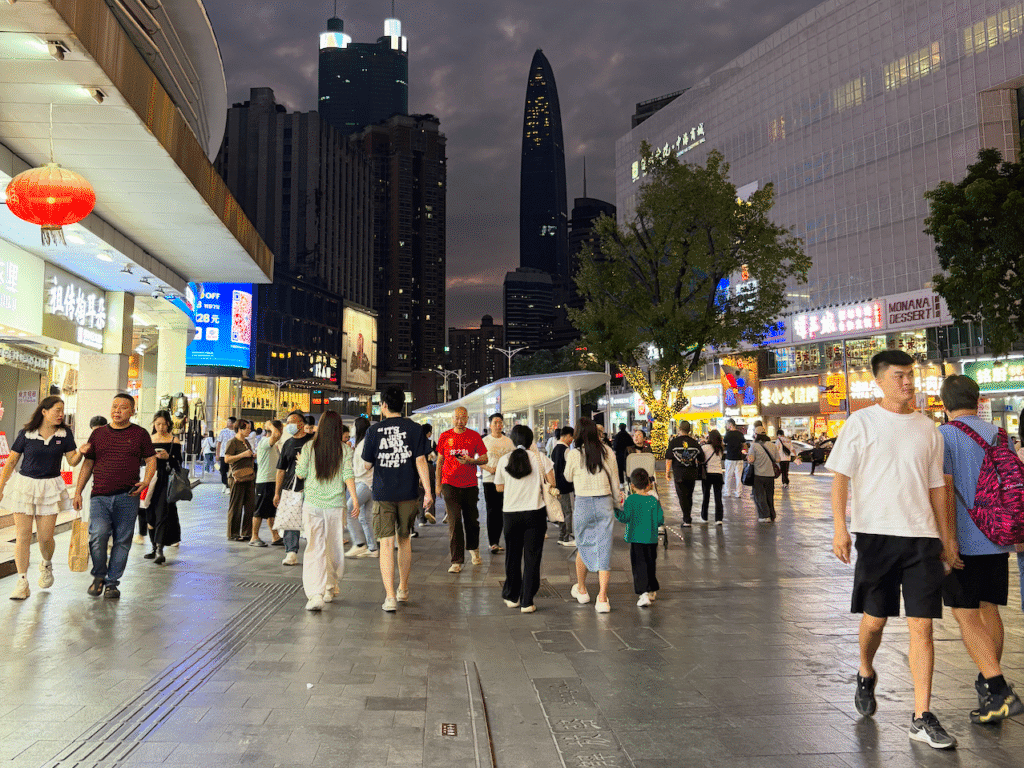
Shenzhen’s dizzying rise has produced drones, smartphones, electric cars and entire industries at a pace few places can match. But experts caution against viewing it as a template for other fast-growing cities.
Shenzhen’s growth has been propelled by a unique confluence of state investment, political structure and the unparalleled opportunities that come from building a city from scratch. And according to Wang, its entrepreneurial spirit is unmatched.
Hustle, it turns out, is one of the few things the city can’t export.
