PRX is a 501(c)(3) organization recognized by the IRS: #263347402.
A decade after the landmark Paris Agreement on climate change, the treaty’s architect looks back at its legacy
As diplomats, scientists and activists from around the globe convene in Belém, Brazil, for COP30, The World’s Host Carolyn Beeler speaks with Christiana Figueres, the former executive secretary of the United Nations Framework Convention on Climate Change and one of the architects of the Paris Agreement.
French President Francois Hollande, left, listens to French foreign minister Laurent Fabius, while United Nations climate chief Christiana Figueres, center, looks on at the COP21, Le Bourget, France, Dec.12, 2015.
Francois Mori/AP/File photo
Thousands of diplomats, scientists and activists are in Belém, Brazil this week for COP30, the annual United Nations climate conference.
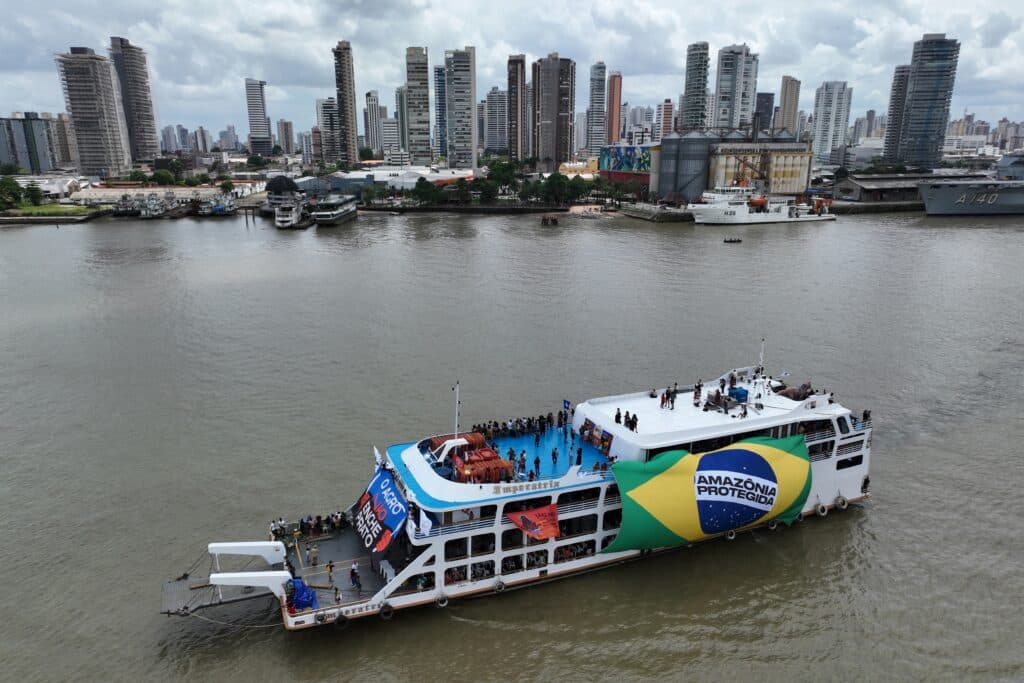
People riding in a boat participate in a People’s Summit event on Guajara Bay during the COP30 UN Climate Summit, Nov. 12, 2025, in Belém, Brazil.Andre Penner/AP
This year’s negotiations also mark 10 years since the approval of the landmark Paris Agreement. The legally binding treaty set the expectations for reducing the carbon emissions driving global temperatures up and for moving countries off fossil fuels.
“Before the adoption of the Paris Agreement … the world was actually heading for a warming of anywhere between four to six degrees [Celsius] by the end of the century,” said Christiana Figueres, the former executive secretary of the United Nations Framework Convention on Climate Change and one of the architects of the Paris Agreement. After Paris, she said, the projection came down to 2.6 degrees Celsius, an improvement, though still short of the target.
French Foreign Minister Laurent Fabius hands over the keys of Le Bourget to UN climate chief Christiana Figueres, right, at the venue of the UN Climate Conference in Le Bourget, France, Nov. 28, 2015.Laurent Cipriani/AP/File photo
Figueres, now attending COP30 as a media participant, joined The World’s Host Marco Werman from a still-under-construction COP venue — complete with shaky WiFi — to reflect on the trajectory of climate change, and COPs, in the decade since Paris.
Marco Werman: What did we have access to 10 years ago when it comes to renewable technologies and electrification?
Christiana Figueres: Every single one of the renewable technologies were still in their infancy stage. Solar was in its infancy. It has been deployed 15 times faster than the International Energy Agency (IEA) could have predicted. The electric vehicle industry has just gone exponential. Ten years ago, we had 1 in every 100 vehicles sold into the market being electric, and today we have 1 in 5. So, all of these technologies have gone through exponential S-curves of improvement in their efficiency, in their impact, in their deployment and they have all bottomed out with respect to their costs. They are so much more competitive than they were 10 years ago.
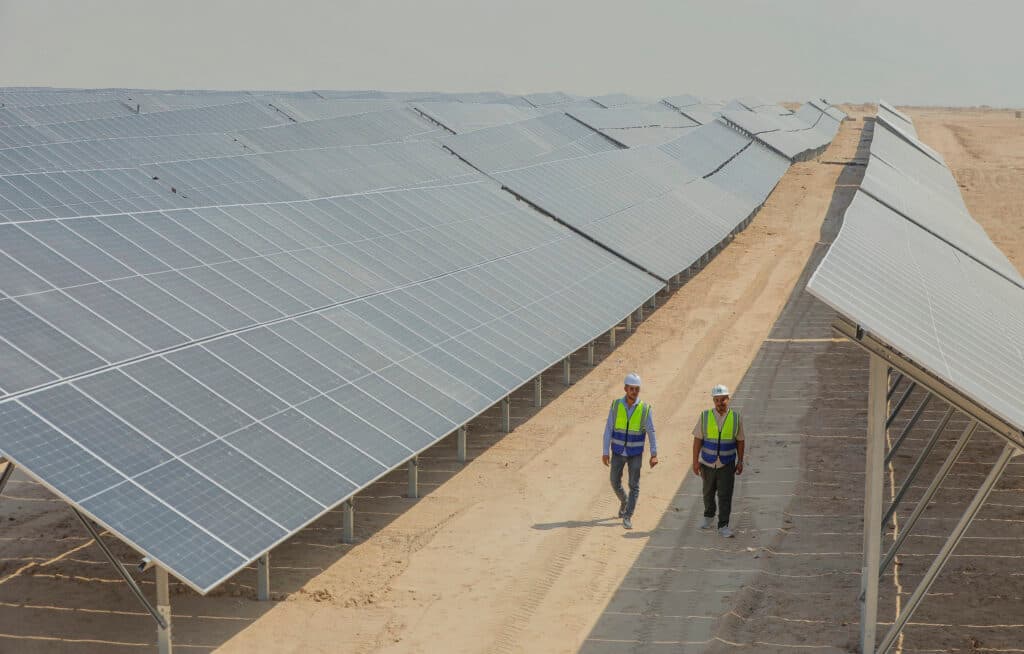
Workers walk between solar panels at a newly opened industrial-scale solar power plant in Karbala, Iraq, Sept. 17, 2025.Anmar Khalil/AP
So, take us back to the moment the agreement was actually reached in Paris. How did that happen? Because I remember covering it from Boston. It came down to a very close deadline, right? Lots of walking back and forth in the hallways of the Paris Convention Center
Well, it always is like that, having been to many, many COPs, more than 20 COPs, it always comes down to the line. But I think what is really important is that I feel that in Paris, 10 years ago was the moment in which countries realized that addressing climate change is in their enlightened self-interest. To become more and more energy independent, to always have better health conditions, better transport, better agriculture and better food production, the fact is that working on climate means actually improving the quality of life of all of us today and giving a better chance of well-being for future generations.
Well, indeed. I mean, representatives at the Paris COP knew ultimately the agreement was about saving people. How did it feel in that moment once it crossed the finish line?
I remember first being completely glued to my seat for what seemed like 10 years, but apparently it was only a few seconds, until I jumped out of my seat and 5,000 people in the hall jumped out their seats and they were clapping and crying and cheering and everyone was so elated that so much work had gone into this. It was a very moving moment.
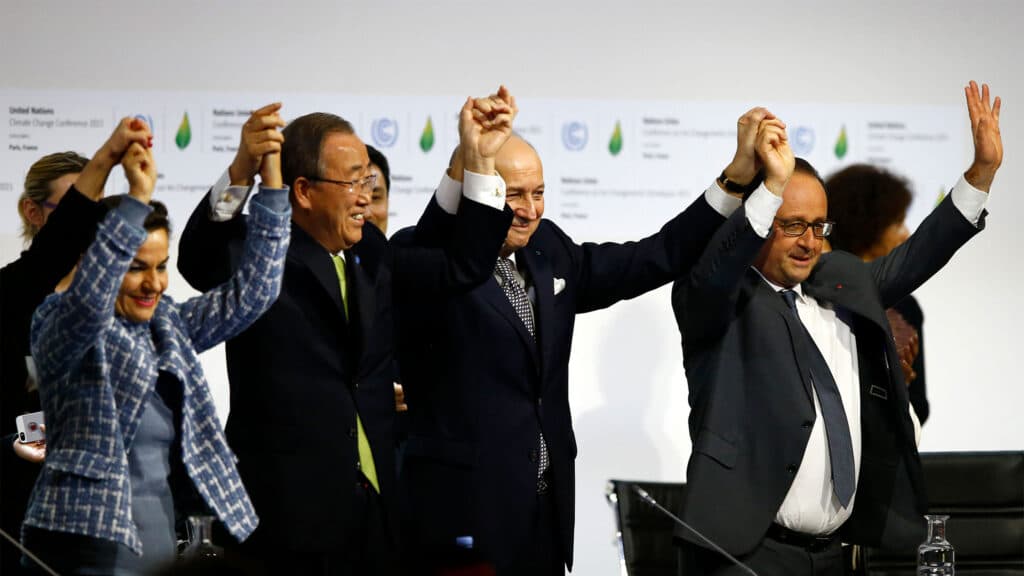
Left to right, UN climate chief Christiana Figueres, UN Secretary-General Ban Ki-moon, French Foreign Minister and president of the COP21 Laurent Fabius and French President Francois Hollande after the final conference at COP21 in Le Bourget, France, Dec. 12, 2015.Francois Mori/AP/File photo
It was just a start, though, in Paris. What were the hopes at the time of what this agreement would achieve?
The hopes were that it would achieve what it is achieving now. Of course, we knew even then that it wouldn’t take only 10 years. It is definitely a multi-decadal process. But that it will give the political signal for every other stakeholder — be it the private sector, investors, technology providers, science — for everyone to then double down and go, “OK, now that we have agreement about where we’re going, now let’s figure out how we do it.” So, it’s no longer about the what, because that is a net zero economy by 2050. Now, it’s about how do we do that? And how do we do that in every single sector?
Yes, so looking back with 10 years of hindsight, what have been the primary mechanisms to really bring the impacts of human-made climate change under control?
You could say that, to a certain extent, it’s the political signal and that is definitely true and that it is known as the “Paris effect.” But what is really exciting is the fact that 10 years hence the center of gravity, of action, of opportunity, of progress has actually migrated away from the international or the multilateral level of governments. The center of gravity has now moved over to what we used to call, when I was in the United Nations Secretariat, the real world. So, now the opportunity, the progress, the imperatives are actually coming from the market, from what I call climate economics. We’re shifting from climate politics and diplomacy to climate economics, and that is an unstoppable force. It is irreversible. It is gaining momentum every single day. Speed and scale remain the challenge.
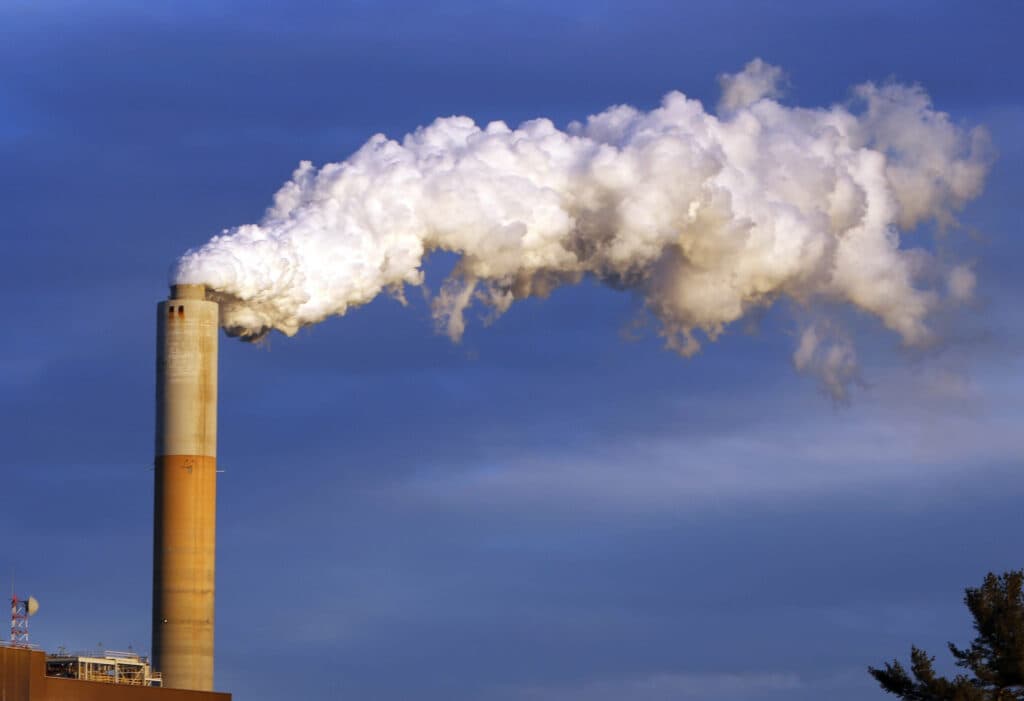
Steam billows from the chimney or a coal-fired Merrimack Station in Bow, N.H., in the United States, Jan. 20, 2015.Jim Cole/AP/File photo
We should also say that the Paris Agreement has fallen short. It established 1.5 degrees Celsius as the threshold we needed to keep warming temperatures below in order to avoid the worst consequences of climate change. The UN Secretary-General, António Guterres, has said that we’ve blown past that limit. Why have we failed on this target?
I wouldn’t say we have failed. I would say, actually, we’re not there yet. This is a new economy that is being built, that is being reconfigured, that has been re-architected from the ground up, and no overarching economic structure can be changed from Sunday to Monday. Ten years have shown that it is entirely possible to re-conceive, restructure, and redesign the economy, but they have not guaranteed yet that we have been able to take in all the sectors because this still is a new experience and new challenge that we have. And so, I would say, I don’t think that we’ve failed. I think we have to recognize that the destination, the outcome that we hold for ourselves has become more difficult to achieve, and hence we have to redouble our efforts.
And why have they become more difficult to achieve?
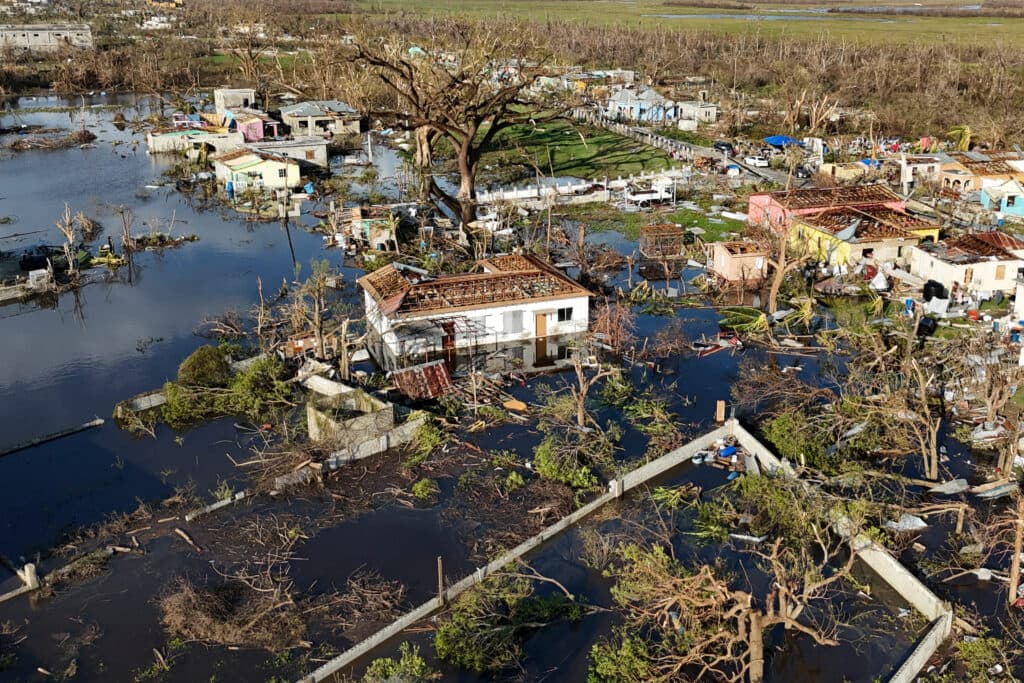
Because we underestimated the effects of uncontrolled and catastrophic natural events. We could not have predicted that we would be seeing the types of hurricanes, the types of typhoons that we’re seeing, for example, in the Philippines or Melissa in the Caribbean. We could have not foreseen that they would be as devastating as they are.
An aerial view of Black River, Jamaica, in the aftermath of Hurricane Melissa, Oct. 30, 2025.Matias Delacroix/AP
Another point of criticism has been that the nationally determined contributions, which are in effect national plans to reduce carbon emissions, are not nearly ambitious enough to meet the realities of climate change, things that you just mentioned. What is your assessment of that?
The Gap Report, which brings together the NDCs, is, by their own self-admission, incomplete. But I think we also have to remember that these national plans reflect much more what is politically expedient for the moment, the geopolitical moment that we’re in, with the threats of tariffs and other bullying measures, rather than a reflection of what is actually going on in the ground. I would say that China … has once again under-promised and will once again over-deliver. But that attitude of under-promising and over-delivering, I think, has now been practiced by several other countries because of the threats of international trade. So, they do not reflect the reality of what is going on in the ground.
So, COP30 in Belém just getting underway, there’s been a lot of criticism of these negotiations over the past decade that they’re not effective. In your view, Christiana, what is the larger value or benefit to these meetings? How do you respond to that criticism?
We now have substantially the rule book, the critical route toward decarbonizing the economy. It is clearly critical for national governments to reflect to each other what they’re doing and, in fact, for national government to witness what the private sector and the investment sector, the finance sector is doing so that next time they can be a little bit more ambitious about what political promises they put on the table.
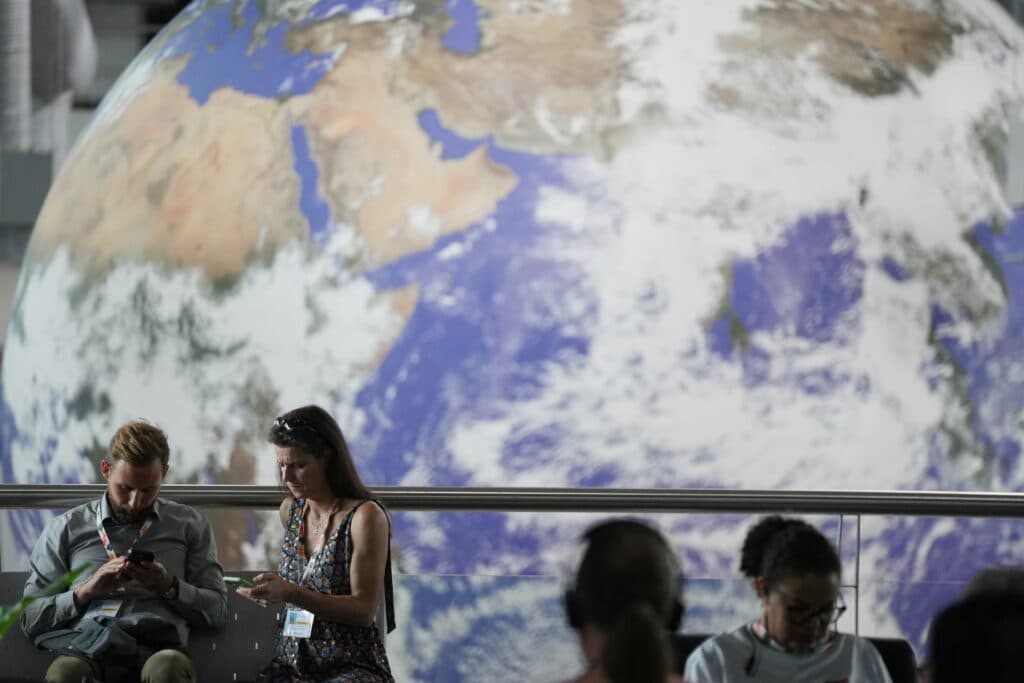
Attendees sit with a backdrop of a globe in a lobby at the side events pavilions of the COP30 UN Climate Summit in Belém, Brazil, Nov. 11, 2025.Fernando Llano/AP
What do you see as the legacy of the Paris Agreement? And I feel remiss, if I didn’t ask you, with the US in, then out, then in, and now out again, with no representatives in Brazil, how much of that is part of the legacy?
The legacy of the Paris Agreement is precisely to have served as the guardrails of decarbonization and of modernization. We keep on thinking, “What do we not want?” What we don’t want is a carbon-intensive economy. What do we want is an economy that is effective, that is efficient, certainly without carbon, but also much more intelligent. We also want a planet that is more just, that provides everyone with basic electricity. We still have 600 million people who don’t even have access to electricity. That is not a problem that can be solved by the fossil fuels, but rather by renewables.
This interview has been lightly edited and condensed for clarity.