Public radio’s longest-running daily global news program.
©2026 The World from PRX
PRX is a 501(c)(3) organization recognized by the IRS: #263347402.

Strategically placed crossings may be the answer to helping wildlife as their environments become increasingly fragmented by factors such as urban development and climate change, among others. Ecologists and nature recovery experts are pushing for building more for animals around the world.
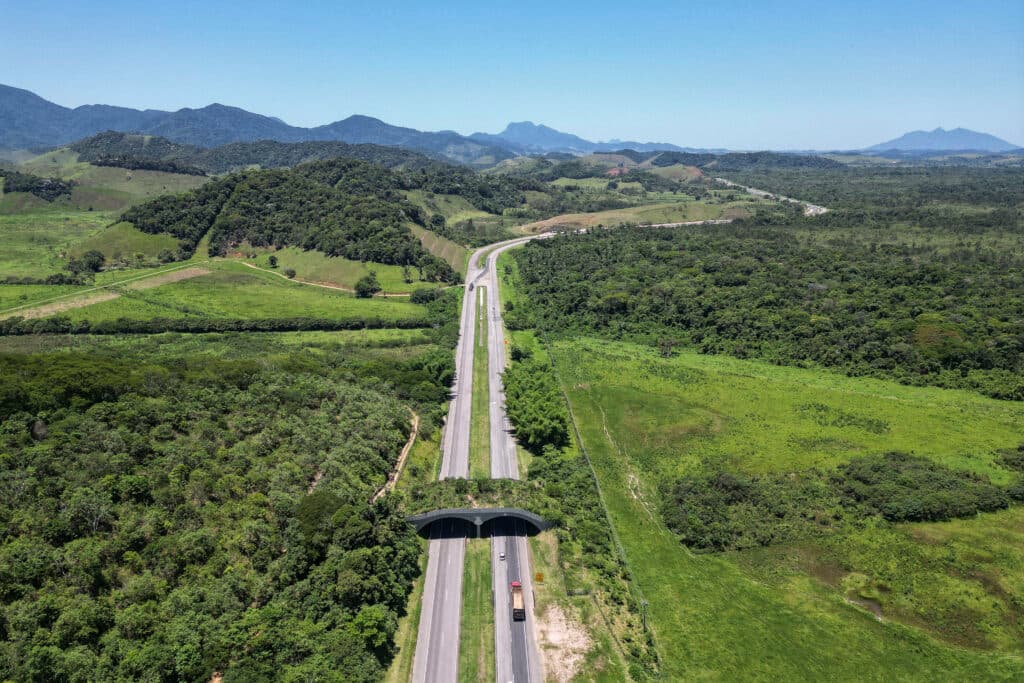
A vehicle drives under an ecological corridor that allows animals to cross over a highway in Silva Jardim, Rio de Janeiro state, Brazil, July 10, 2022.
As land-use pressures such as agricultural expansion and urbanization continue to increase across the globe, wildlife areas are becoming increasingly fragmented. New highways and railroad tracks, for example, are cutting animals off from vital environments, while deforestation is wiping them away completely.
Ecologists and nature recovery experts say strategically-placed wildlife crossings can help. There’s now a growing effort to build more of them to recreate better environments for animals.
“They are extremely effective in reducing mortalities,” said Tony Einfeldt, a Parks Canada ecologist team leader for the monitoring program in the Lake Louise, Yoho and Kootenay Field Unit.
When it comes to wildlife crossings, he said, no two structures are exactly alike. “Different animals need a variety of different things. So, some prefer underpasses, some prefer big open overpasses. And it really depends on the animal and the kind of topography that you’re dealing with.”
No matter the location, these crossings mostly bypass highways, train tracks or other human-made structures. They can be up to about 50 meters (164 feet) wide — half the length of a football field — and cross more than eight lanes of traffic.
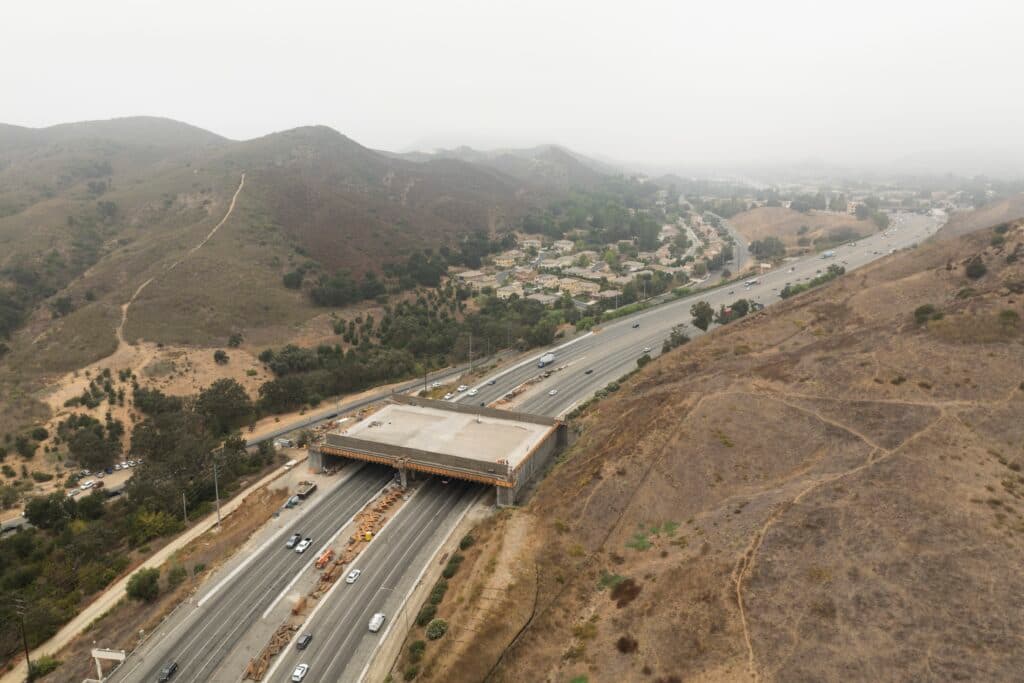
In fact, the world’s longest wildlife bridge stretches far longer than that, coming in at around a half-mile. A bridge currently under construction in California, though, could even surpass that.
“Some of them have a lot of plants and trees and rocks and cover provided for the animals that might be a bit more wary [of using them],” Einfeldt said. The foliage and landscaping can help shield animals from car lights, for example.“And some are much more open and clear so that they have a nice line of sight, right across.”
Einfeldt explained that different animals also use the crossings in various ways. Some need no introduction to the bridges, trying to walk across before construction even finishes. But Einfeldt has also observed some bears taking up to eight years to start learning how to use the structures when they were first introduced.
Additionally, some animals walk straight across rather quickly, while others take their time, even stopping to graze or procreate on the bridges. Einfeldt’s coverage area boasts one of the largest networks of wildlife crossings in the world, with 41 underground pathways and seven overpasses.
Wildlife crossings originated in France, in the 1950s. But the country at the vanguard of their development is the Netherlands.
“By now, in the Netherlands alone, we have more than 80 wildlife bridges, and a few thousand wildlife tunnels,” said Edgar van der Grift, a senior researcher of animal ecology at the Wageningen University and Research Institute in the Netherlands. He said the country is able to set such a high bar due to a few factors, including that the general public values its health and nature.
But perhaps most crucially, van der Grift said, the people in power also see the benefit.
“People in nature groups, but also people in the government,” he said. “If you have committed people there and they really go for it, you get things done. So, that is really a success factor in our case.”
The lack of political will is cited by experts worldwide as a significant factor in what prevents more wildlife crossings from being built.
In Costa Rica, Inés Azofeifa has spent the past decade working for SalveMonos, a nonprofit organization dedicated to protecting and preserving wildlife, particularly howler monkeys. Her team has put up dozens of bridges to save howler monkeys from electrocution, as they often are forced to use power lines to cross roads.
Unlike the bridges in Canada and the Netherlands, the bridges for the howler monkeys are made of rope. They’re attached to tree branches and hang over the road, resembling monkey bars. Azofeifa said a post-pandemic development boom has made them more necessary than ever.
“[There has been] a lot of building in these areas,”Azofeifa said. “And [along the entire] Pacific coast of Costa Rica.”
As more hotels and homes are built, she said, there are fewer safe routes for monkeys to take. That’s why, in 2022, Azofeifa helped draft a bill that would make developers put up new animal crossings as they go. The bill has not progressed, however, through the government.
Martin de Retuerto says political will is also lacking in the UK.
“We’re just so far behind. And we should be able to do it,” said de Retueto, who leads nature recovery at the Hampshire and Isle of Wight Wildlife Trust. “This is not [an] engineering, a technological or even a space issue.”
He said the economy is often prioritized by politicians. But he’s quick to remind them “that the economy is very much underpinned by [a] healthy environment. And you need to invest in the environment as much as you do in any other [part] of the economy.”
National Highways — the agency responsible for the country’s motorways — is starting to address the issue more than it has before. Construction is currently underway for the UK’s largest wildlife bridge, in the Cotswolds. It’s expected to be ready by the end of 2027.
The impacts of climate change are also increasing the need for more wildlife structures, according to Per Sandström, a wildlife ecologist and associate professor at the Swedish University of Agricultural Sciences. He works with the Sami people — Sweden’s Indigenous population and reindeer herders — to help identify the best locations for reindeer overpasses.
“Building these is a way to brace for climate change. Because with a changing climate, the reindeer need more and more alternatives during different snow conditions,” he explained.
This has been particularly true the past two years, Sandström added, when large amounts of snow and ice forced the reindeer to seek out other areas. “There’s no question about the need of accessing these lands.”
Meanwhile, Sweden’s public broadcaster reported that the country’s transport agency plans to build up to a dozen new reindeer crossings over the coming years.
