Public radio’s longest-running daily global news program.
©2026 The World from PRX
PRX is a 501(c)(3) organization recognized by the IRS: #263347402.

As the trial of former Brazilian President Jair Bolsonaro enters its final phase, the outcome could set a precedent for how democratic institutions respond to authoritarian threats in the South American country and beyond.
Every Sunday, Avenida Paulista — São Paulo’s main avenue — is closed to cars and open to pedestrians, cyclists and performers. It becomes a kind of stage for public life and, at times, political expression.
Former Brazilian President Jair Bolsonaro is now facing the final phase of his trial. He is charged with five counts, including attempting to stage a coup in 2022, plotting the assassination of current President Luiz Inacio Lula da Silva, and involvement in an armed criminal organization.
If convicted, Bolsonaro could face more than 40 years in prison.
Brazil’s Supreme Court has scheduled sessions until Sept. 12 to reach a verdict.
Meanwhile, Bolsonaro remains under house arrest in an upscale gated community in the capital Brasília. He’s being monitored by plainclothes police officers and is required to wear an ankle bracelet. He denies any wrongdoing.

Brazilian authorities have moved to tighten restrictions on him amid fears that Bolsonaro might attempt to flee — fears that have grown after authorities discovered a draft asylum request to Argentina on his phone and revealed his brief stay at the Hungarian embassy earlier this year.
The case has divided public opinion across the country. It has also shaken Brazil’s political landscape and reignited questions about the country’s democratic institutions, accountability and the role of foreign influence.
Former US President Donald Trump, a close ideological ally of Bolsonaro, has stepped into the fray. He imposed a 50% tariff on some Brazilian imports, sanctioned Supreme Court Justice Alexandre de Moraes, who is overseeing the case, and denounced the trial as a “witch hunt.”
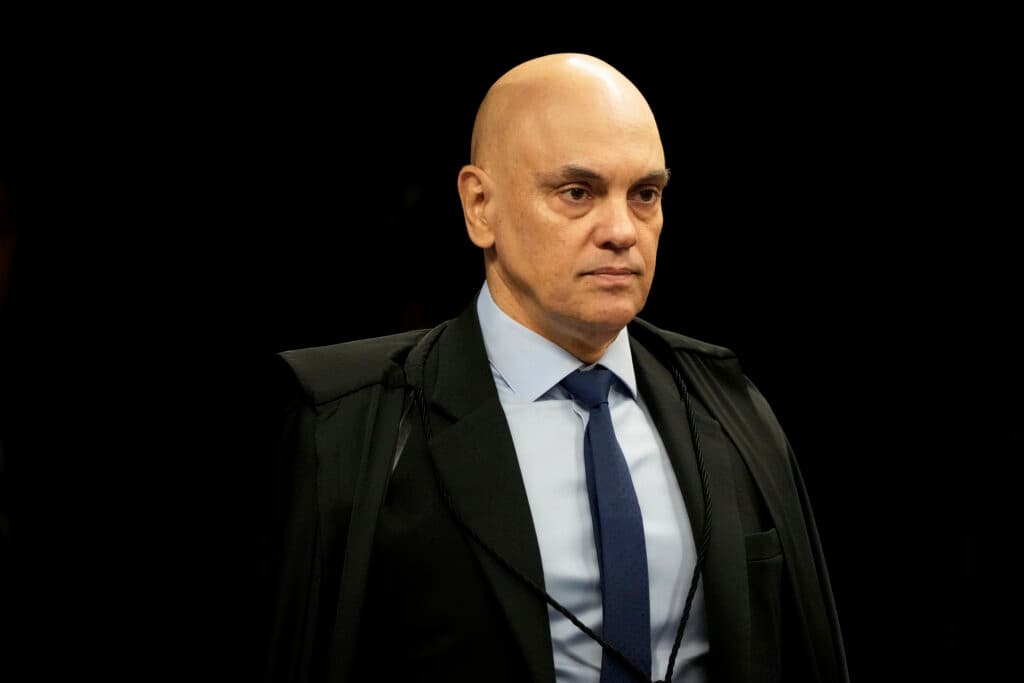
Brazilian political scientist Cláudio Gonçalves Couto said the trial could mark a turning point for the country.
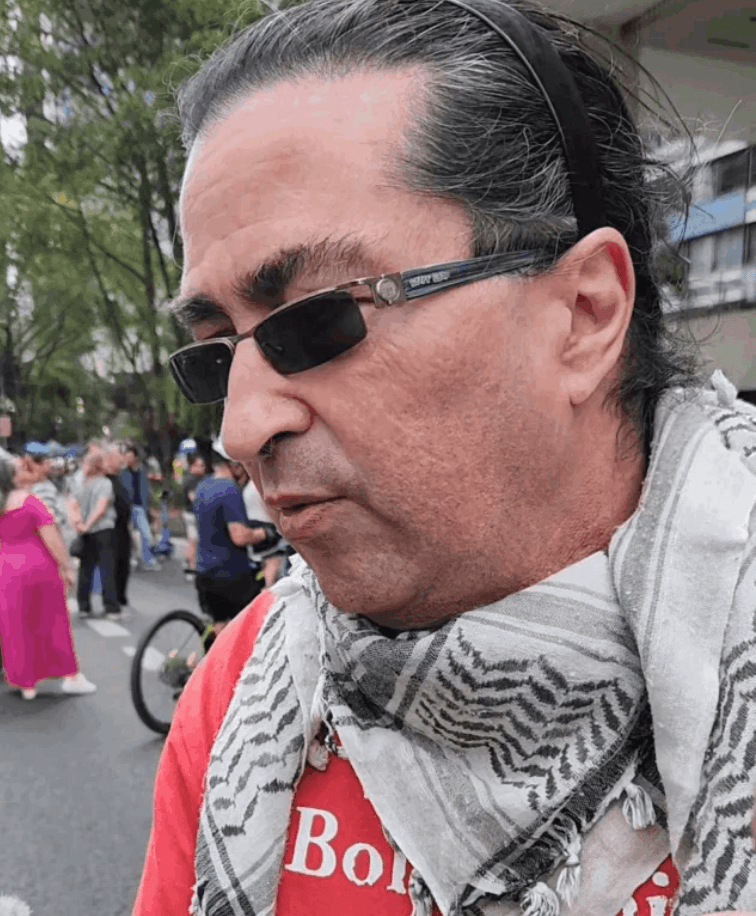
“Brazil has a long history of institutional breakdown, military interventions and authoritarian regimes, and Bolsonaro was always a clear supporter of authoritarianism in Brazil,” he said. “If someone who tried to undermine democracy is punished, it sends a powerful message.”
That message could ripple beyond Brazil. Oliver Stuenkel, a political analyst, said that authoritarian leaders across Latin America are watching closely.
“This trial may shape how far-right leaders act around the world,” Stuenkel said.
In São Paulo, the political divide has become palpable.
On a recent Sunday afternoon on Avenida Paulista — the city’s main avenue — voices from across the spectrum offered sharp opinions.
Maurício de Melo Ribeiro, a 58-year-old man, said he was confident Bolsonaro would be convicted: “Our democracy is still a work in progress. Holding him accountable is part of making it stronger,” he said.
Luciana de Oyá, a Black practitioner of Candomblé, an Afro-Brazilian religion that faced increased hostility under Bolsonaro, said the trial represented more than punishment — it symbolized visibility.
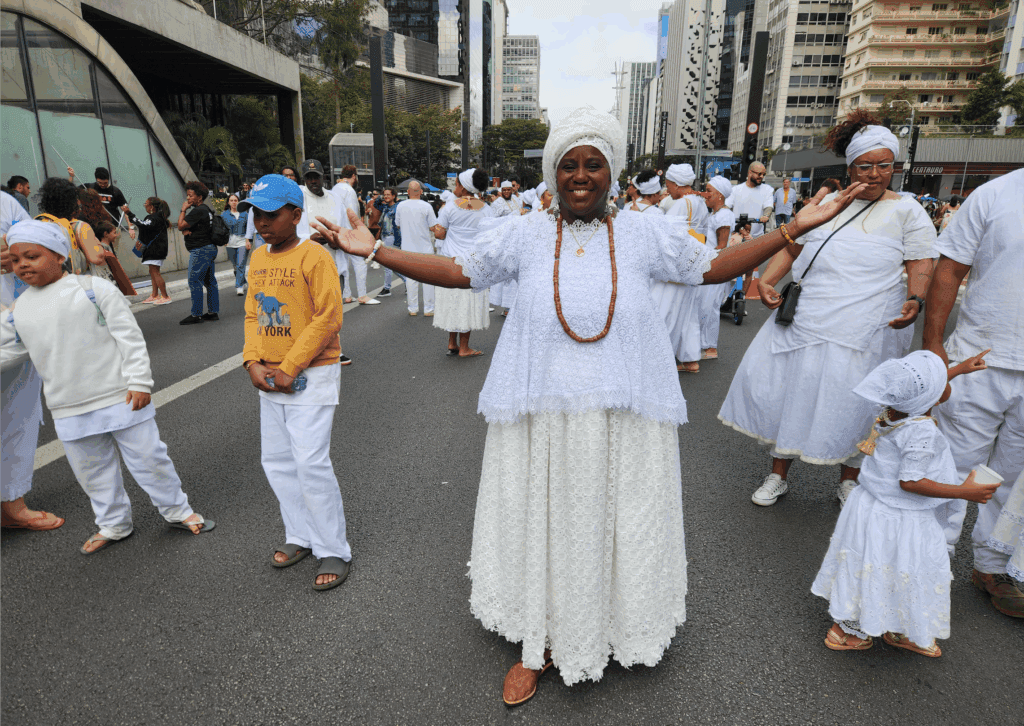
She said Bolsonaro’s government rolled back key policies that advanced racial equality. “Black people in Brazil have been fighting for centuries to gain freedom and recognition,” she said. “This is part of that fight.”
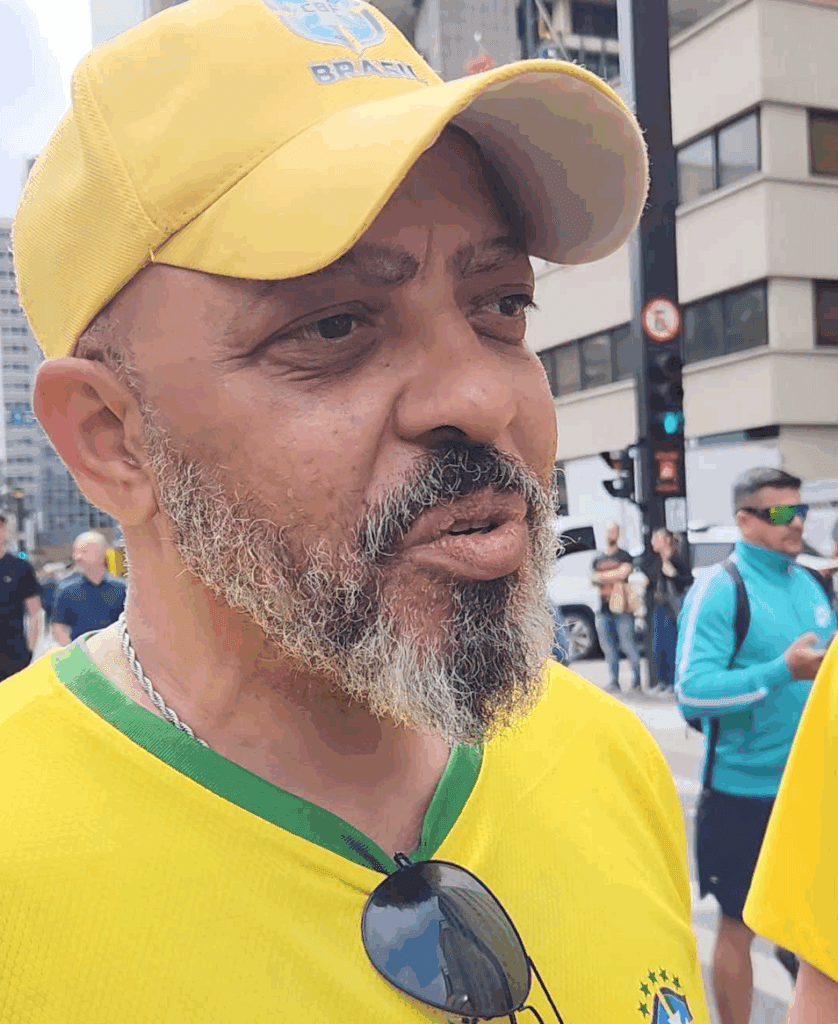
Among Sunday strollers wearing Brazil’s iconic yellow and green football jerseys — which became closely associated with Bolsonaro himself after his supporters adopted it as a political symbol during rallies and protests — some described the trial as political persecution.
Edson Preto, also on Avenida Paulista that day, said the court was punishing Bolsonaro for his views, not his actions: “This isn’t democracy. This is a dictatorship in disguise.” He believes that Bolsonaro is not guilty.
A recent survey revealed that about 55% of Brazilians agree Bolsonaro’s imprisonment is fair, compared to 39% who do not.
The courtroom battle in Brazil also mirrors events in the United States. Both Trump and Bolsonaro refused to concede defeat after their election losses, and both inspired violent attacks on government institutions. But their paths have since diverged: Trump is back in power, while Bolsonaro is facing prison.
While Trump has ramped up pressure on Brazil’s judiciary through US sanctions, his intervention appears to be backfiring. President Lula’s popularity has risen, and Bolsonaro’s base has fractured. Even Brazil’s powerful agribusiness sector — traditionally aligned with the right — has pushed back against the tariffs.
Despite mounting political pressure, legal experts believe Bolsonaro’s conviction is likely.
“The trial is not only about one man’s fate,” Cuoto added, “but about whether Brazil’s democracy can hold firm under strain.”
Brazilian journalist Yon Boechat contributed to this report.
