Public radio’s longest-running daily global news program.
©2026 The World from PRX
PRX is a 501(c)(3) organization recognized by the IRS: #263347402.

David Bliss grew up hearing stories about his great-aunt Bertha, a once-energetic woman who ran her own shop in the small German town of Husen. But he knew very little else about her until he found a high school in Husen, which for decades has had students research the lives of Holocaust victims. Bliss’ journey to memorialize his great-aunt unearthed debates about such memorials in Germany, including those over the Stolperstein, or “Stumbling Stone” project. Rebecca Rosman traveled to Husen and Munich to tell this story.
More than 100,000 Stolpersteine memorials have been installed across Europe, making it the largest decentralized memorial in the world.
There’s a line in the Talmud, one of Judaism’s most sacred texts, which says, “A person is only forgotten when their name is forgotten.”
Maybe that’s also why, growing up, whenever someone died, I was taught to say, “May their memory be a blessing.”
I’ve never been especially religious, but I’ve always found that phrase beautiful. May their memory be a blessing. It’s still the first thing I say to comfort someone grieving.
Over the past couple of years, I’ve been thinking more deeply about what it really means to remember. That reflection started in the spring of 2023 when my dad’s friend David sent me a message. Something about a trip to Germany, and laying a brass plaque to honor his great-aunt Bertha.
“I sincerely believe that there is a beautiful story to be told,” he wrote.
I wasn’t so sure. It sounded meaningful, yes, but personal. Why would anyone beyond his family have skin in the game about his family memorial?
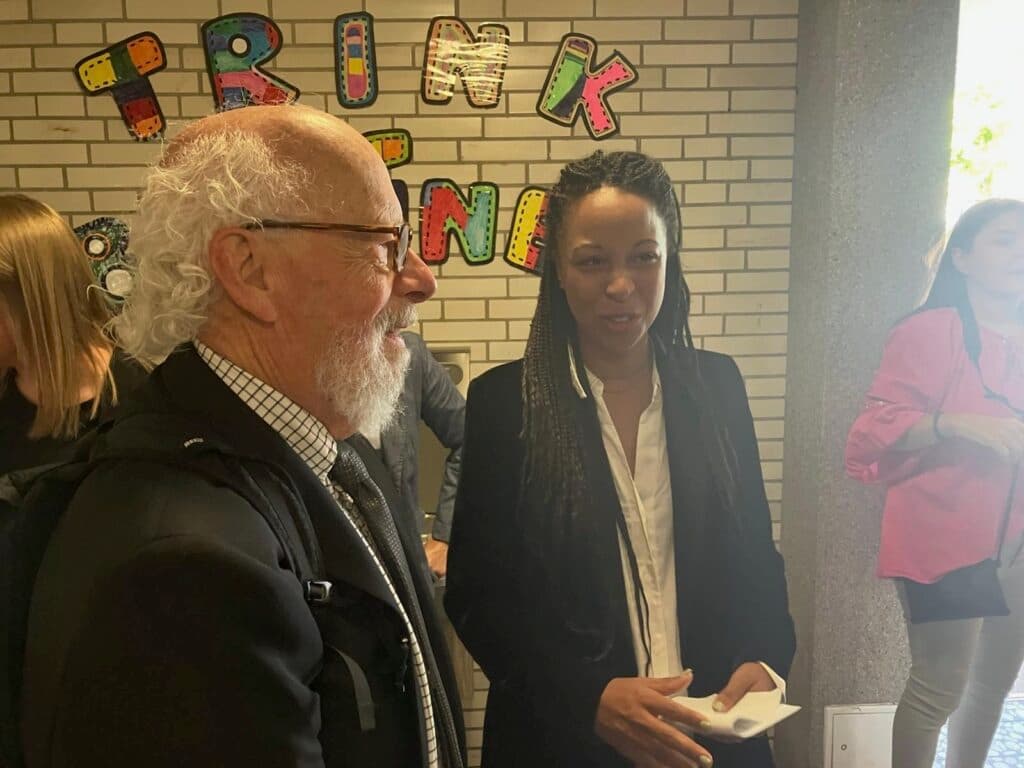
But he kept nudging, and eventually, I got on a train from Paris. That’s how I ended up in a high school auditorium in a small town called Husen, watching German teenagers play violin and read poems about a woman none of them had ever met.
A woman David barely knew, either, as it turned out. Bertha Wolf. Born in 1879. Died in 1942, on the way to Sobibor Concentration Camp.
For most of David’s life, Bertha was pretty much just a name. Mentioned in passing by his mom, but never explained. No photos, no grave. Just silence.
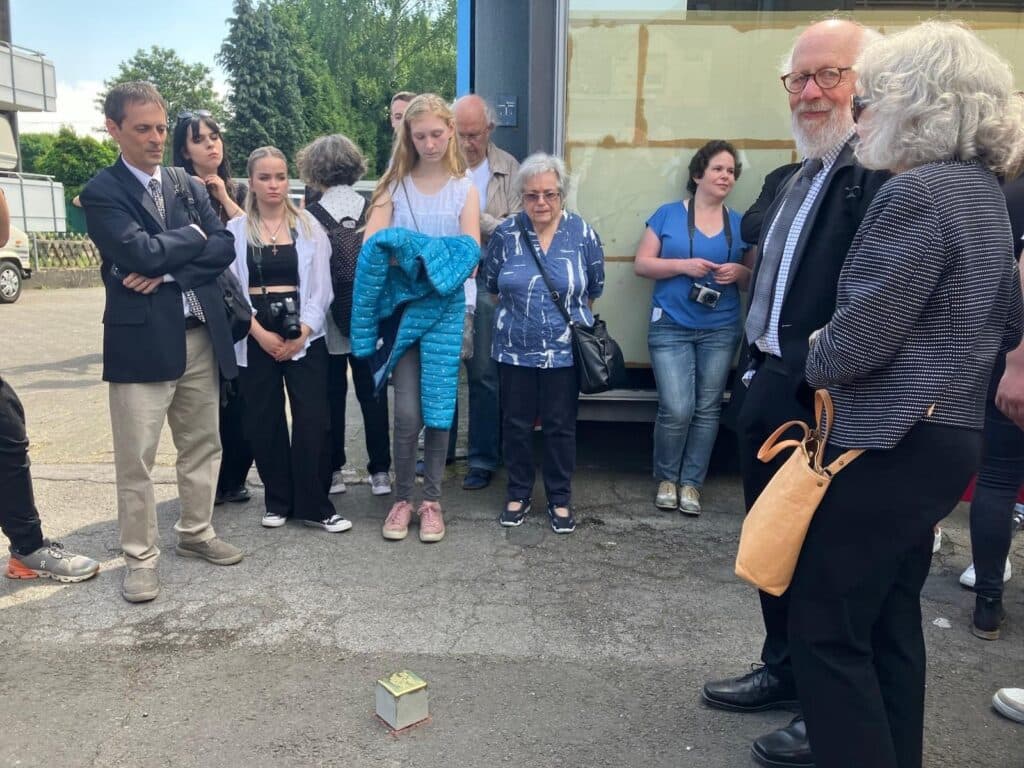
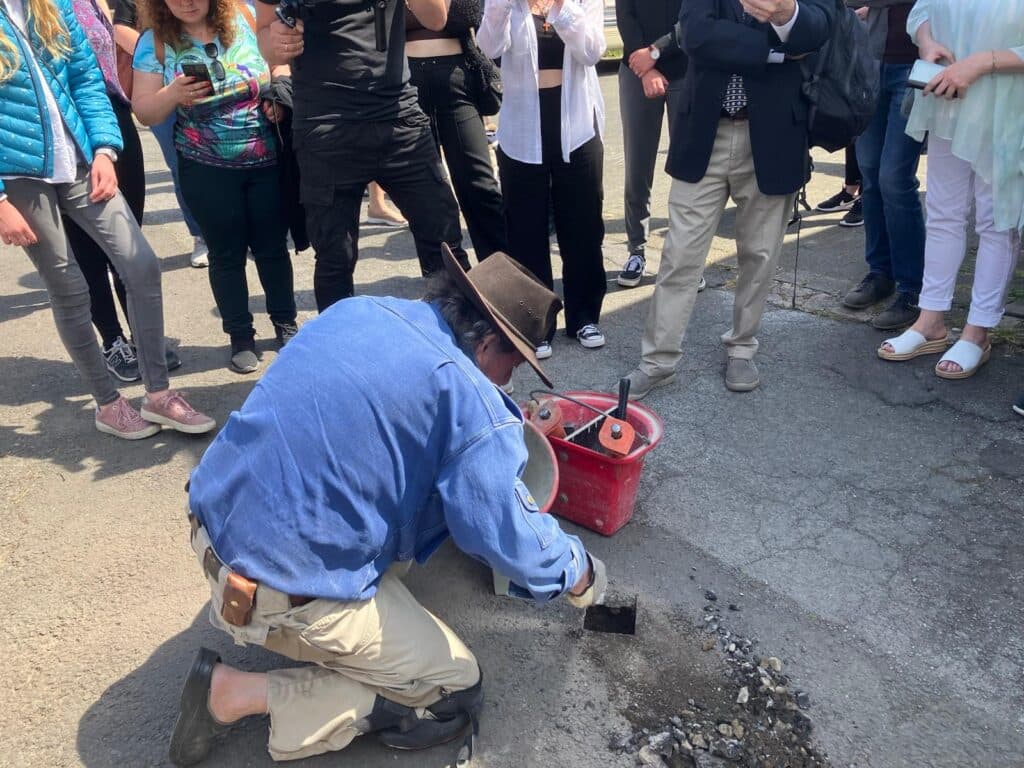
After he retired, David started looking back. He filed a request to have a Stolpersteine, a “stumbling stone,” laid in her name. One of those brass cobblestones you see on European sidewalks, marking the last-known homes of Holocaust victims. You’re meant to stumble on them. Literally.
More than 100,000 of these stones — launched in 1993 by German artist Gunter Demnig — have been installed across Europe.
Bertha’s would become part of that legacy. But for David, it was also a small way to honor someone who had always been a shadow. As he worked through the application process, word got around in Husen. That’s when David got an unexpected reply.
It turned out, students at the local high school had been researching Bertha for years as part of a project documenting the town’s Jewish residents before the war. They told him that Bertha ran a fabric shop. Let people buy on credit. Donated a rug to a local church. She was remembered.
The ceremony in Husen was emotional, but it raised a bigger, tougher question: Who’s going to carry this memory forward?
David is in his 70s. He lives outside Chicago. He’s the one pushing to make sure Bertha isn’t forgotten. But he’s not sure his kids feel the same urgency.
“They don’t have the same intense feeling I do,” he told me. “I wish they did.”
That’s not a knock on them. It’s a reflection of something a lot of families are dealing with right now. As the survivors and first-generation descendants age, how do we keep these stories alive? Can memory be inherited if the connection starts to fray?
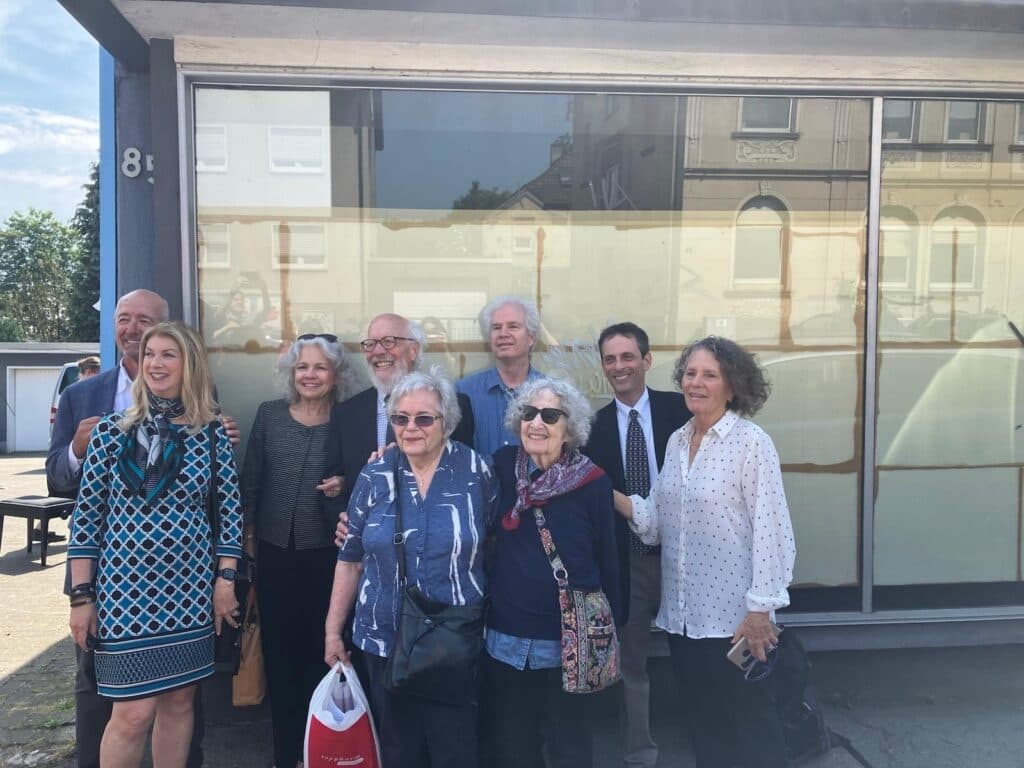
David’s doing what he can. After the trip, he bought Bertha’s old home and is turning it into a nonprofit focused on Holocaust education.
It’s a beautiful gesture.
Not every city handles memory the same way.
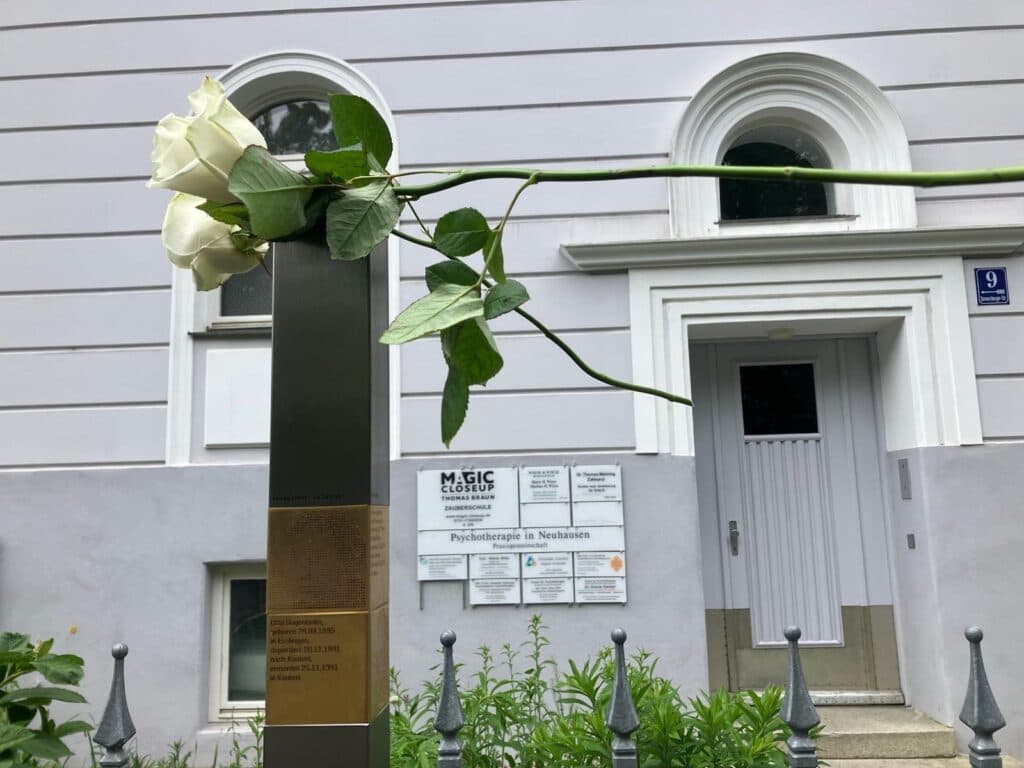
In Munich, for example, Stolpersteine aren’t allowed on public sidewalks. The city places plaques at eye level instead. They say it’s more respectful. Others argue it’s too sanitized. Too polite. There’s no universal script for remembrance.
But for people like David, the need to do something is clear. Especially now, with anti-Semitism and racism rising across the globe. The past isn’t staying in the past. So, what does it mean to remember? A stone in the ground? A story passed down? A museum with artifacts?
All of it, maybe.
What stuck with me most came near the end of my trip to Husen. After the official ceremony, David gathered his family for something smaller. Quieter.
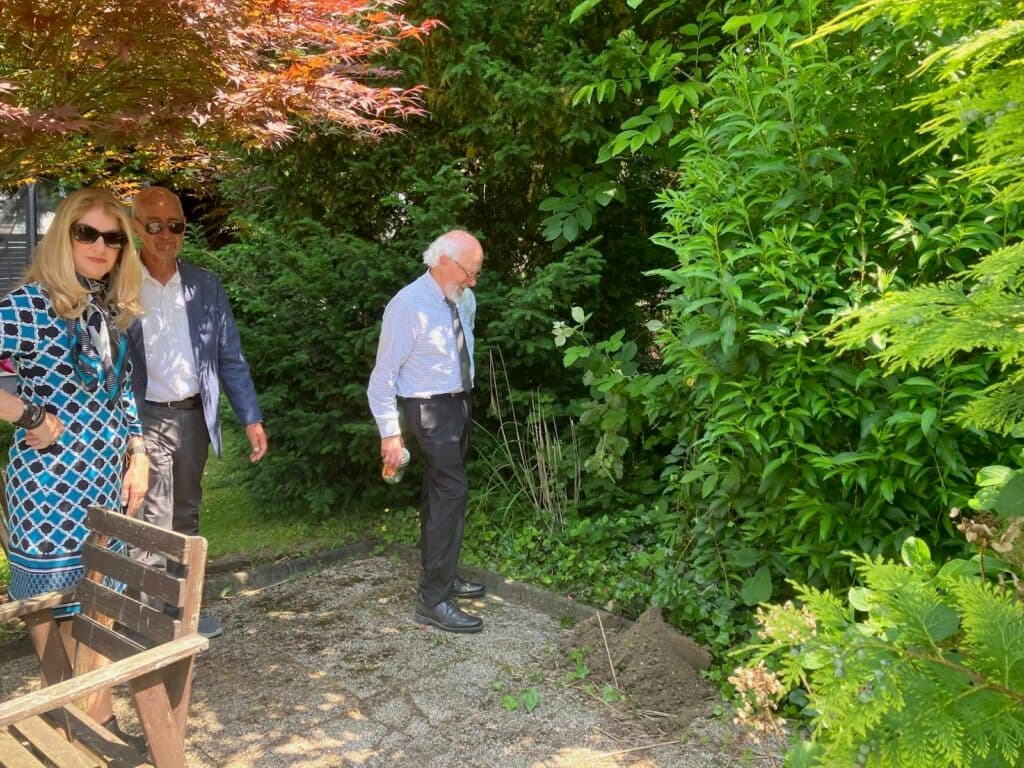
He wanted to bury a time capsule with his family in Bertha’s old backyard. The time capsule included artwork from his granddaughter, a piece of that donated rug, a flag and a photo of a hanger from Bertha’s shop.
It’s a nice gesture, I thought.
But it’s also a bet — that someone, someday, will come looking for this history and want to carry it on.
David and his family took turns shoveling dirt into the ground, burying the capsule. The first scoop, done with the shovel upside down — an old Jewish tradition, a symbol of grief.
“When another generation of children asked the questions that had eluded us,” David said, “her memory stood alone. We were nowhere to be found. Eighty-two years later, we stand in your garden once more.”
That line hit me.
Because in the end, this isn’t just about Bertha. It’s about the people who choose, again and again, not to let her, and others like her, fade.
David’s done his part. The baton is there, waiting.
The question is, who’s ready to take it?