Public radio’s longest-running daily global news program.
©2026 The World from PRX
PRX is a 501(c)(3) organization recognized by the IRS: #263347402.

Pope Francis, who died on Monday at the age of 88, was the first Latin American and Jesuit pontiff. He was also the first to choose the name Francis, dedicating his life to working with the poor and society’s outcasts. Global leaders have expressed their condolences as the Vatican arranges his funeral for Saturday.
Argentina’s Cardinal Jorge Bergoglio gives a Mass outside the San Cayetano church where an Argentine flag hangs behind in Buenos Aires, Argentina, Aug. 7, 2009.
Catholics around the world are mourning the death of Pope Francis, who passed away on Monday at the age of 88 after suffering from a stroke and subsequent heart failure. The news came a day after the pontiff made an Easter appearance for a massive crowd that gathered at St. Peter’s Basilica in Rome.
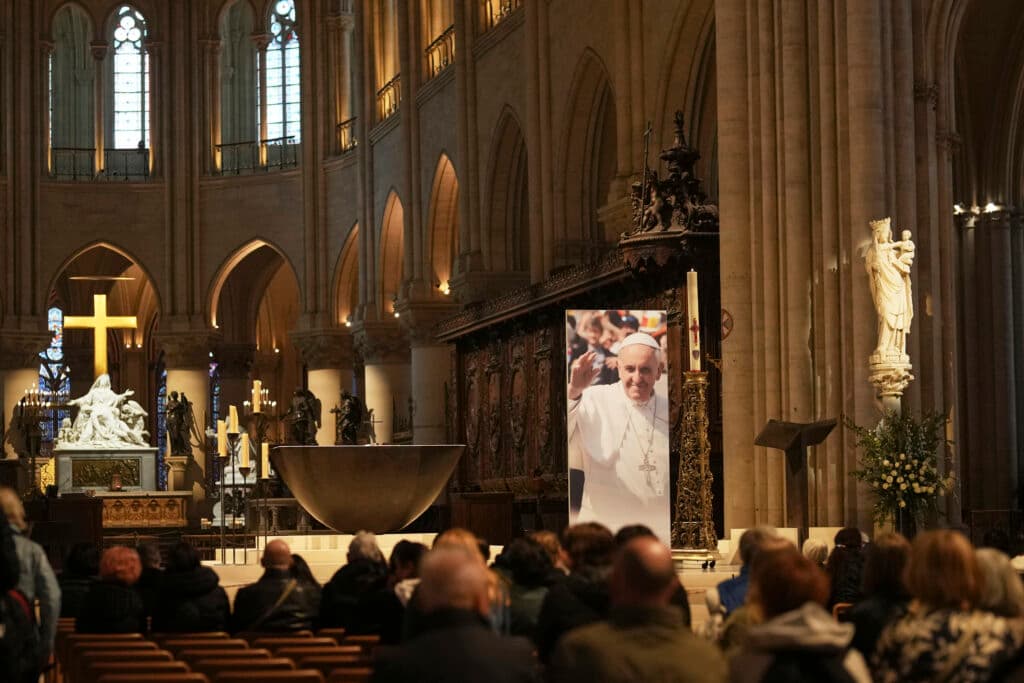
“He taught us to live the values of the Gospel with faithfulness, courage and universal love, especially for the poorest and most marginalized,” Cardinal Kevin Farrell said in an official announcement made by The Vatican.
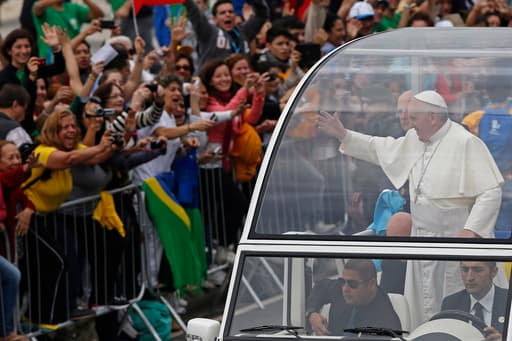
Francis had wished everyone a Happy Easter on Sunday, and then took what would be his last ride in the open-air popemobile around the square. In his Easter message read out by an archbishop, Pope Francis called for a ceasefire in Gaza and prayed for peace in Yemen and Ukraine.
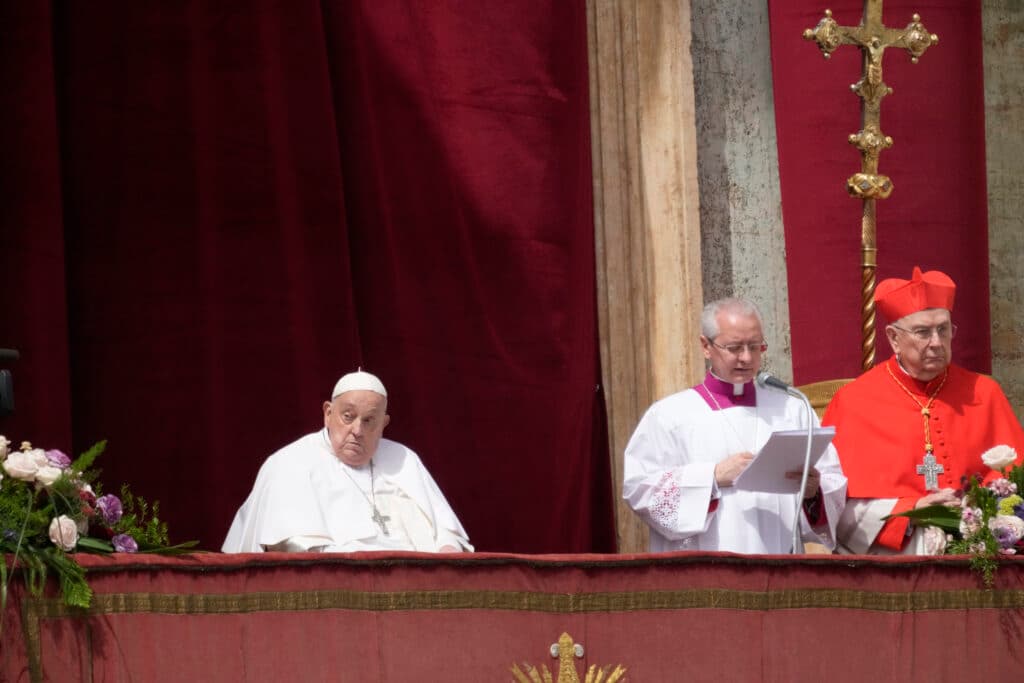
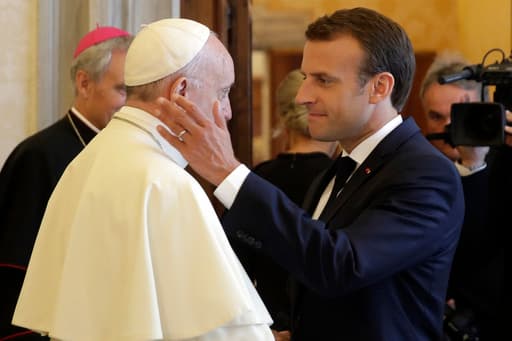
Since then, condolences and messages of praise have poured in from across the globe. US President Donald Trump ordered American flags lowered to half-staff. French President Emmanuel Macron called it a day of deep sorrow, adding that Francis stood with the most vulnerable with deep humility and empathy.
Pope Francis was born Jorge Mario Bergoglio in Buenos Aires, Argentina, in December 1936. He was the eldest of five children in a family of immigrants. Their parents were born in Italy, but the children grew up speaking Spanish.
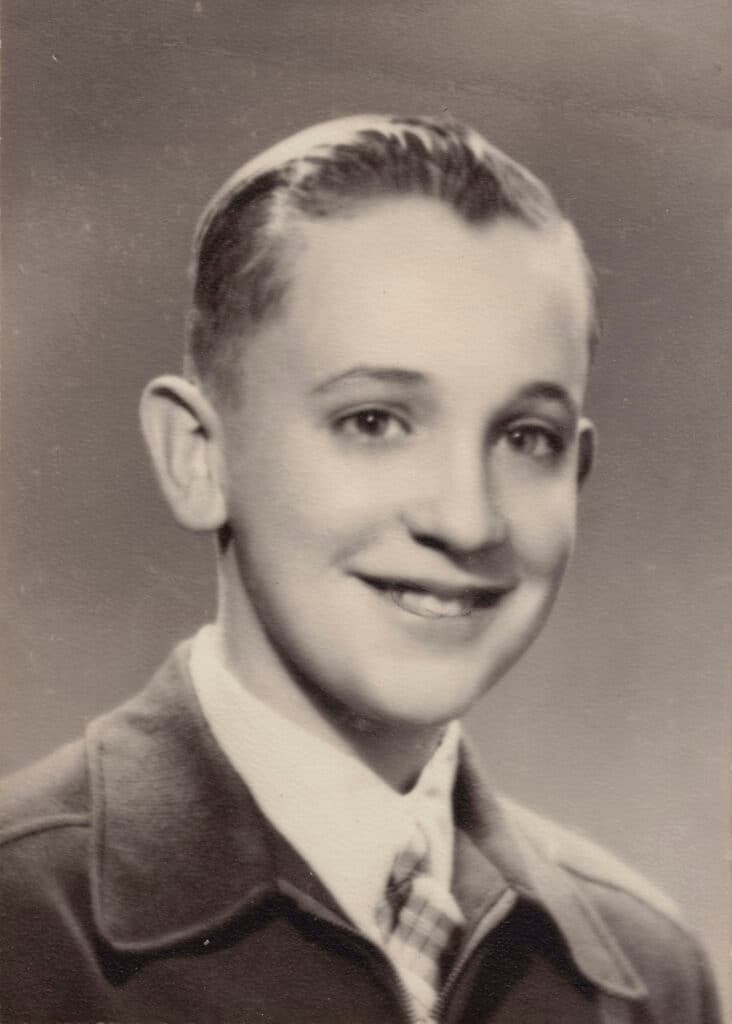
“For most of the children of Italians in Argentina, they did not speak the language,” said Gustavo Morello, a Jesuit priest from Argentina and a professor of sociology at Boston College. “The whole idea of the Italians was assimilation.”
Morello added that Bergoglio’s entire life was shaped by the immigrant experience and this also informed his views on the politics of Argentina — especially in regards to helping the poor.
“Not just in Argentina, but also in Latin America … you can be a conservative priest, you can be a progressive priest, but then the proximity with the poor is not in discussion,” Morello said. “Perhaps the style in which you approach the poor may be fair, but the expectation that the Catholic priest should be closer to the people is a very Latin American expectation. You have to be there when the people need you.”
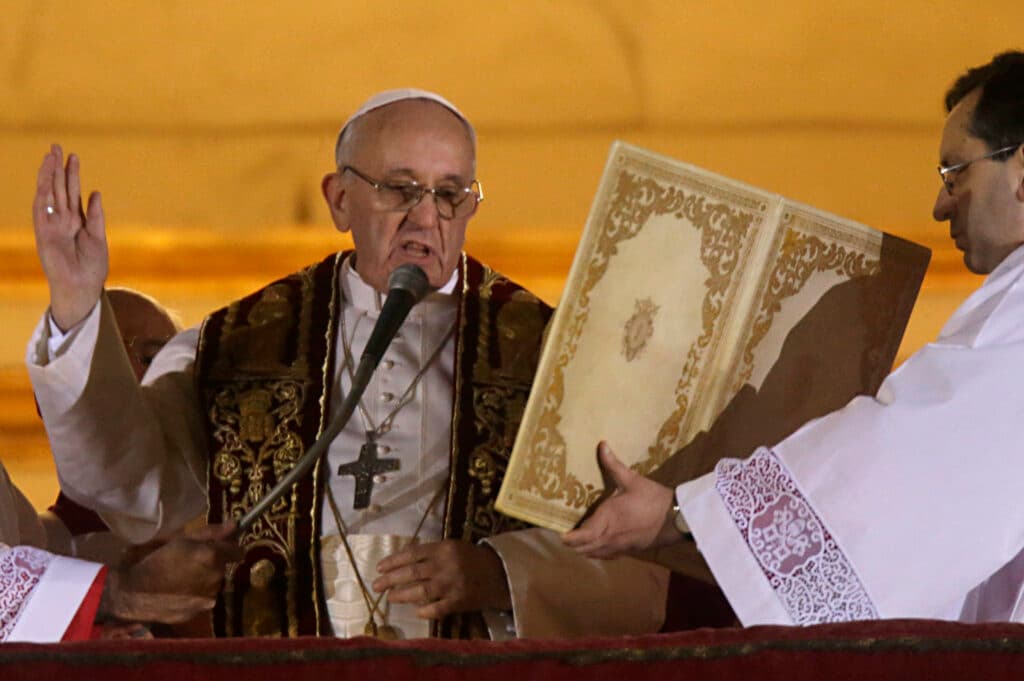
As a Catholic priest, later as a bishop and throughout his papacy, Francis emphasized the importance of helping those most in need — and not just from afar, but by being close to the poor, the sick and the marginalized. This could be one reason why Catholic cardinals picked Bergoglio for the papacy after Pope Benedict XVI stepped down in 2013.
Gustavo Morello said he was surprised by the choice of Bergogliao at the time, because no one from Latin America had been pope before — nor had anyone from the Jesuit order, whose priests are known for their work in education and international missions.
Additionally, Morello said, “there was no pope that picked the name Francis in 800 years of Christianism.”
Bergoglio named himself after St. Francis of Assisi, the 13th-century Italian friar known for personal simplicity and care for nature and working with the poor and society’s outcasts — also adopting his style.
“I think it was very clever in terms of, for a foreigner, picking the name of a very liked, a very loved, Italian saint,” Morello explained. “But also it’s a kind of political program like, ‘Okay, I want to be closer to the people and the church should be closer to the people.’”
Francis often denounced economic inequality. Soon after becoming pope, he visited a juvenile detention center and washed the feet of two women, including a Muslim.
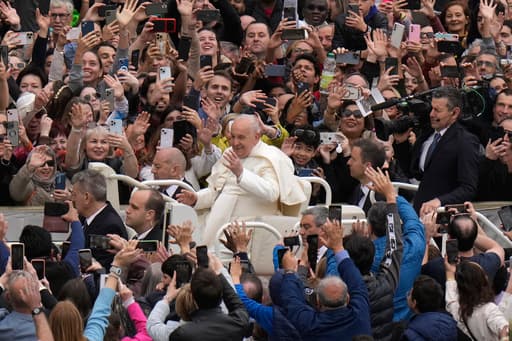
Francis also took the Vatican’s public relations game to a whole new level.
In April 2023, Hulu released a documentary called “The Pope: Answers,” in which Pope Francis sat down in conversation with a diverse group of young people and answered a variety of questions about the Catholic Church, including faith, and even things like sexuality and abortion.
Elise Allen, who writes for the Catholic news site Crux, said that Francis embraced the media as a way to get his message out, even though he was not the first Pope to use social media.
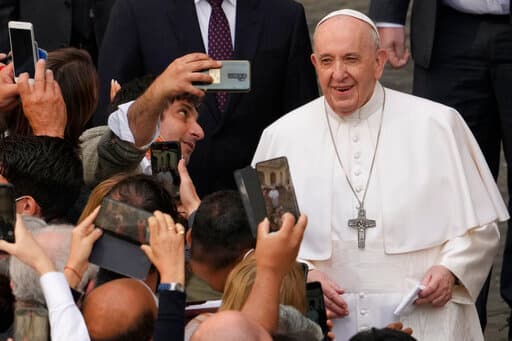
“Benedict actually had opened the Vatican’s Twitter (now X) account, but that was very soon before his resignation,” Allen said. “So, Francis is really the first pope we’ve had in the digital era, which also changes how we see the papacy. It’s made the pope’s message and the Catholic message much more visible. It’s made the Church’s internal disputes much more visible. So, people think this is something new, right? ‘Oh, Francis has brought in maybe some controversy among Catholics, right wing, left wing, you know, conservative, progressive.’ I mean, some of that, that’s always been there. It’s just far more visible now because of social media.”
Christiana Zenner, an associate professor at the Department of Theology at Fordham University in New York, said that Pope Francis took his pastoral role very seriously, presenting aspects of Catholic social teaching to a wider audience, including many non-Catholics.
“Laudato si’”, Pope Francis’ second encyclical, or official teaching sent as a formal letter or circular document to the Catholic Church, was published in 2015 on the environment.
“He directed it not just to, ‘Brothers and sisters in the Catholic Church,’ as would have been prior tradition, or ‘All people of goodwill’, as would have been a more recent tradition in Catholic social teaching,” Zenner said. “He directed ‘Laudato si’ to every person living on this planet.”
Popes John Paul II and Benedict XVI also emphasized the importance of protecting the environment as God’s creation, “but none has centralized the question of environmental degradation, social inequality, consumption and what it means to be human, and what constitutes ethical conduct in the way that Pope Francis does,” Zenner explained.
But Pope Francis was also not quite the transformative leader that some people had hoped for. Although he is often credited with saying the right things about sexual abuse of children by Catholic clergy — around the world, over many years — and meeting face-to-face with abuse survivors, critics say that he still fell short of holding those responsible to account.
Some have praised Francis for elevating the status of women in certain leadership positions in the Catholic Church, but Christiana Zenner said that he had the opportunity to do much more. For example, she pointed to the Synod on the Pan-Amazon Region held in 2019 in Rome.
“There was a push by many people from the Amazon region to include women in the sacramental life of the Church, whether as deacons or as sacramental emissaries of some other sort,” she said. “And he said ‘no’. So, women continued to be second class citizens, sacerdotally, when it comes to performing the sacraments, and that’s a line on which the Catholic Church has not been willing to budge in at least a millennia, certainly, more.”
It’s not just progressive Catholics who’ve said they felt let down by this pope.
Francis faced no small amount of resistance from Catholic conservatives, especially here in the United States.
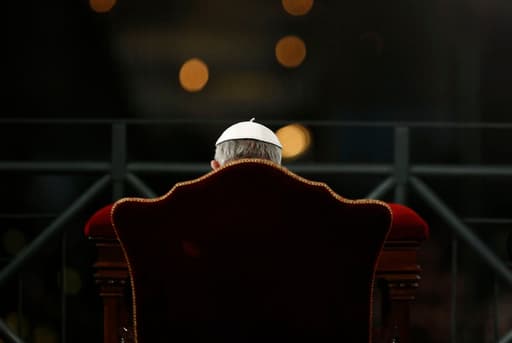
“I think Pope Francis simply doesn’t accept that Catholic identity in politics and public life should be solely defined by opposing abortion and same-sex marriage,” said John Gehring, the author of the book, “The Francis Effect.”
“You know, in many ways, I think this papacy has been kind of a challenge to those who really try to narrowly define Church teaching to affirm a kind of political agenda that often has more in line with, say, the US Chamber of Commerce or the Republican Party than traditional Catholic teaching,” Gehring said.
For the American branch of the Catholic Church, which Gehring describes as broadly comfortable and wealthy, the message from Pope Francis was always kind of radical.
But, Gehring added, it was also rooted in the Gospel, which is about addressing sin and injustice, even when it makes people uncomfortable.
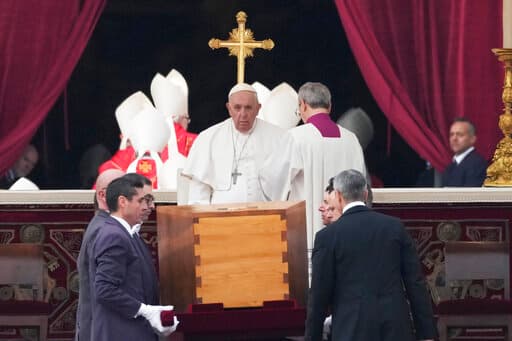
The pope’s funeral at St. Peter’s Square is scheduled for Saturday, with public viewing starting on Wednesday.
