Middle East repression will continue in 2012: Amnesty
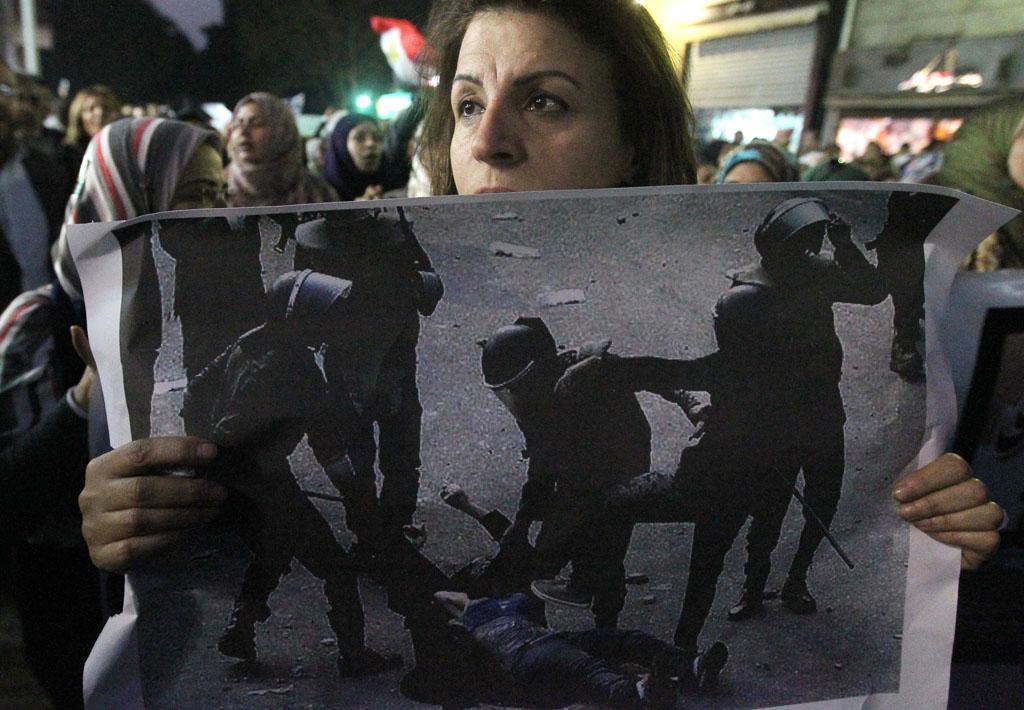
An Egyptian woman holds the widespread picture of a woman who was stripped and beaten by riot police during clashes last week as Egyptians gather for a protest in downtown Cairo to denounce the military’s attacks on women and to call for an immediate end to the violence against protesters on December 20, 2011.
Arab governments will not stray from their using violence and strong-arm tactics to quell popular protests and dissent this year, Amnesty International says in a new report. But demonstrators will not be backing down either.
In the 80-page Year of Rebellion: State of Human Rights in the Middle East and North Africa, the U.S.-based rights groups comprehensively chronicles how the region’s regimes authorized bloody crackdowns on largely unarmed protestors to resist demonstrators’ widespread calls for reform.
Most popular activists in places like Tunisia, Egypt, Syria, Bahrain and Yemen have not been fooled by reforms “that make little difference to the way they are treated by the police and security forces,” said Philip Luther, Amnesty International’s interim Middle East and North Africa Director, according to the organization’s press release.
But Amnesty goes on to say that despite the great optimism that came with the toppling of decades-old dictators in the Middle East, the “gains made by protestors had not yet been cemented by key institutional reforms to guarantee that the same kinds of abuses would not be repeated.”
In Egypt, renewed protests against army and police repression have pitted demonstrators against demonstrators in Cairo's Tahrir Square in recent months. Activists are calling for the start of another uprising on Jan. 25, 2012, the one-year anniversary of the revolt that toppled former dictator, Hosni Mubarak.
The article you just read is free because dedicated readers and listeners like you chose to support our nonprofit newsroom. Our team works tirelessly to ensure you hear the latest in international, human-centered reporting every weekday. But our work would not be possible without you. We need your help.
Make a gift today to help us reach our $25,000 goal and keep The World going strong. Every gift will get us one step closer.