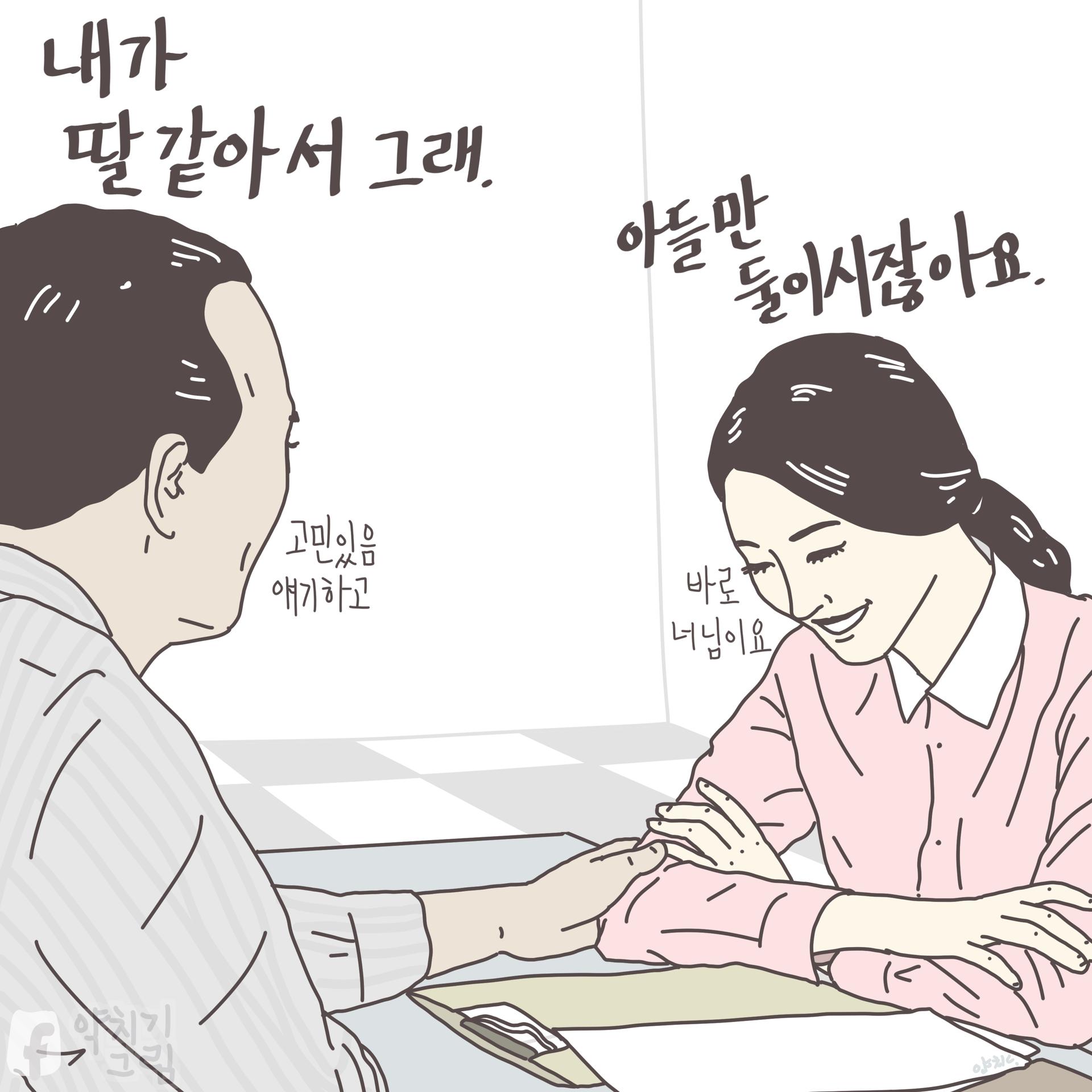
Boss: "You remind me of my daughter."Woman: "But you only have two sons."
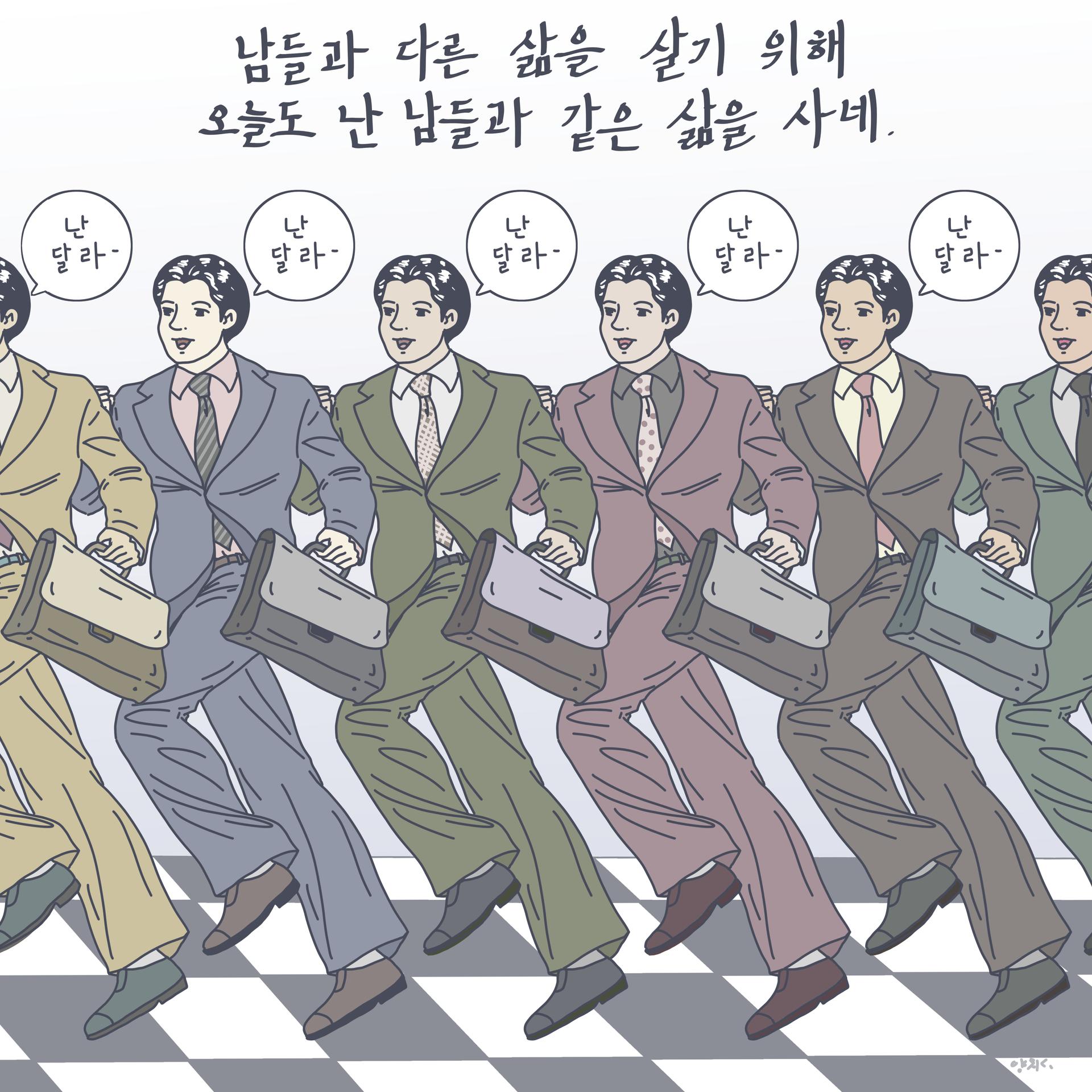
Artist Yang Kyung-soo believes South Korean office culture represents a mix of two things: Confucianism and military hierarchy.
The result is an atmosphere in which employees must “follow their boss’ orders without exception,” the 32-year-old says, adding the he doesn’t think office workers "have any freedom to express their own opinions at their jobs.”
This top-down dynamic is the subject of his popular single-frame illustration series called "Yakchjkii."
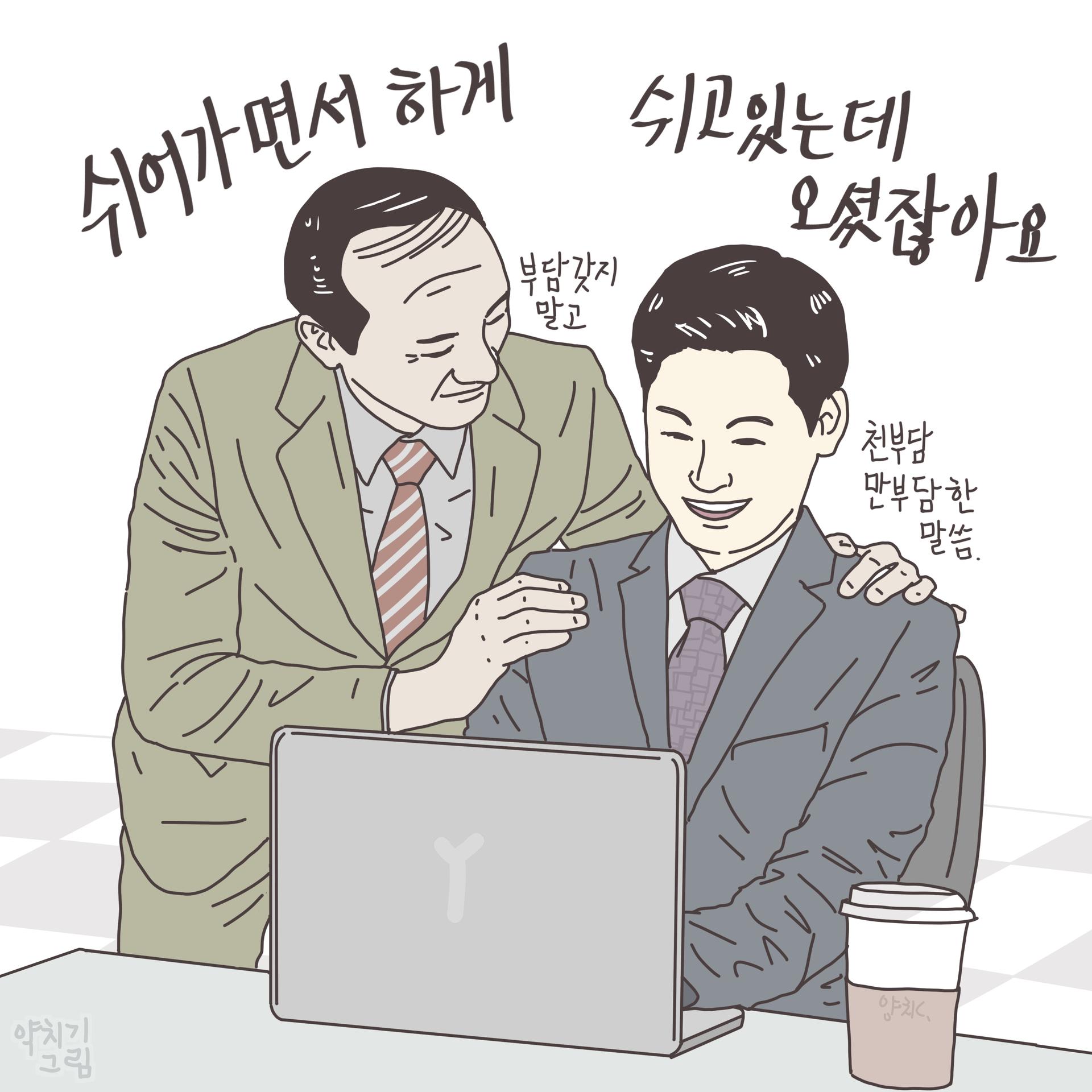
An authoritarian, passive-aggressive or even creepy boss is a figure many Korean office workers have to deal with, the artist says — or at least, that’s what he’s heard.
“I’ve never worked in an office myself, but I have a lot of friends who do." Yang says. “The only time they can open up about how they feel is after work, when they’re drinking. I ask them why can’t they tell their opinions to their bosses, but they tell me it's impossible.”
In Yakchjkii, Yang gives his office worker characters the power to say things that their real life counterparts could never get away with.
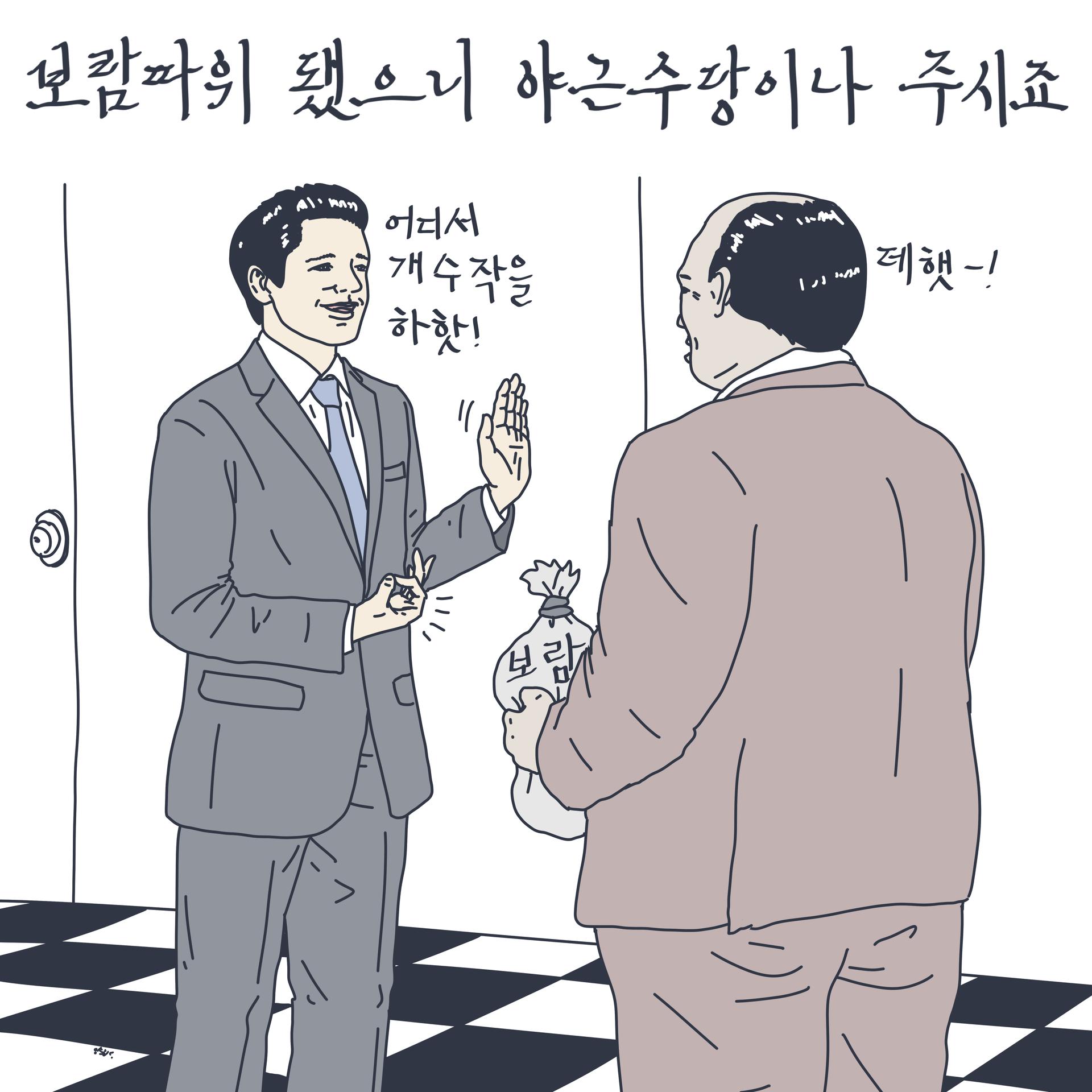
Despite the rigors of office life in South Korea, most people are still drawn to these types of jobs because they provide financial stability, the artist says. Not landing a position in a big company or as a civil servant can cause tension in some families, he says, including his own. Yang's own parents are artists but they have steady jobs. He studied fine arts at university and is now a freelancer. It's caused a rift in his own family that has never been repaired.
“We haven’t spoken for the past 10 years and I doubt they even know about how my career has gone,” he says.
Yang says he now makes a decent living as an artist. Recently his Yakchjkii drawings were published in book form. He also plans to expand the series to depict other occupations. But Yang says he’s not giving up on his first artistic passion — Buddhist-inspired paintings.
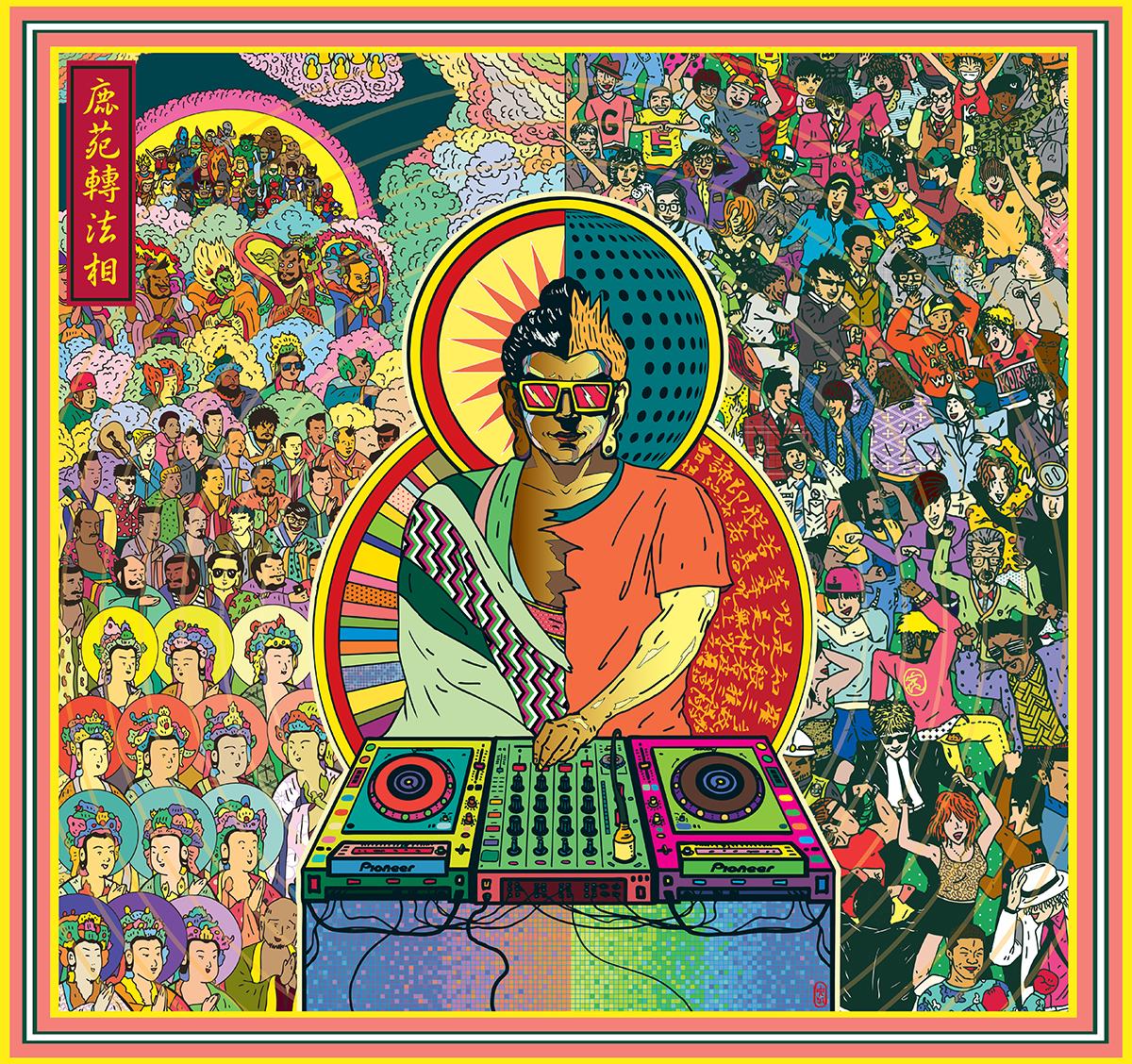
He doesn’t see any contradiction between creating that kind of art and making cartoons about Korean office culture.
“They both give me balance in my life,” he says. “Maybe one is serious and the other isn’t, but they are both a part of me.” Yang says that it’s perhaps Buddhism that makes him question whether he’s living to work or working to live. It’s something he thinks everyone should be contemplating.
We want to hear your feedback so we can keep improving our website, theworld.org. Please fill out this quick survey and let us know your thoughts (your answers will be anonymous). Thanks for your time!