Hajj 2011: Muslims Pilgrimage to Mecca (Photos)
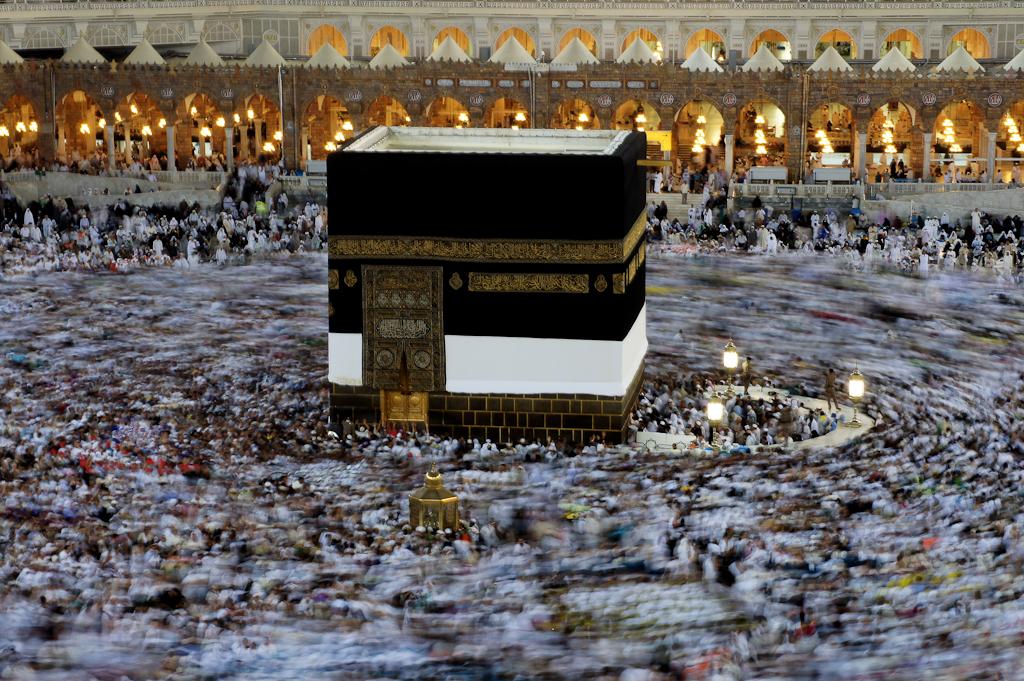
Muslim pilgrims reach to touch the golden doors of the Kaaba as they perform the walk around the Kaaba (Tawaf) at the Grand Mosque in the Saudi holy city of Mecca early morning. Nov. 9, 2010. The Kaaba, Islam’s holiest site which stands in the centre of Mecca’s Grand Mosque, contains the holy Black Stone which is believed to be the only piece remaining from an altar built by Abraham.
More than 2.5 million Muslims from around the world are expected to perform the hajj.
The hajj, an annual pilgrimage to Mecca, Saudi Arabia, is the largest pilgrimage in the world. More than 2.5 million Muslims are expected to perform the hajj, a religious duty to be carried out at least once in their lifetime by every able-bodied Muslim who can afford to do so.
The pilgrimage is a demonstration of solidarity between Muslim people, as well as their submission to Allah.
This year, the hajj falls between Nov. 4 to 9.
The hajj is associated with the life of Islamic prophet Muhammad and during the time pilgrims join processions and perform a series of rituals. The rituals include: walking counter-clockwise seven times around the Kaaba — the cube-shaped building which acts as the Muslim direction of prayer — running back and forth between the hills of Al-Safa and Al-Marwah, drinking from the Zamzam Well, standing vigil at Mount Arafat, and throwing stones in a ritual Stoning of the Devil.
At the end of hajj, pilgrims shave their heads, perform a ritual of animal sacrifice, and celebrate the three day global festival of Eid al-Adha.
Editors note: More photos to be added as the pilgrimage continues.
The World is an independent newsroom. We’re not funded by billionaires; instead, we rely on readers and listeners like you. As a listener, you’re a crucial part of our team and our global community. Your support is vital to running our nonprofit newsroom, and we can’t do this work without you. Will you support The World with a gift today? Donations made between now and Dec. 31 will be matched 1:1. Thanks for investing in our work!