Cairo court: Egyptian expats allowed to vote overseas
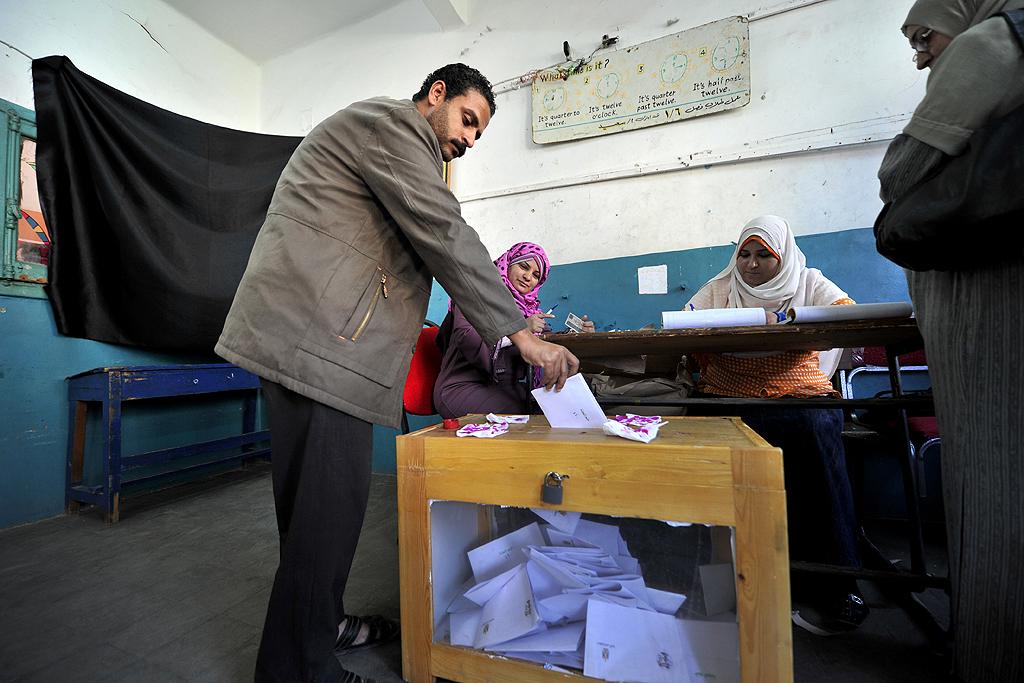
An Egyptian man casts his ballot at a polling station in Cairo on March 19, 2011. Egyptians got their first taste of democracy in a referendum to a package of constitutional changes after president Hosni Mubarak was forced to relinquish his 30-year grip on power last month in the face of mass street protests.
A Cairo court ruled on Tuesday that Egyptian citizens living overseas “should be allowed to vote” in the nation’s upcoming parliamentary elections, reported Reuters.
Egyptians head to the polls on November 28 to elect a new lower house of parliament – the first democratic vote since the ouster of former president Hosni Mubarak earlier this year.
Egyptian expats could play a key role in deciding the outcome of the parliamentary election if their votes are accepted and tallied later this fall.
Some estimates place the number of Egyptians living overseas as high as 10 million – a significant percentage of the country’s 80 million residents.
Egyptian expats were not allowed to vote in the 2005 presidential election.
Egypt’s ruling military council, which assumed power following Mubarak’s departure, also denied Egyptians living abroad the ability to vote in a decree issued earlier this year.
Local media reported that the army’s decision earlier this summer was based on logistical reasons at Egyptian embassies in addition to the possibility for voter fraud.
"Votes abroad would not reflect constituents true will because the existence of electorate blocs would facilitate vote buying," a military source told the independent Al-Masry Al-Youm newspaper at the time. "Egyptians abroad wouldn’t be interested to know who would represent them as much as the local citizens would."
The court ruling on Tuesday should allow Egyptians living abroad to vote in at least one diplomatic mission in their country of residence – if it is actually applied.
Youssef Zada, Egypt's consul general in New York, suggested on his Twitter feed Tuesday that the Cairo administrative court ruling may be non-binding. Zada also questioned whether the voting process could be set up in time.
The right to vote abroad was a key demand of demonstrators in Cairo’s Tahrir Square earlier this year.
An online campaign has since organized continuing protests outside Egyptian embassies and consulates in the months following the departure of Mubarak, from New York to London.
Many Egyptians believe that any transition to democracy has to include all Egyptian voices – especially the ones living abroad, whose monthly remittances make up a large chunk of the country’s economy.
"We are pumping millions of dollars into the country. So it is confusing that neither the officials nor the politicians are willing to help us get this long-denied right as is the case with expatriates of other countries," protester Abdul Gafour told Gulf News this week. "The election process cannot be complete and fair without allowing us to exercise our right to vote."