China arrests more than 10,000 for internet ‘crimes’
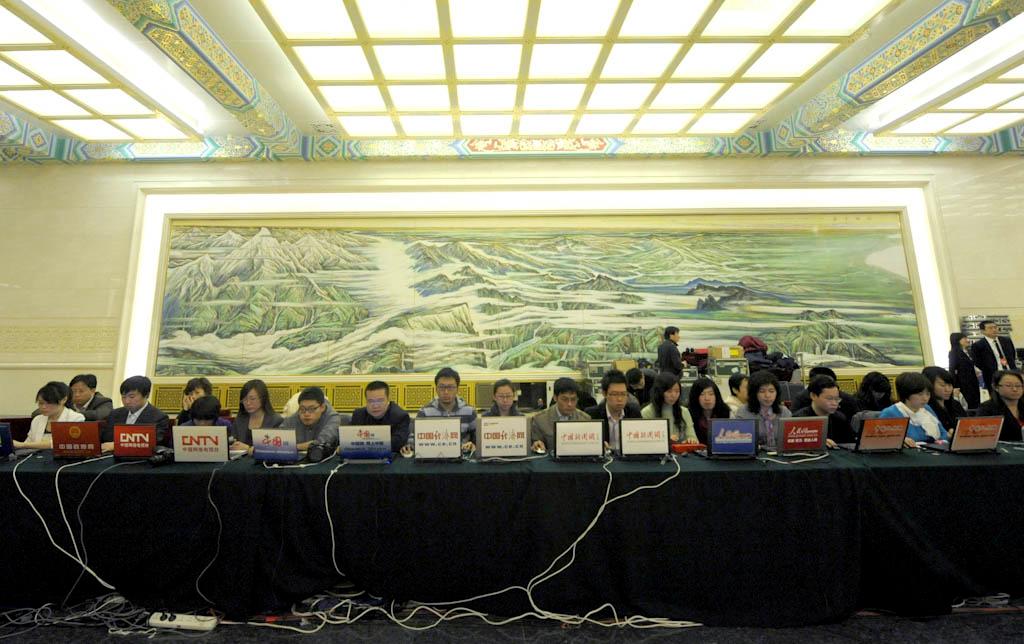
Journalists from Chinese websites work on computers during a press conference of the Third Session of the 11th National People’s Congress in Beijing on March 4, 2010. China is home to the world’s largest web population, with 384 million people online. The country has more than 81,000 Internet cafes with 4.7 million computers.
China has arrested over 10,000 people and identified 600 "criminal gangs" for cyber crimes as part of a major government sweep that began in June, BBC News reported.
The country's ministry of public security announced that 3.2 million "harmful" online messages were disposed of, reported China's Xinhua, news the communist authorities portrayed as a crime-fighting initiative but which some say is really intended to discourage dissent online.
The arrests targeted those believed involved with illegal online businesses, particularly weapons sales, counterfeiting agencies and organizations buying and selling people's personal data, said Xinhua.
More from GlobalPost: US agricultural exports to China become costly in times of drought
The news comes a week after China unveiled a new policy framework for its information development, according to the Council of Foreign Relations, one that may see policymakers pushing for a closer examination of online activity in order to prevent the possibility of being hit with cyber espionage attacks similar to those seen in Iran.
China's local governments, meanwhile, have also been busy shoring up the Great Firewall.
Beijing police recently arrested 5,007 people on internet-related charges and shut down 263 internet cafes in order to "protect the physical and mental health of young people," said BBC.
Authorities there also warned against any online "political rumor" or "attack" on Communist Party leaders, reported USA Today, possibly auguring even closer monitoring by the government.
China's 538 million Internet users are already subject to heavy filtering by the authorities and are unable to access sites like Google, Facebook, and YouTube, according to Freedom House's "Freedom on the Net" 2011 report on China.
The article you just read is free because dedicated readers and listeners like you chose to support our nonprofit newsroom. Our team works tirelessly to ensure you hear the latest in international, human-centered reporting every weekday. But our work would not be possible without you. We need your help.
Make a gift today to help us reach our $25,000 goal and keep The World going strong. Every gift will get us one step closer.