Prominent Black Lives Matter activist arrested
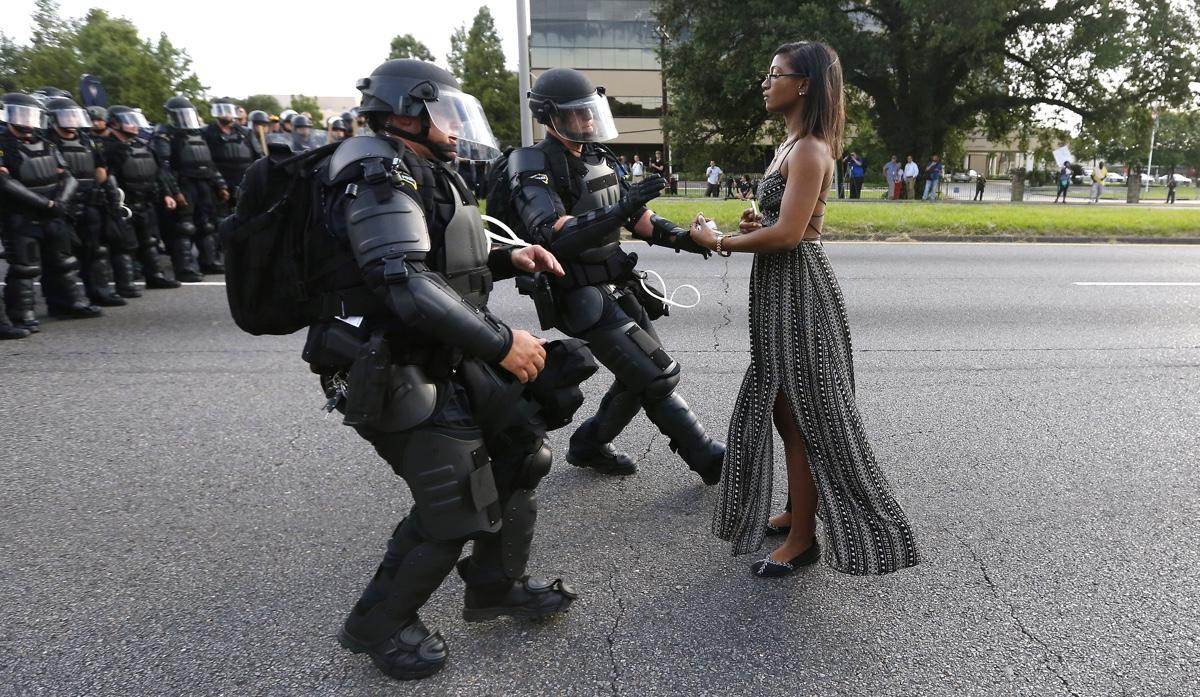
A demonstrator protesting the shooting death of Alton Sterling is detained by law enforcement near the headquarters of the Baton Rouge Police Department in Baton Rouge, Louisiana, on July 9, 2016.
A prominent Black Lives Matter activist livestreamed his own arrest at a late Saturday protest in Baton Rouge, Louisiana, as tensions continued to rise between American police and racial minority groups.
The demonstration was one of several in US cities following the death of two African-American men shot dead by white police officers, their dying moments captured in shocking video footage that went viral online. One of those killed was Alton Sterling, shot dead by a police officer in Baton Rouge, in the southern state of Louisiana.
Black Lives Matter activist DeRay McKesson traveled to Baton Rouge for the protest, and was walking on the side of a road livestreaming the demonstration on Periscope.
"Police have been provocateurs all night," he says in the video. "We aren't blocking the street or anything."
"No justice, no peace, no racist police!" activists chant, as police cruisers follow the group.
Then suddenly the video is interrupted. "City Police. You're under arrest – don't fight me," a voice says.
Another activist grabs the phone and continues the video, asking police why McKesson was detained.
Pictures on social media show McKesson with his hands behind his back being taken away by police.
A Louisiana state police officer told a reporter with The Advocate, a Baton Rouge publication, that McKesson was arrested because he had been blocking the road – even though in his video McKesson said there was no sidewalk on the road.
"We welcome the protests," the officer told The Advocate in a video posted online. "We wouldn't arrest people who are quietly protesting off the roadway."
Two activists who were witnesses told The Washington Post that it was a physically violent arrest.
"He was clearly targeted," said activist Brittany Packnett told the Post.
Local media said some 30 people where arrested in the Baton Rouge protests.
Hundreds of people marched late Saturday in several US cities protesting police abuses.
In St. Paul, Minnesota, several hundred protesters blocked a highway intersection for about three hours and hurled rocks and bottles at police, who were equipped with helmets, clubs and gas masks.
The officers used smoke grenades, pepper spray and tear gas to break up the crowd, and around midnight arrested protesters who refused to move.
We want to hear your feedback so we can keep improving our website, theworld.org. Please fill out this quick survey and let us know your thoughts (your answers will be anonymous). Thanks for your time!