Europe a new breeding ground for rare animals: Study
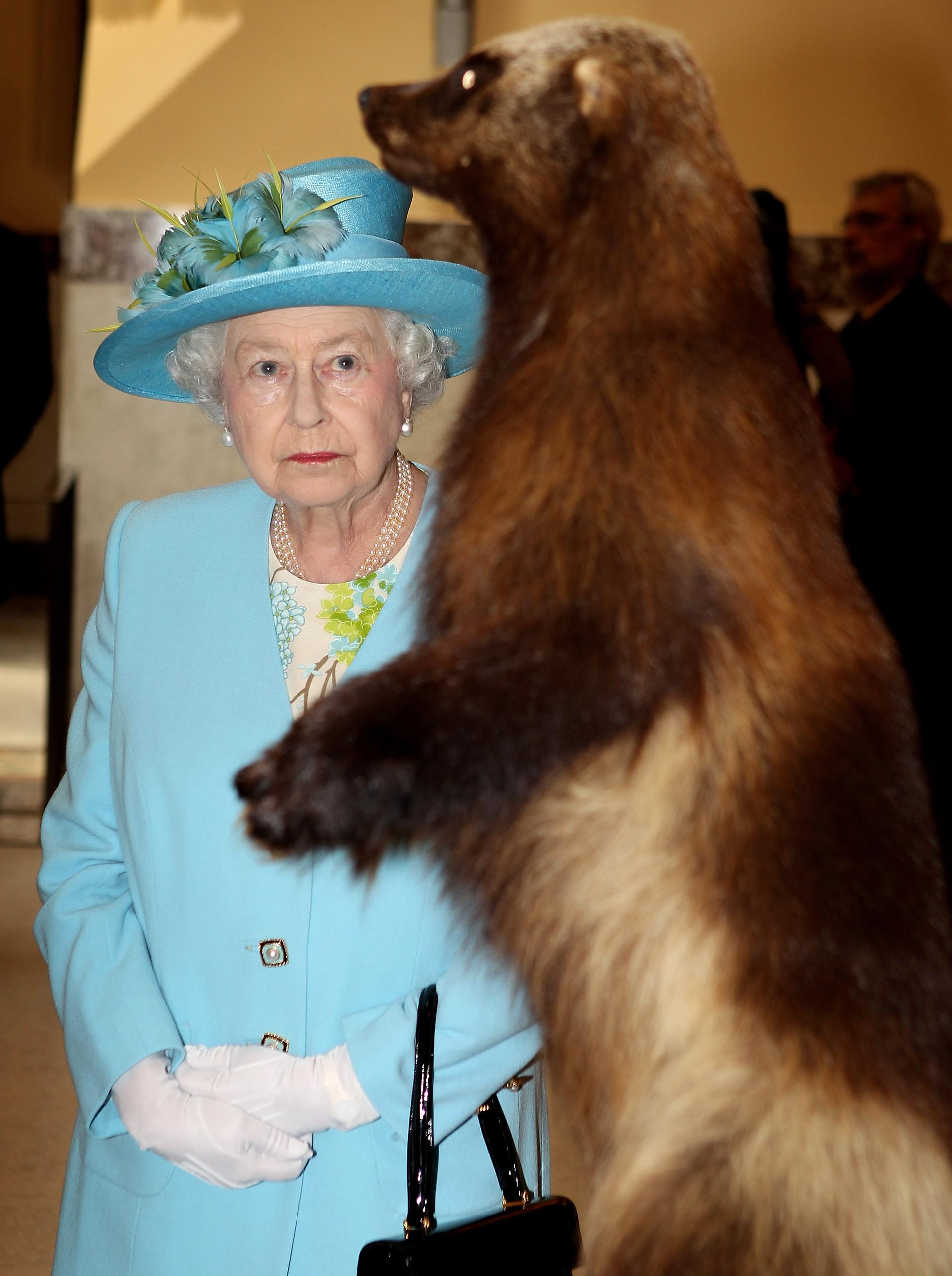
Britain’s Queen Elizabeth II looks at a statue of a wolverine. In Canada. But she might see one soon back in the United Kingdom, according to a new wildlife study that says rare animal species are making a comeback in Europe.
BERLIN, Germany — Europe is a comeback kid when it comes to conservation, according to a new study showing strong population growth for a number of rare animals on the continent.
Species that were struggling to survive there a half-century ago are flourishing today thanks to protection efforts and hunting restrictions, researchers said.
So what unusual animals are you most likely to encounter while tromping around Europe?
Well, the bison and beaver populations were among those showing the greatest increase from 1960 to 2005, according to the report, but the number of Iberian ibexes, Eurasian lynxes, and (yes) wolverines also shot up.
As for the birds, if you manage to look past all those storied Eurpean monuments, you are more likely to catch a glimpse rarities like the white-headed duck or the barnacle goose, the study said.
Frans Schepers of Rewilding Europe told BBC News that while people tend to "have this general picture of Europe that we've lost all our nature and our wildlife," the real takeaway from their success is "conservation actually works."
The study was commissioned by Rewilding Europe and conducted by the Zoological Society of London, Birdlife and the European Bird Census Council, said BBC.
Every day, reporters and producers at The World are hard at work bringing you human-centered news from across the globe. But we can’t do it without you. We need your support to ensure we can continue this work for another year.
Make a gift today, and you’ll help us unlock a matching gift of $67,000!