China’s foreign teachers face scrutiny after pedophile scare
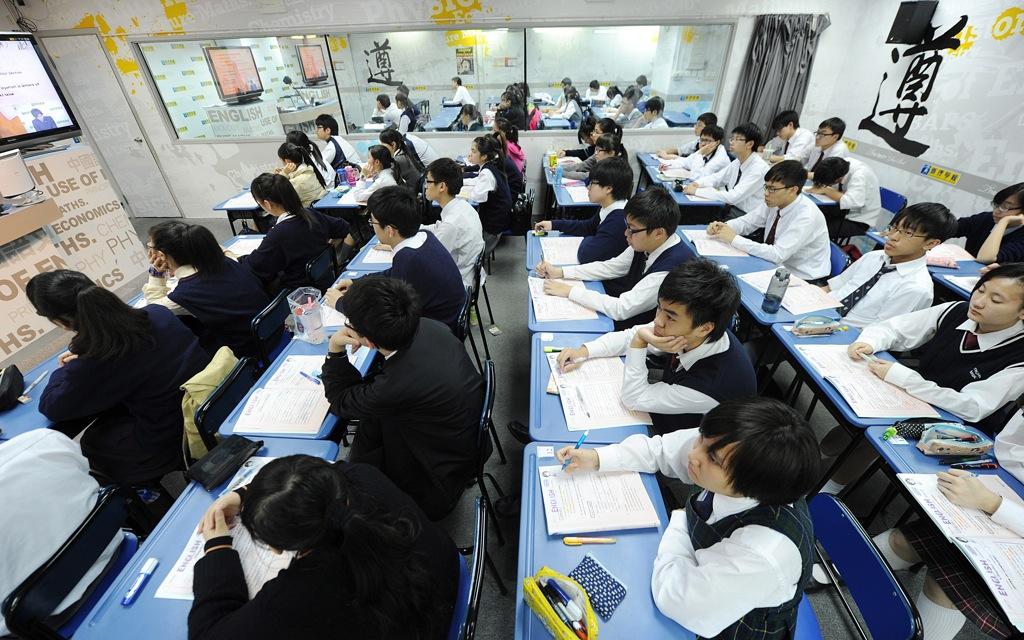
Teachers and pupils in Hong Kong, March 2011. Foreign teachers in China are facing closer scrutiny after two pedophile scares involving a British and an American man.
HONG KONG — It's a well-known fact among expats in China that it often takes little more than a foreign face to be hired as an English teacher, regardless of qualifications.
But foreign instructors in Chinese schools are facing increased scrutiny following revelations that a British man wanted in the UK in connection with the rape of a child and distribution of indecent images worked at a Beijing school.
Neil Robinson, 47, turned himself in to Beijing police late last week. He taught at an international school in the capital for four years, according to China Daily, before resigning last year due to "personal reasons."
This case was immediately followed by the discovery that an American convicted of child pornography offenses was working as an English teacher in Nanjing.
More from GlobalPost: French billionaire returns disputed statues to China
The scandals prompted the State Administration of Foreign Experts to issue an "urgent notice" instructing local authorities to supervise foreign teachers' "daily activities," the South China Morning Post said.
China's state-run media have issued calls for greater vigilance to ensure that foreigners with criminal records don't end up working in Chinese schools.
"We should be on guard and use the recent negative case to scare off those who want to come to our country with bad motives," said Xia Bing, director of the government's Department of Cultural and Educational Experts, in China Daily.
Many foreigners view teaching English in China as an easy, default option, as demand is high and schools and tutoring companies often do not require prior teaching experience. As a result, it attracts a motley crew.
"Expect more of this," says Bill Bishop, a Beijing-based commentator, in his Sinocism newsletter. "Most of the foreign schools and English training centers do not do any kind of background checks."
China would be wise—and entirely within its rights—to crack down.
The story you just read is available for free because thousands of listeners and readers like you generously support our nonprofit newsroom. Every day, reporters and producers at The World are hard at work bringing you human-centered news from across the globe. But we can’t do it without you: We need your support to ensure we can continue this work for another year.
Make a gift today, and you’ll get us one step closer to our goal of raising $25,000 by June 14. We need your help now more than ever!