Public radio’s longest-running daily global news program.
©2026 The World from PRX
PRX is a 501(c)(3) organization recognized by the IRS: #263347402.
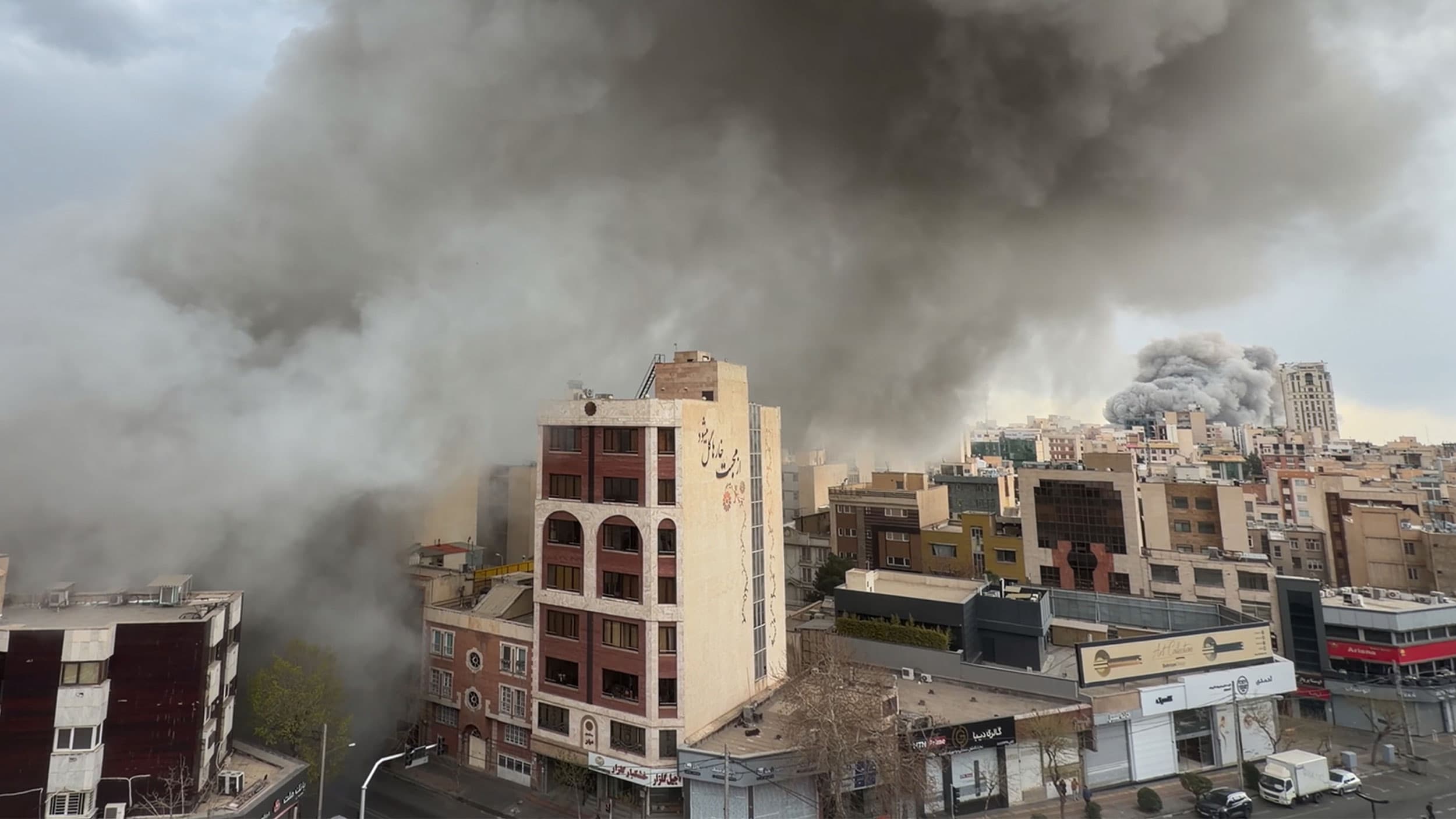
Israel and the US launched strikes on Iran on Saturday. Iran responded by striking Israel and US bases across the Middle East, including in Kuwait, Bahrain Qatar and the UAE. Follow The World for the latest updates.
Plumes of smoke from two simultaneous strikes rise over Tehran, Iran, March 2, 2026.
Follow The World for the latest updates on the unfolding war between Iran, Israel and the US.
The war in the Middle East spiraled further Monday as Israel and the US pounded Iran. Tehran and its allies hit back against Israel, neighboring Gulf states and targets critical to the world’s production of oil and natural gas.
The intensity of the attacks, the killing of Iranian Supreme Leader Ayatollah Ali Khamenei, and the lack of any apparent exit plan indicated the conflict would not end anytime soon. It was already having far-reaching consequences: Safe havens in the Mideast like Dubai have seen incoming fire; hundreds of thousands of airline passengers are stranded around the globe; oil prices shot up and US allies pledged to help stop Iranian missiles and drones.
Iran has long threatened, if attacked, to drag the region into total war, including targeting Israel, the Gulf Arab states and the flow of crude oil crucial for global energy markets. All of these came under attack on Monday.
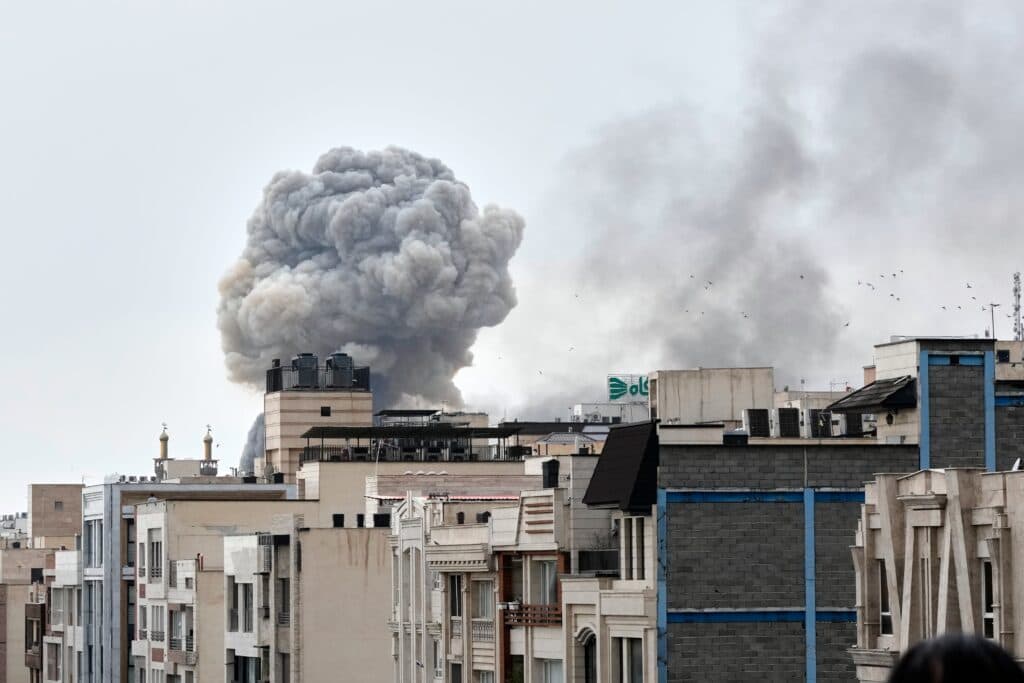
The chaos of the conflict became apparent when the US military said Kuwait had “mistakenly shot down” three American F-15E Strike Eagles while attacks from Iranian aircraft, ballistic missiles and drones were underway. US Central Command said all six pilots ejected safely and are in stable condition.
Israel and the US bombed Iranian missile sites and targeted its navy, claiming to have destroyed its headquarters and multiple warships. As several airstrikes hit Iran’s capital of Tehran, the top security official Ali Larijani vowed on X: “We will not negotiate with the United States.”
The death toll grew on all sides. The Iranian Red Crescent Society said that the US-Israeli operation has killed at least 555 people. In Israel, where several locations were hit by Iranian missiles, 11 people were killed. The Iranian-backed Hezbollah militant group also targeted Israel, which responded with strikes on Lebanon, killing more than two dozen people. Meanwhile, four American troops have been killed, and three people were reported killed in the United Arab Emirates and one each in Kuwait and Bahrain.
In Kuwait City, fire and smoke rose from inside the US Embassy compound, shortly after the US issued a warning to Americans to take cover and stay away from the complex. There were no immediate reports on damage or casualties.
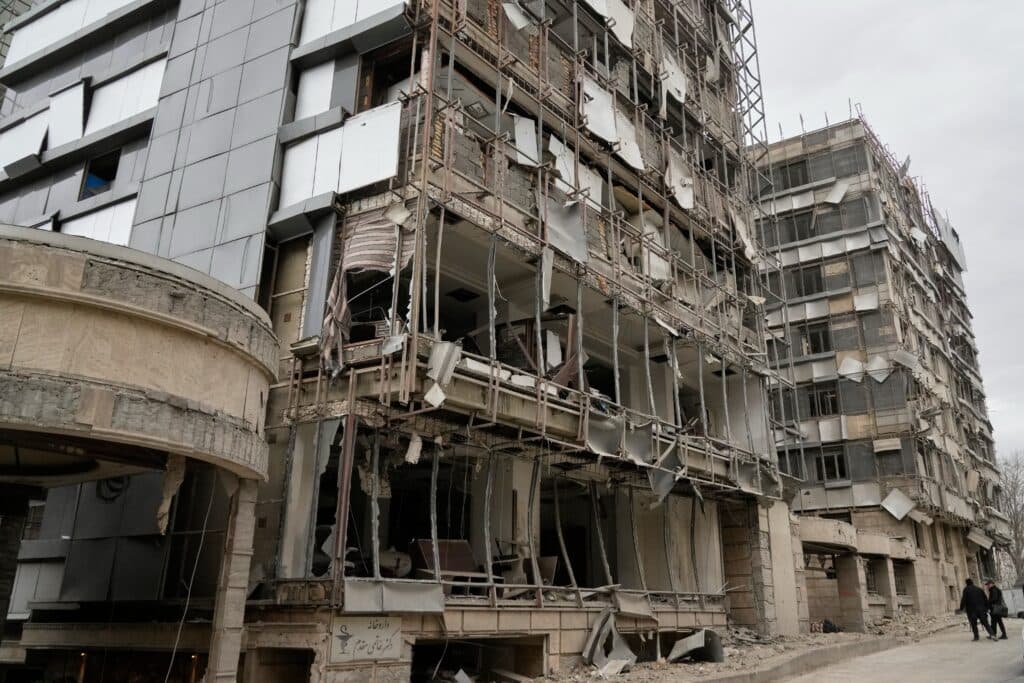
Iran targeted the lifeblood of the area’s economy.
With world markets already rattled by the fighting, QatarEnergy said it would stop its production of liquefied natural gas, taking one of the world’s top suppliers off the market. It offered no timeline for restoring its production. European natural gas prices surged by 40% in response.
Meanwhile, Saudi Arabia’s Ras Tanura oil refinery came under attack from drones, with defenses downing the incoming aircraft, a military spokesman told the state-run Saudi Press Agency. The refinery has a capacity of over half a million barrels of crude oil a day.
A drone also targeted an oil tanker in the Gulf of Oman, killing one mariner, the sultanate said, while debris fell on an oil refinery in Kuwait.
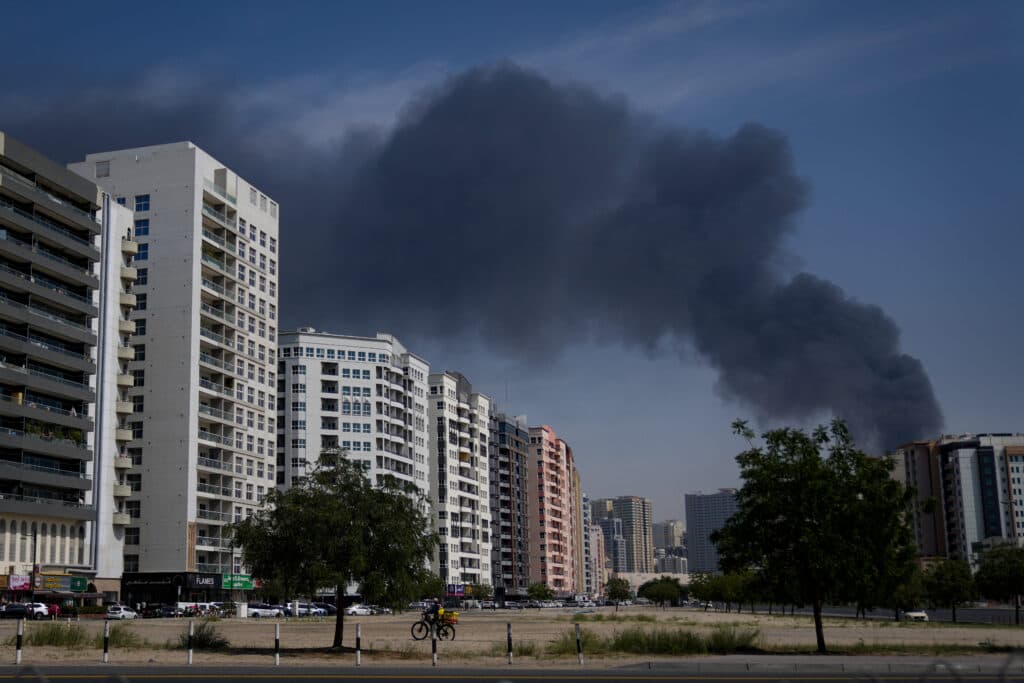
Several ships have been attacked in the Strait of Hormuz, the narrow mouth of the Persian Gulf through which a fifth of all oil trade passes and where Iran has threatened attacks.
“The attack on Saudi Arabia’s Ras Tanura refinery marks a significant escalation, with Gulf energy infrastructure now squarely in Iran’s sights,” said Torbjorn Soltvedt, an analyst at the risk intelligence company Verisk Maplecroft. “An extended period of uncertainty lies ahead.”
The region is also a hub for air travel, and passengers have been stranded around the world as carriers based in the Gulf grounded flights. But long-haul carriers Etihad and Emirates restarted limited flights Monday.
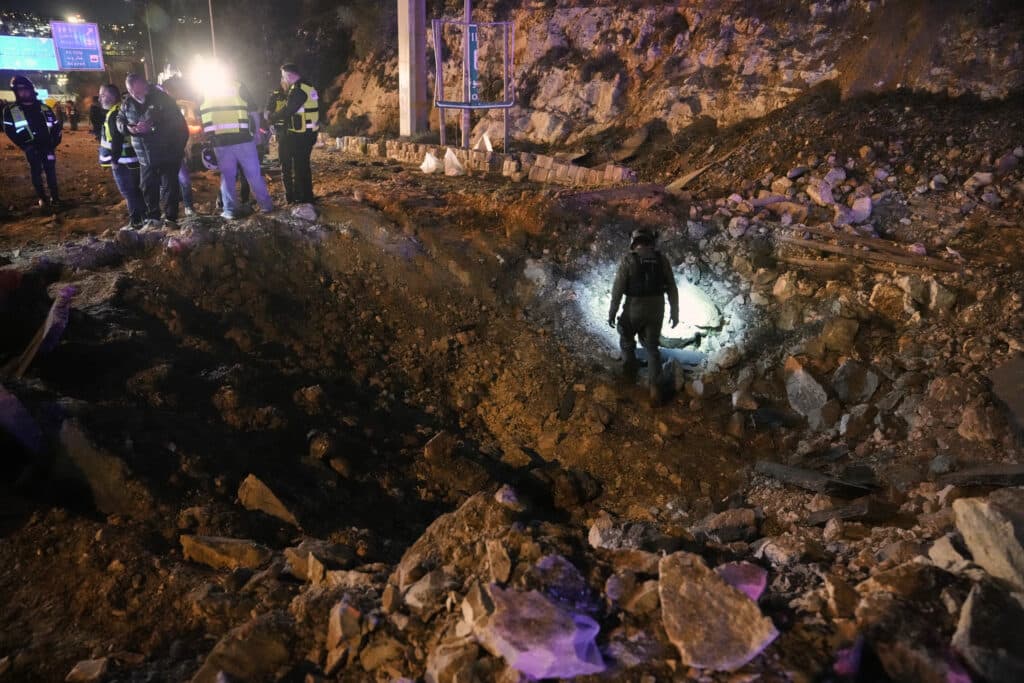
Reza Najafi, Iran’s ambassador to the International Atomic Energy Agency, told reporters that airstrikes targeted the Natanz nuclear enrichment site on Sunday.
“Their justification that Iran wants to develop nuclear weapons is simply a big lie,” he said.
Israel and the US have not acknowledged strikes at the site, which the US bombed in the 12-day war between Iran and Israel in June. Israel has said that it is targeting the “leadership and nuclear infrastructure.”
Iran has said it has not enriched uranium since June, though it has maintained its right to do so while saying its nuclear program is entirely peaceful.
Hezbollah said it fired missiles on Israel early Monday in response to Khamenei’s killing and “repeated Israeli aggressions.” It was the first time in more than a year that the militant group has claimed an attack.
There were no reports of injuries or damage.
Lebanon’s government said Hezbollah’s overnight attacks against Israel were “illegal” and demanded the group hand over its weapons.
Rescue services in Israel said several locations have been hit by Iranian missiles, including Jerusalem and a synagogue in Beit Shemesh. In all, 11 people have been killed.
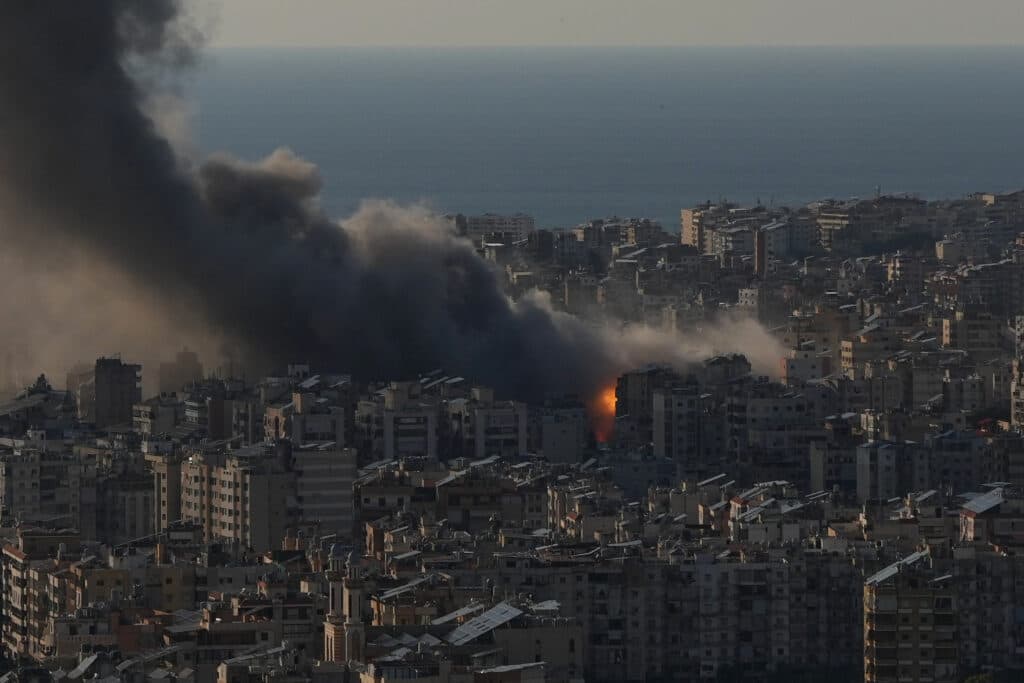
Israel retaliated with strikes on Lebanon, killing at least 31 people and wounding 149 others, according to Lebanon’s Health Ministry. Associated Press journalists in Beirut were jolted awake by loud explosions that shook buildings and shattered windows.
Iran’s proxies were a chief concern for American and Israeli officials before they moved ahead with strikes over the weekend.
The Iraqi Shia militia Saraya Awliya al-Dam claimed a drone attack Monday targeting US troops at the airport in the Iraqi capital, Baghdad. It claimed another drone attack on Sunday against a US air base in Iraq’s north.
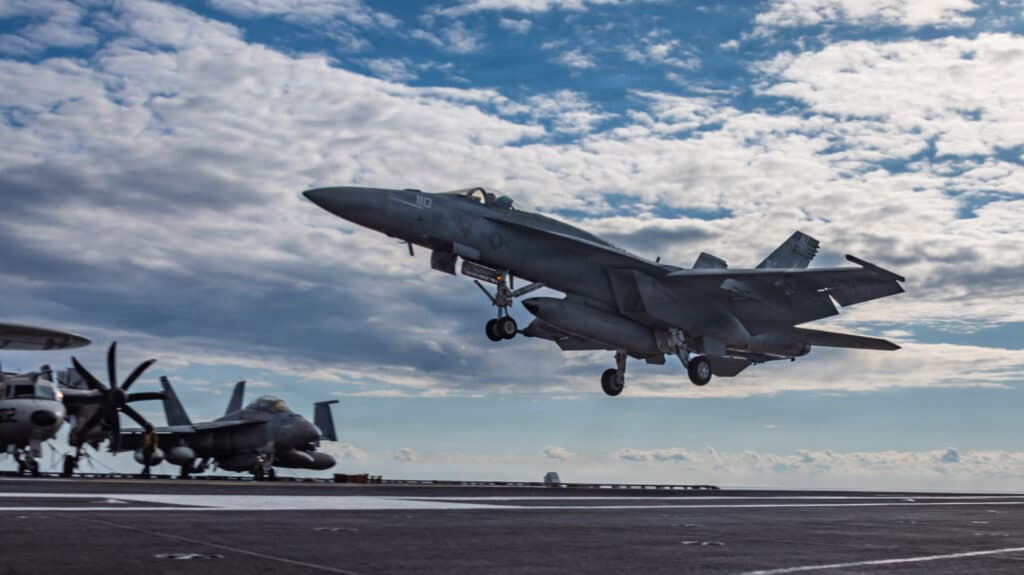
The US military said B-2 stealth bombers struck Iran’s ballistic missile facilities with 2,000-pound bombs. US President Donald Trump said on social media that nine Iranian warships had been sunk and that the Iranian navy’s headquarters had been “largely destroyed.”
“Combat operations continue at this time in full force, and they will continue until all of our objectives are achieved,” Trump said in a video message Sunday.
Defense Secretary Pete Hegseth said Monday that the US is not engaged in a nation-building effort in Iran, and there is a clear mission. “This is not Iraq. This is not endless,” Hegseth said.
He didn’t give specifics when asked about the ultimate goals of the operation, how long it might last or what success would look like, saying doing so would disadvantage US forces.
It’s not completely clear what the US objectives are. In announcing the initial strikes, Trump referred to the threat posed by Iran’s nuclear and missile programs. But he also listed various grievances dating back to Iran’s Islamic Revolution in 1979 and urged Iranians to “take over” their government. There have been no signs yet of any such uprising.
The American leader, however, has also signaled he would be open to dialogue with Iran’s new leadership — which could be chosen soon.
In an indication that the conflict could draw in other nations, Britain, France and Germany said Sunday they were ready to work with the US to help stop Iran’s attacks.
Early Monday, Cyprus said a drone “caused limited damage” when it hit a British air base there.
Tehran’s streets have been largely deserted with people sheltering during airstrikes. The paramilitary Basij force, which has played a central role in crushing recent nationwide protests, set up checkpoints across the city, according to witnesses.
In the northern Iranian city of Babol, a student, speaking anonymously over concerns of retribution, told the AP that armed riot police were on the streets Saturday night and into the early hours of Sunday after the death of Khamenei.
“We don’t know whether to be happy about the elimination of the criminals who oppress us or to remain silent in the face of the US and Israel’s war against the country and its interests and the terror that is taking place,” he said.
Lidman reported from Tel Aviv, Israel, and Magdy from Cairo. Associated Press writers Bassem Mroue and Sally Abou AlJoud in Beirut contributed to this report.