Public radio’s longest-running daily global news program.
©2026 The World from PRX
PRX is a 501(c)(3) organization recognized by the IRS: #263347402.

Tens of thousands of travelers remain stranded around the globe after several Middle Eastern countries closed their airspaces following US and Israeli strikes on Iran over the weekend, triggering widespread cancellations and delays at some of the world’s busiest airports. The conflict has sparked one of the most significant disruptions to air travel in recent history, affecting major international hubs and sending ripples through global passenger and cargo networks.
A plume of smoke caused by an Iranian strike is seen in the background as Emirates planes are parked at Dubai International Airport after its closure in Dubai, UAE, March 1, 2026.
When Adelina Pietraru arrived at Dubai International Airport on Saturday, her trip began like any other day of travel.
“We got to the airport, went through security as usual. Everything was normal,” she said.
The Romanian-born university student had been vacationing with her mother in the United Arab Emirates before returning to school for her final semester. After going through security, the two headed to their gate. They sat around for a while. Then, a delay was announced.
“We waited for about half an hour. And then, they weren’t saying anything,” Pietraru said. “I went to check with one of the stewardesses, and she told me that the flight had been canceled and they didn’t have any further information at that point.”
Pietraru then began hearing rumors from other travelers about an attack in Iran. When she checked again with airline staff, they confirmed the news: All flights out of the airport were canceled indefinitely.
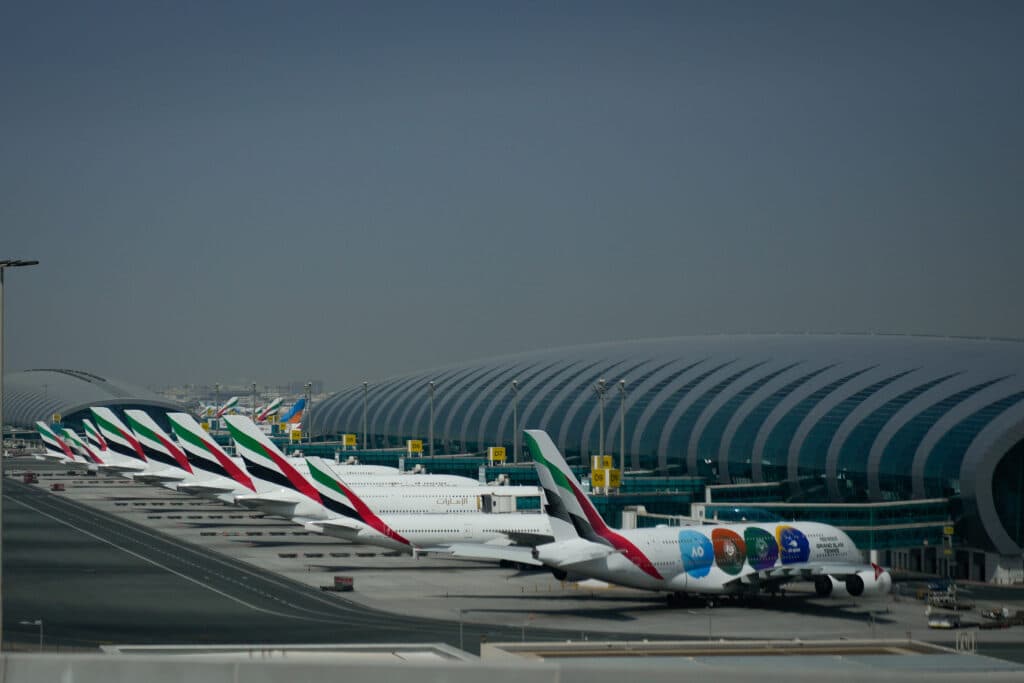
Travelers have been stranded around the globe after several Middle Eastern countries closed their airspaces following US and Israeli strikes on Iran over the weekend. They were followed by Iranian attacks on Israel and US bases in Gulf Arab countries, including the UAE, Kuwait and Bahrain.
Several other passengers described similar experiences in the aftermath of the strikes — that they were unaware war had broken out in the region until their flights were abruptly grounded.
“That was shocking,” said Neetu Manocha, a Swiss resident who had also been visiting Dubai with her family.
Manocha had already packed her children’s bags and was preparing to leave for the airport when she learned of the escalating conflict. She spent hours consulting an airline chatbot, searching for alternatives, before concluding that her family would likely be stuck in Dubai for days.
The chatbot advised her that if they went to the airport, they could receive hotel vouchers while waiting for rebooking. Despite concerns about being caught outside during retaliatory strikes, they decided to go to the airport.
“It was risky, but still, we don’t have a choice,” she said. “So, we took a metro to go to the airport, and there we saw that the airport was closed.”
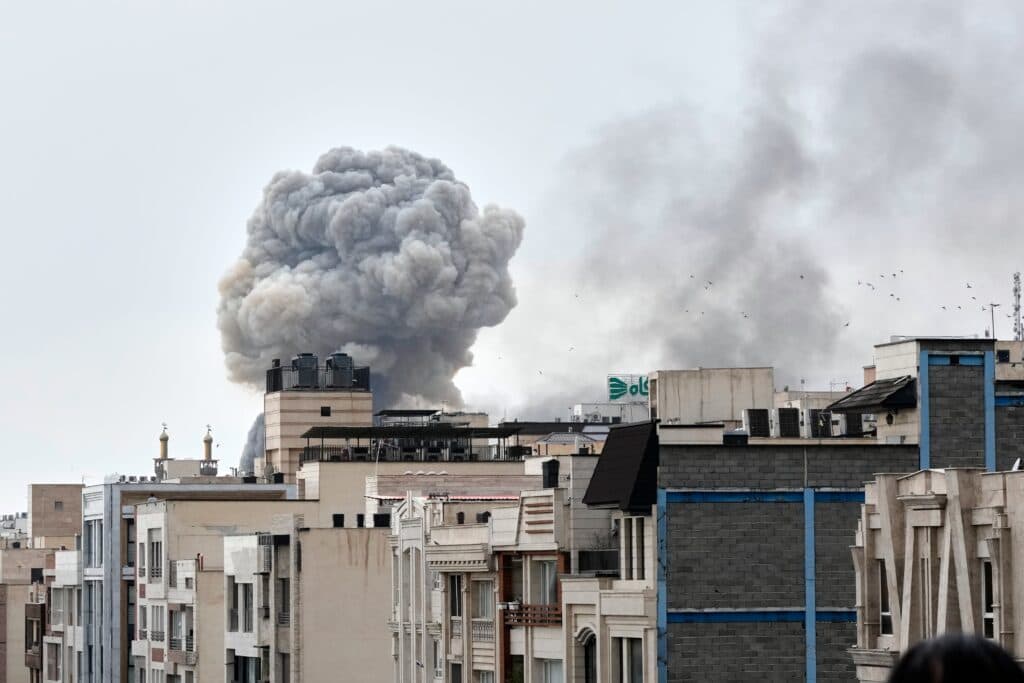
Dubai International Airport had closed after being struck during Iran’s retaliation. Videos circulating on social media show chaotic scenes inside terminals in the aftermath of the strike, with alarms sounding and passengers fleeing amid shattered glass and debris. Local officials said several airport staff were injured and evacuations were conducted.
Major hubs across the United Arab Emirates, Bahrain and Kuwait appeared to have been targeted in response to their hosting of US military bases. As a result, the Middle East’s three major airline carriers — Emirates, Qatar Airways and Etihad, often referred to as the “ME3” — shut down or severely restricted flights.
According to the aviation analytics firm Cirium, roughly 11,000 flights have been cancelled in the past three days.
“We know that the Middle Eastern carriers are transporting through their hubs in Dubai, Abu Dhabi and Doha around 130,000 passengers per day,” said Mike Arnolt, an air travel analyst with Cirium. “So, it’s a huge volume of passengers.”
Over the past 30 years, airlines in the region have become central players in global aviation, connecting long-haul travelers through Gulf hubs. As a result, the cancellations left passengers stranded not only in the Middle East, but also in the US, Australia and especially India.
“If you are from South Asia and you need to get to the United States, there is basically one option, and that is to go with Emirates, Etihad or Qatar,” Arnolt said. “The Indian diaspora relies on these airlines, so they’re particularly impacted.”
Beyond passenger travel, Middle Eastern airlines also play a vital role in global supply chains. Jonathan Mellink of the air cargo analytics firm Rotate said the closure of regional airspace reduced international cargo capacity by nearly 20%.
“The Middle East is home to some of the largest air cargo carriers in the world,” Mellink said. “These carriers play a pivotal role in the movement of cargo between the Middle East and Europe, Asia and Europe — basically they’re so big that they’re global carriers.”
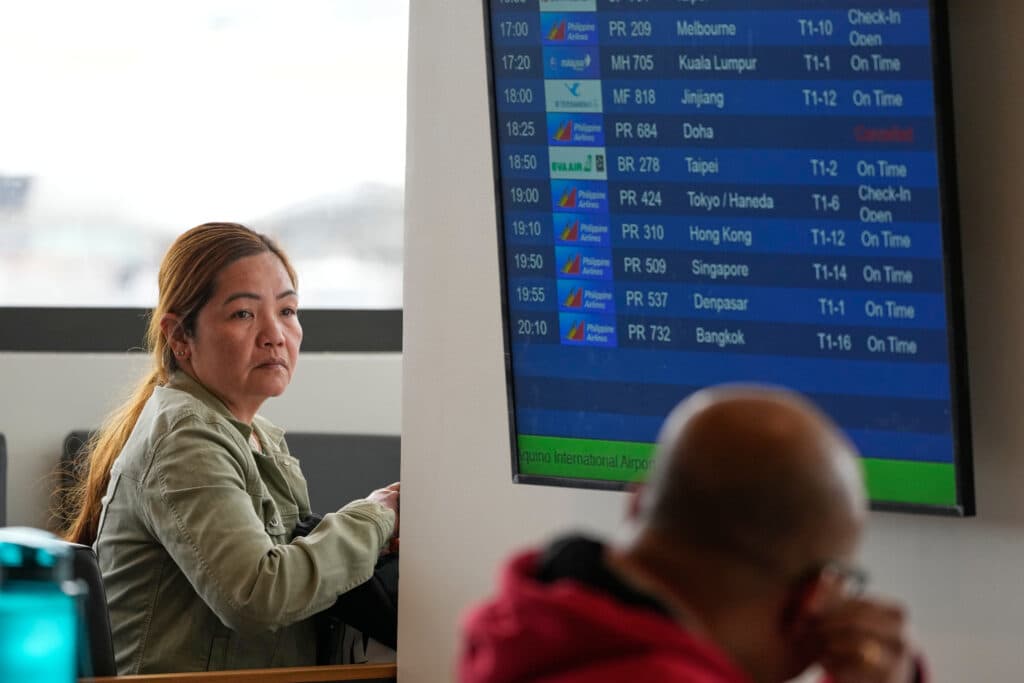
Mellink said the suspension of flights, combined with rising fuel costs linked to the conflict, would likely drive up shipping prices.
“Prices will remain elevated for a while, and that mostly has to do with fuel,” he said. “Fuel prices take up to 40% of the cost of a ticket. So, you will see prices getting elevated, whether that is at the gas station for your car, or in your flight ticket, or in your cargo capacity.”
Some airlines in the region began resuming limited operations on Monday, but analysts cautioned that the conflict’s volatility could quickly change conditions, throwing schedules back into turmoil.
But even if hostilities ease, industry experts warn that delays and cancellations are likely to persist as airlines work to reposition aircraft, crews and stranded passengers, which means the travel chaos could go on for days.
