Public radio’s longest-running daily global news program.
©2026 The World from PRX
PRX is a 501(c)(3) organization recognized by the IRS: #263347402.

Along Greenland’s coastline, small villages became ghost towns decades ago after the Danish government relocated their populations to larger cities. In some, though, communities have been reclaimed as summer getaways for former residents and their descendants.
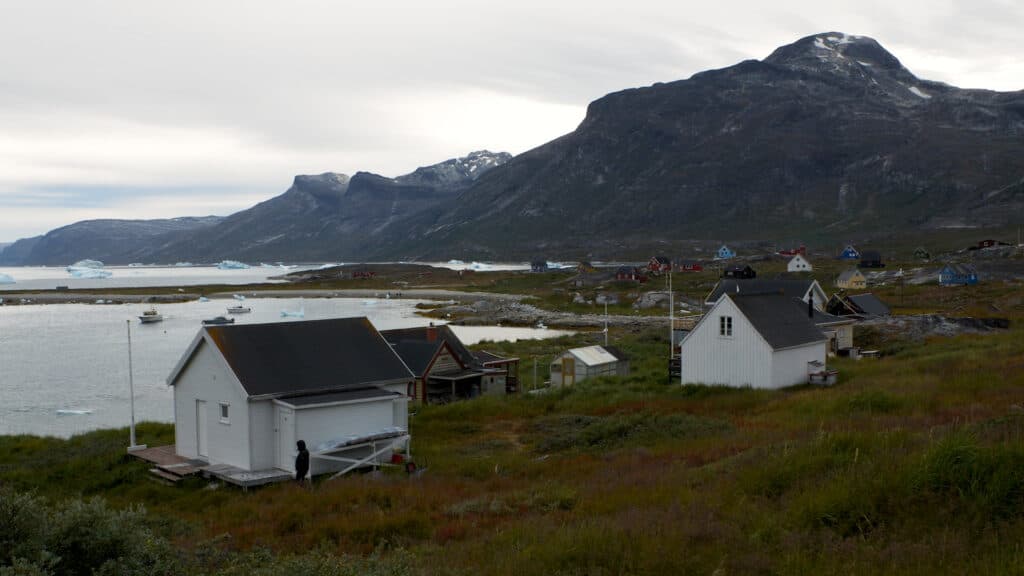
An old fish processing plant on Qoornoq in Greenland. Still image taken from a video.
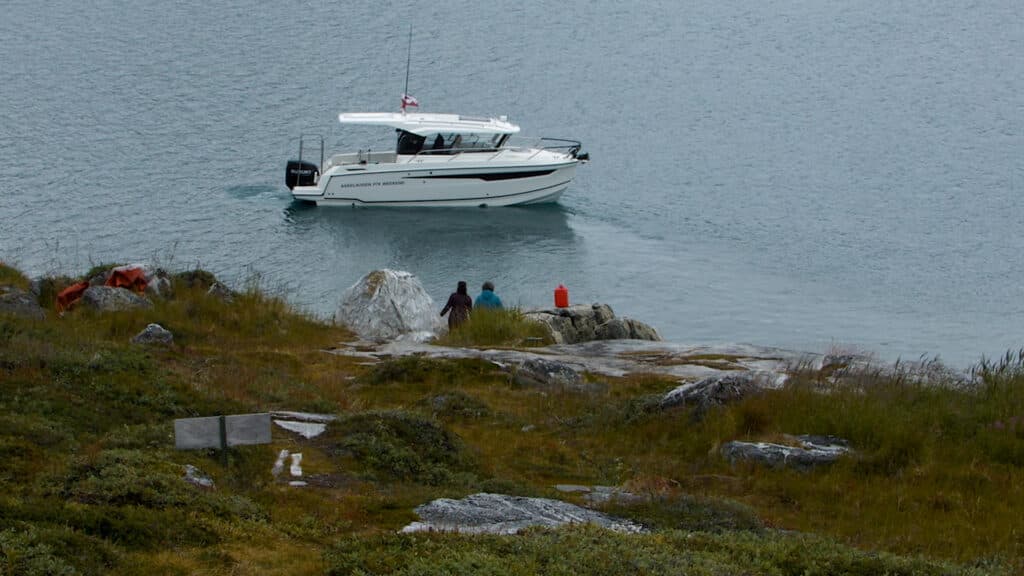
The island of Qoornoq is about an hour’s sail from Greenland’s capital, a dot of land sitting in the iceberg-studded waters of the Nuuk fjord.
The easiest way to get there is via water taxi advertising visits to an “abandoned” settlement. But when you scramble off the boat onto a rocky stretch of coast, the island doesn’t look so abandoned. There are a few dozen tidy A-frame houses perched on the rocks, some with solar panels and Greenlandic flags waving.
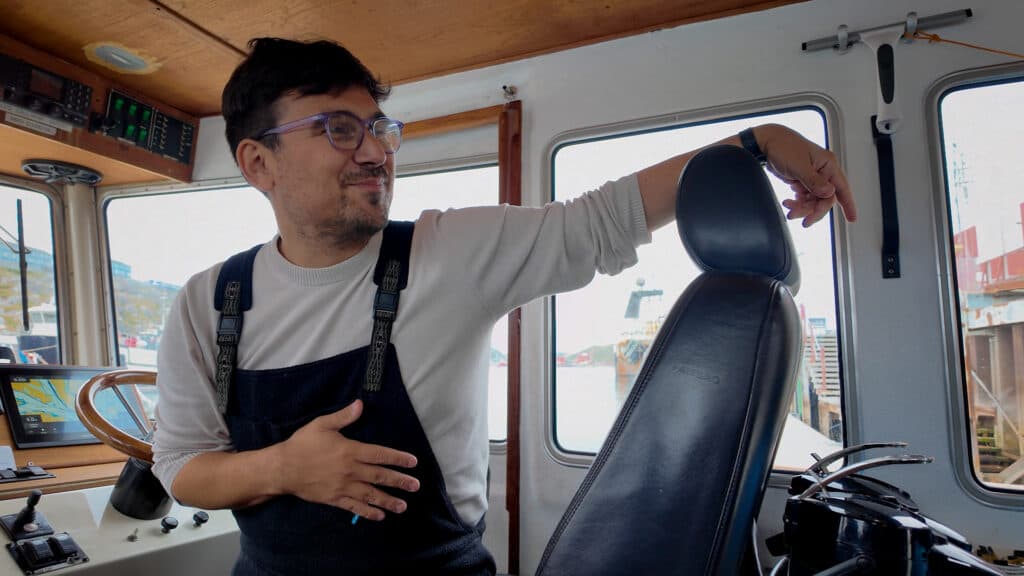
Qoornoq is one of the villages that was shut down as part of modernization efforts that began in the 1950s and ‘60s, when the Danish government wanted to consolidate the population. But in recent decades, it’s become a popular summer spot for former residents and their descendents.
“Many of the people here, we live in Nuuk, so we use the houses here as summer cottages,” Victoria Martins explained. “We have [solar electricity] and freezers, so I can live here for many months.”
Martins was born and raised on the island, but her parents were forced to leave in 1971, when the government shut down the community.
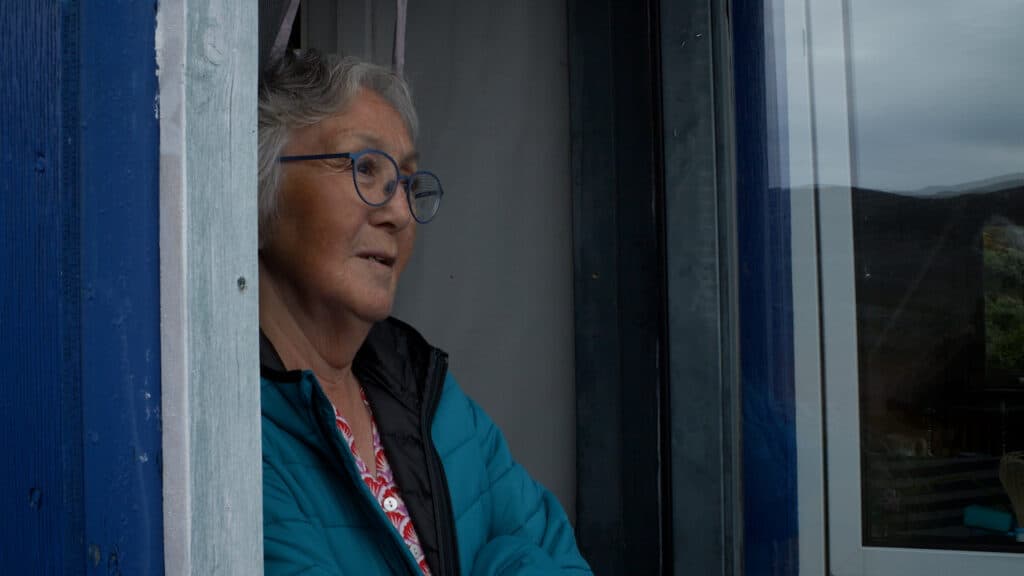
Her bright blue house has solar panels and spectacular views of the surrounding mountains, but no running water or plumbing. There are no stores or hospitals either, so Martins said she couldn’t live there full time even if she wanted to.
“Most of the people who lived here before miss [being] here,” she said.
Ujammiugaq Engell, the head of the Nuuk Local Museum, said that a lot of these settlements were shut down to consolidate a workforce in larger cities.
“Some of them were shut down more forcefully than others,” Engell said. “In some places, they just stopped coming out with resources for the stores. And that was what happened with Qoornoq, for instance.”
The general store was shut down, as were the school and church. Mail deliveries stopped.
But, Engell said, the island was never totally abandoned.
“The funny thing about Qoornoq is there were always people.”
Some residents with the means traveled between the island and Nuuk, she said, while others just never left.
“The same thing happened in some of the other settlements that were closed down in the ‘50s and ‘60s and ‘70s, up and down all of Greenland’s coasts,” Engell said.
With no stores on Qoornoq, hunting and fishing have become especially popular. Engell said the fact that people are still living there speaks to their resilience. But the resettlement policies also have a dark side.
At the museum where she works, she pointed out a photo of a huge, modern apartment building hanging on the wall. She said that it was built in Nuuk to house people relocated from Qoornoq and other small settlements. But it was nothing at all like the places they came from.
“We can almost physically see where it went wrong,” she said. “How people who had previously been either the greatest hunter or the greatest fisher were completely stripped of that identity and had to sort of scramble to find a new one, and find a place in the big city where they did not feel at home, where they didn’t feel welcome.”
The trauma caused by relocation is seen as part of the reason why Greenland has high rates of depression, alcohol abuse and suicide.
“We’re still dealing with a lot of that trauma. We’re still dealing with people who feel a sense of not belonging. And that has been passed down into generations,” Engell said.
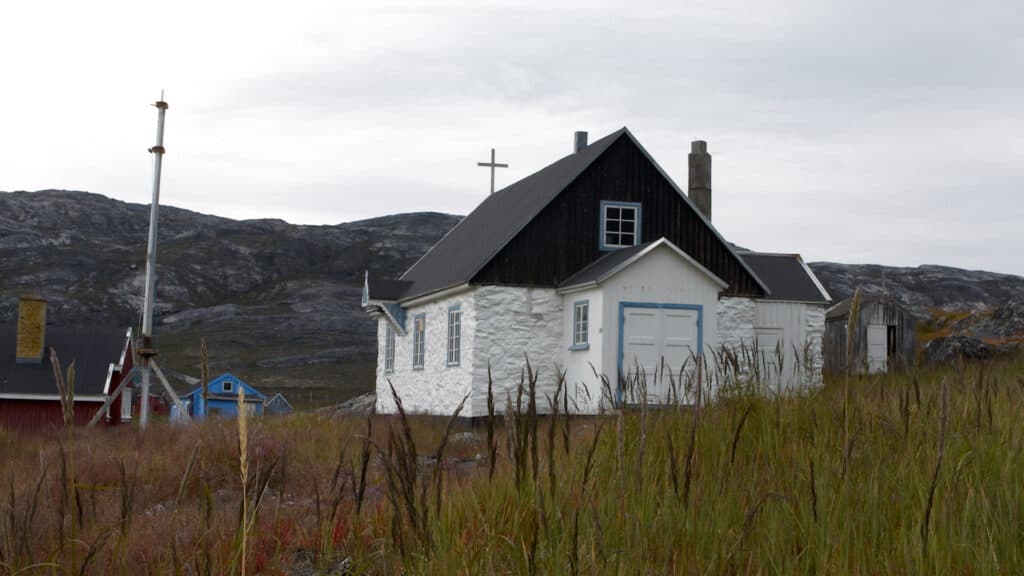
Today, dozens of small settlements are still scattered around Greenland, some with as few as a handful of residents. Official government relocation policies are a thing of the past. But there is an ongoing debate about how to keep these communities running, and fund infrastructure like schools that serve just a few kids.
For now, in Qoornoq, it’s the residents themselves who are running things.
Victoria Martins relies on trips back to Nuuk for food.
Neighbors Niikolaj Mikiassen and Susanne Kreutzmann Pedersen sometimes bring her supplies when they make a trip back to Nuuk themselves.
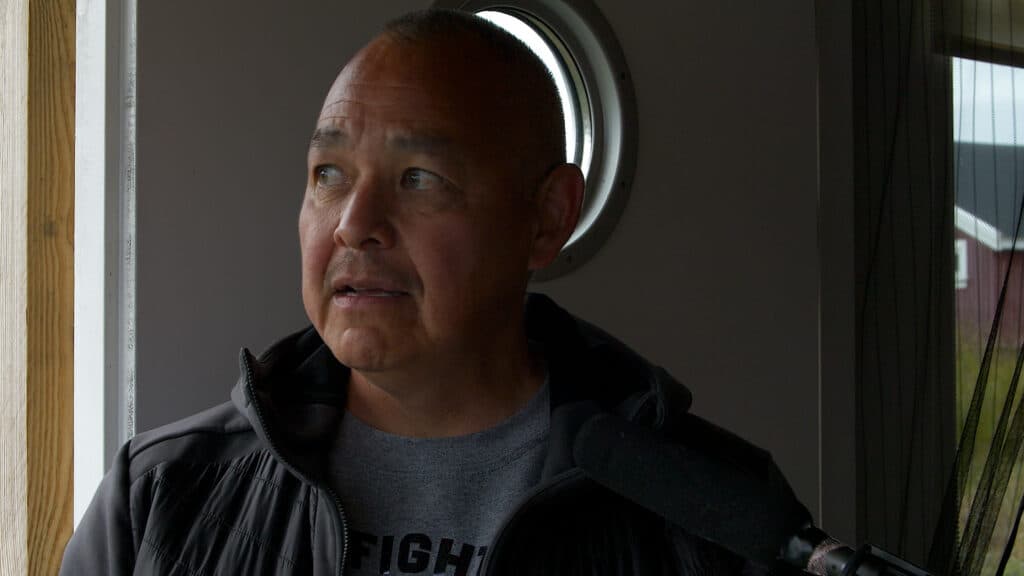
Mikiassen’s father worked at a fish processing plant on Qoornoq before it was closed down. “He was sad, of course, but [it was] time to move and to live another life,” he said of his father.
Suzanna Kreutzmann Pedersen said that seasonal residents banded together to restore the local church. It has bright blue pews and even a little museum.
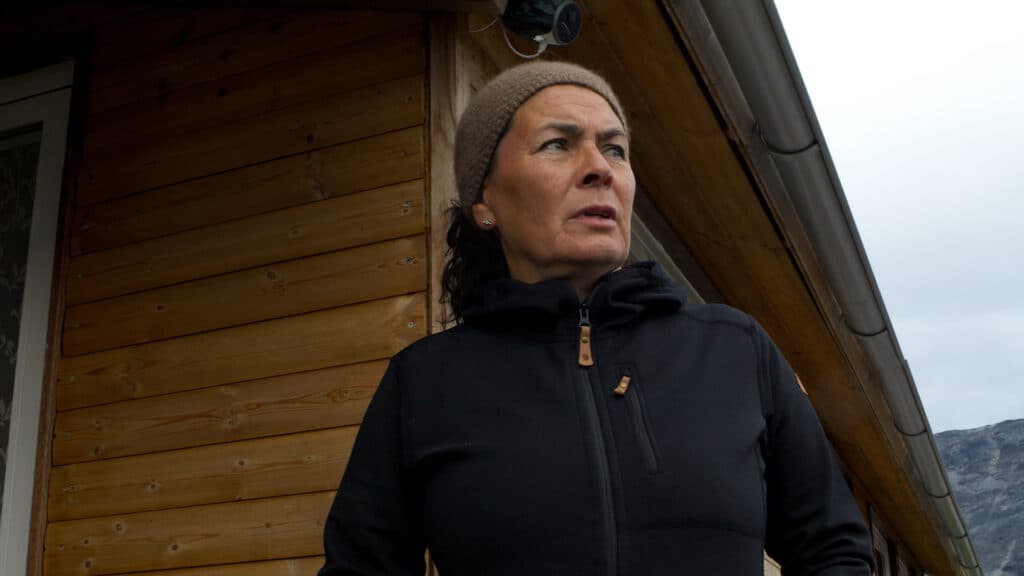
“People come here to get married, and sometimes [for] Easter.”
The couple returns frequently to Qoornoq to enjoy the silence and to hunt.
“Every day, every kind of weather is beautiful,” Pedersen said, standing on her porch with a sweeping view of the fjord. “And these windows here, [they’re] our television.”
