Public radio’s longest-running daily global news program.
©2026 The World from PRX
PRX is a 501(c)(3) organization recognized by the IRS: #263347402.
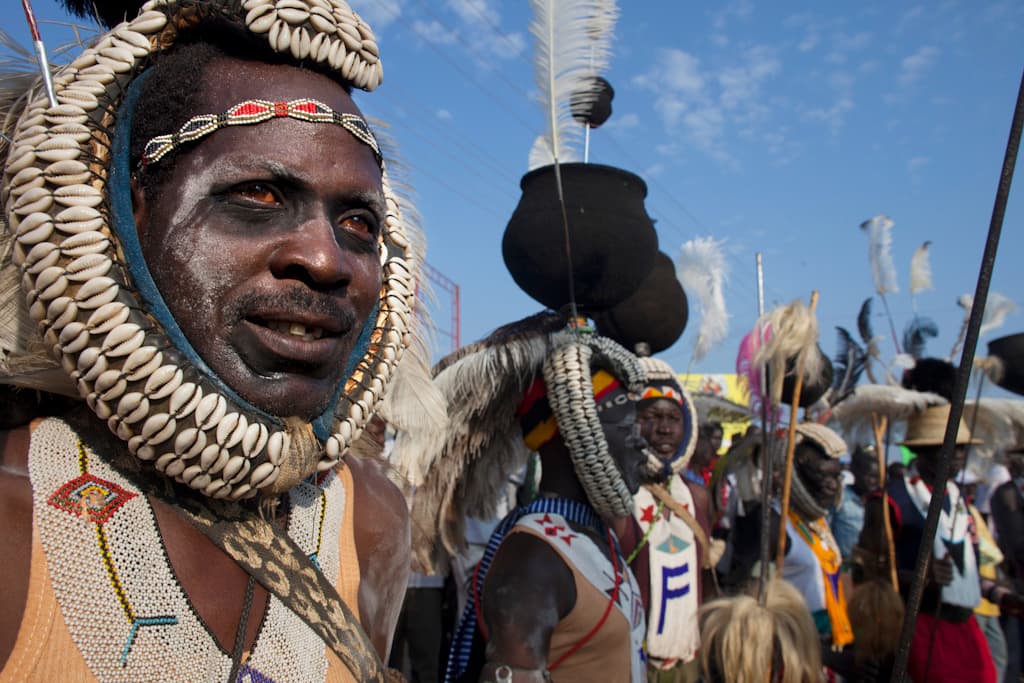
South Sudan celebrates after a fraught year of independence from northern neighbor Sudan.
South Sudanese tribal performers get ready to parade during a ceremony South Sudan’s first Independence day on July 9, 2012 in Juba, South Sudan. After breaking away from Sudan last year, South Sudan is getting ready for its first independence anniversary celebrations. Over the past year repeated conflict with North Sudan, corruption scandals and economic difficulties have plagued the new country. Further problems caused by the shutdown of its oil production have led to a sharp decline in its currency and a rise in the price of food and fuel.
South Sudan today marked the first anniversary of its independence, with thousands of people celebrating in the capital, Juba.
But since the world's newest country officially separated from Sudan a year ago, the oil-producing border region has been the site of violent clashes.
The Associated Press said South Sudan's biggest achievement in the last year has been avoiding an all-out war with Sudan. The two sides were at war for 22 years, until 2005.
In a speech to mark the independence anniversary, South Sudan's President Salva Kiir said the country needs to be "independent economically," the BBC reported.
"We still depend on others. Our liberty today is incomplete. We must be more than liberated. We have to be independent economically," Kiir told the crowd attending official celebrations.
Agence France-Presse said celebrations began in Juba at midnight, with crowds of people thronging the streets.
Last week leaders of both countries agreed to peace initiatives to stop violence along the border. But the ceasefire, agreed to during talks in Ethiopia, was a verbal agreement only.
African Union-sponsored talks will continue on Wednesday.
A selection of GlobalPost's reporting on South Sudan from the past year:
More from GlobalPost: Sudan: Border tensions rise before South's independence
More from GlobalPost: South Sudan celebrates its independence
More from GlobalPost: South Sudan: Ethnic clashes must be solved in the long term
More from GlobalPost: Sudan and South Sudan: What were they thinking?