Bangladeshi Nobel laureate Muhammad Yunus loses Grameen bank appeal
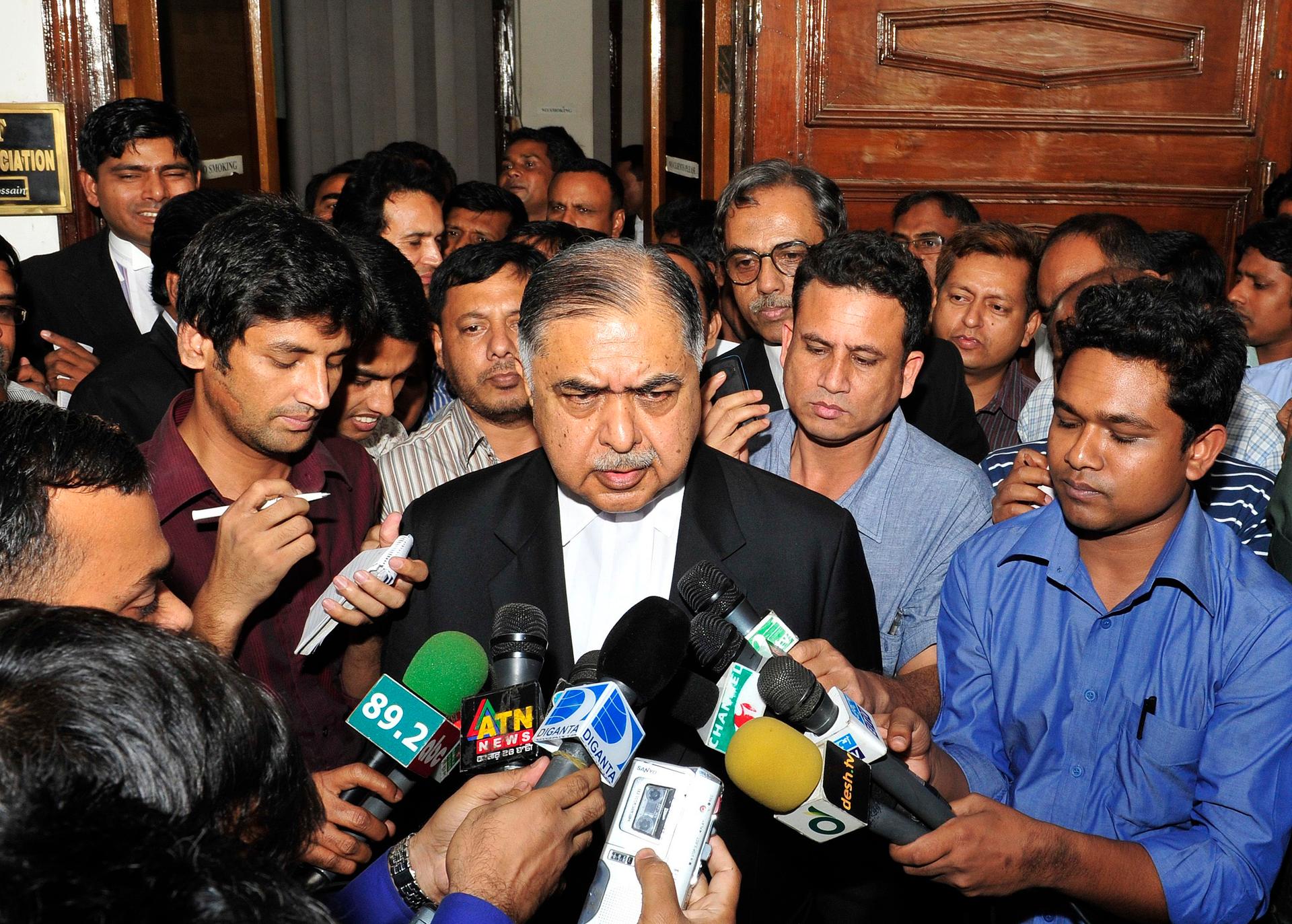
Bangladeshi lawyer Kamal Hossain, who represents micro-finance pioneer Muhammad Yunus speaks with journalists following the verdict at the Bangladesh Supreme Court in Dhaka on April 5, 2011. Bangladesh’s Supreme Court dismissed Nobel-winning Muhammad Yunus’s final appeal against a central bank order sacking him from the micro-finance bank he founded, Yunus’s lawyer told AFP.
Bangladeshi Nobel laureate and micro-finance pioneer, Muhammad Yunus, has lost his final court appeal against his dismissal from Grameen bank, which he founded.
Following international pressure, however, the government has reportedly been in talks with Yunus to reach a compromise.
Yunus, known as the "banker to the poor" for his practice of giving tiny loans to millions of impoverished people, spurred a boom in such lending across the developing world, earning him and the bank the 2006 Nobel Peace Prize.
The Supreme Court ruling Tuesday ended a monthlong dispute between the Bangladeshi government and Yunus — an outspoken critic of the government — over his right to continue as managing director of the Grameen Bank.
Bangladesh's central bank removed Yunus from his post last month, saying the 71-year-old had been improperly appointed while past retirement age; Yunus said his removal was politically motivated and illegal, and he alleged that the government was trying to take control of his bank.
In March, Bangladesh's High Court ruled that his dismissal was legal.
The battle threatened to dampen U.S.-Bangladeshi ties, according to the Associated Press.
Last month Robert Blake, assistant secretary of state for south and central Asian affairs, said the U.S. was "deeply troubled" by the situation and that if no compromise was reached. "I think it will have an effect on our bilateral relations."
No compromise was reached by Tuesday.
Yunus was not in court to hear the ruling, but his lawyers hope to have the court order rescinded on the basis that they did not have time to submit all their arguments, the BBC reported.
Every day, reporters and producers at The World are hard at work bringing you human-centered news from across the globe. But we can’t do it without you. We need your support to ensure we can continue this work for another year.
Make a gift today, and you’ll help us unlock a matching gift of $67,000!