Aid workers promised access to Libya as Misurata evacuation begins (VIDEO)
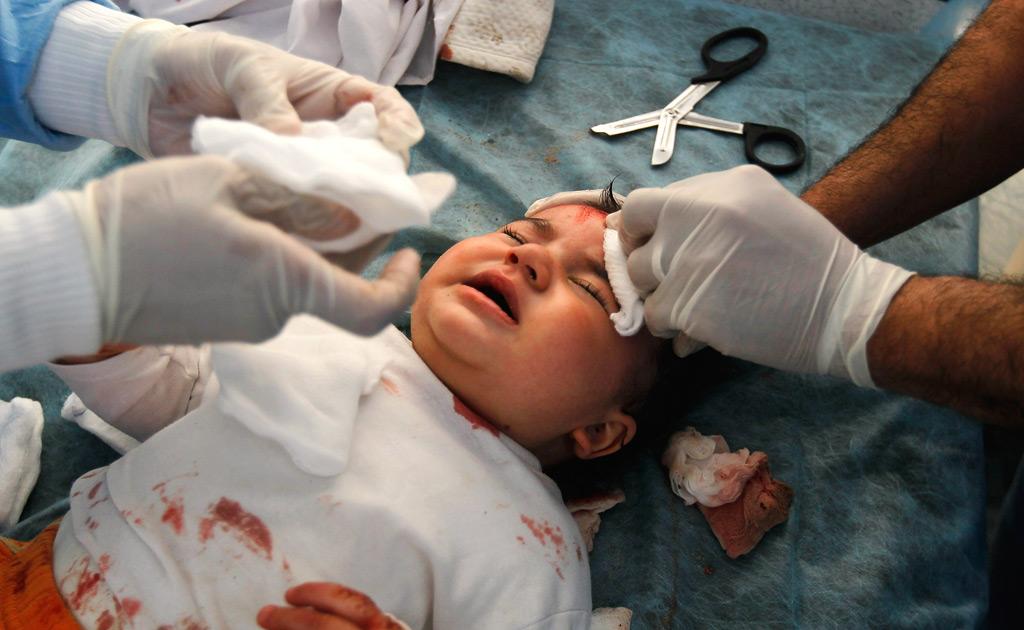
Doctors work on a baby who suffered cuts from shrapnel that blasted through the window of his home earlier in the morning during fighting in the besieged city at a hospital on April 18, 2011 in Misurata, Libya.
Humanitarian groups have begun evacuating the besieged Libya city of Misurata as the United Nations negotiated an aid lifeline but no cease-fire in the opposition rebel-held port.
After a ship carrying 1,000 migrants from Misurata arrived in the eastern rebel stronghold of Benghazi, Britain pledged to help 5,000 more leave the embattled western city.
Monday's evacuation, organized by the International Organization for Migration was initially delayed over fears of pandemonium among the thousands clamoring to leave the city.
The OIM said thousands more were waiting to get out of Misurata, where six weeks of bombardment and sniper attacks are reported to have killed hundreds and left food and medicine in short supply,
It said it also rescued 100 Libyans, including 23 "war casualties" and one child who had been shot in the face.
Libyan officials have told the United Nations that Muammar Gaddafi's government is willing to allow "safe passage" out of the city in return for increased U.N. presence in other cities, Al Jazeera reported.
But U.N. humanitarian chief Valerie Amos said although they had been offered access to inspect the city, there were "no guarantees" of an end to daily attacks to protect evacuations or aid deliveries.
British International Development Secretary Andrew Mitchell said Britain was willing to pledge nearly $5 million to fund the evacuation of 5,000 migrants trapped in Misurata.
"The position in Misurata, which has sharply deteriorated in the last few days, means that there are 5,000 poor migrant workers caught out on the quay side with munitions exploding some 300 yards (meters) from where they are," Mitchell told the BBC.
"Many of them are Egyptians, there's some Bangladeshis as well, and we're going to move all of them out as soon as we can by sea."
Lieutenant-General Charles Bouchard, the head of NATO's military operations in Libya, on Monday accused Gaddafi's forces of attacking hospitals and civilians in Misurata.
"The regime's forces have used snipers on top of mosques, they are hiding beside hospitals, they have got their armored vehicles in schools and, in fact, they have even taken their uniforms off," he told the Canadian Broadcasting Corp.
He called the tactics "underhanded" and "immoral" but said NATO's U.N.-mandated bombardment of Gaddafi's defenses had mitigated their impact.
"There is some suffering, but I can assure you of one thing: the suffering would have been much much greater if we (NATO) were not there … the deaths would be in the thousands."
Every day, reporters and producers at The World are hard at work bringing you human-centered news from across the globe. But we can’t do it without you. We need your support to ensure we can continue this work for another year.
Make a gift today, and you’ll help us unlock a matching gift of $67,000!