Heavy fighting as Libyan rebels launch assault on Tripoli
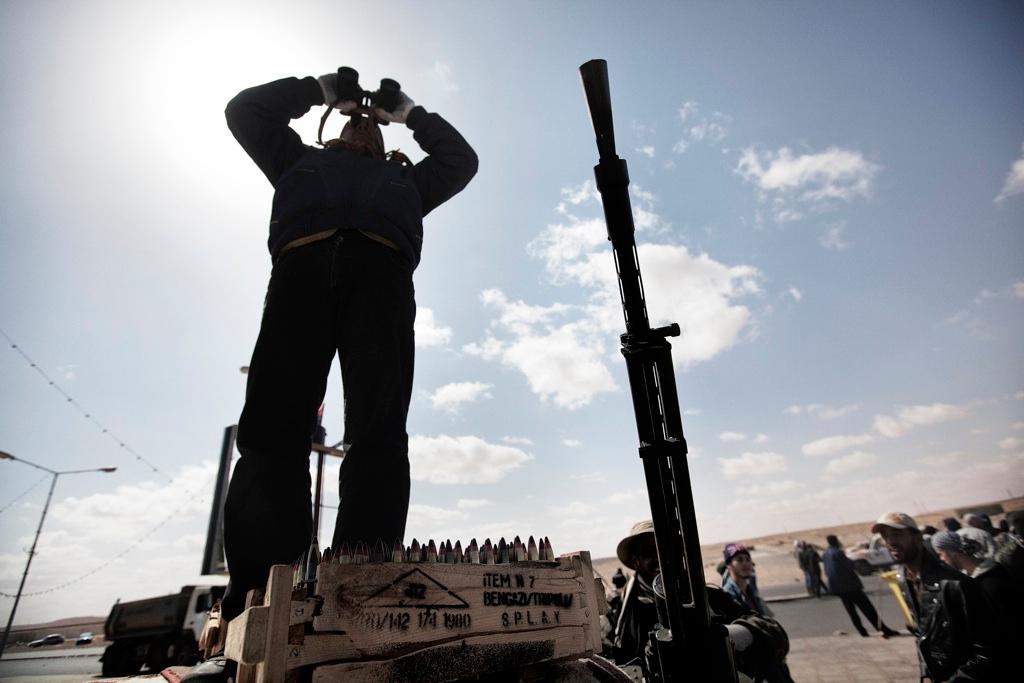
A Libyan rebel fighter uses binoculars to monitor the skies over Ras Lanuf on March 8, 2011.
Gunfire and explosions were heard early Sunday morning in Tripoli, as Libyan rebels pushed towards the capital — a day after making significant gains in their war against leader Muammar Gaddafi.
In the latest development, government spokesman Moussa Ibrahim on Sunday accused NATO of unfairly aiding the rebels, saying the alliance had "gone mad."
In anticipation of a final rebel advance on the capital, Al Jazeera reported that security forces loyal to Gaddafi used machine guns and mortars late Saturday to confront a small number of opposition protesters in the streets of Tripoli.
The BBC also cited rebel sources who confirmed their supporters had started to rise up in Tripoli, but added that Gaddafi still had strong support in the city.
Witnesses said rebel flags were raised over some buildings in a few central and eastern neighborhoods.
GlobalPost in Benghazi: Who are the Libyan rebels?
Gunfire and explosions were reportedly heard Sunday near the Bab al-Aziziyah government command compound, as well as in the Souq al-Jomaa and Abu Sita neighborhoods.
The rebels are advancing on three fronts towards the capital, while Nato controls access by sea.
Reports say:
1. The rebels are within several miles of Tripoli's suburbs, after advancing tens of miles from Zawiyah, to the west, and seizing the town of al-Mayah.
2. The rebels have taken Jaddayim, which is 25 miles east (according to a BBC reporter traveling with the rebels). This comes after they took control of Zlitan, 100 miles east of Tripoli.
3. There are also rebel formations to the south, in Gharyan.
The gains come as Gaddafi told state television on Saturday that the rebels had been eliminated in the capital.
GlobalPost in Tripoli: Inside Libya's most notorious prison
Meanwhile pro-Gaddafi forces are fighting back at the eastern oil port of Brega, where the rebels have been pushed back due to heavy bombardment.
Every day, reporters and producers at The World are hard at work bringing you human-centered news from across the globe. But we can’t do it without you. We need your support to ensure we can continue this work for another year.
Make a gift today, and you’ll help us unlock a matching gift of $67,000!