Voyager I close to leaving solar system, report says
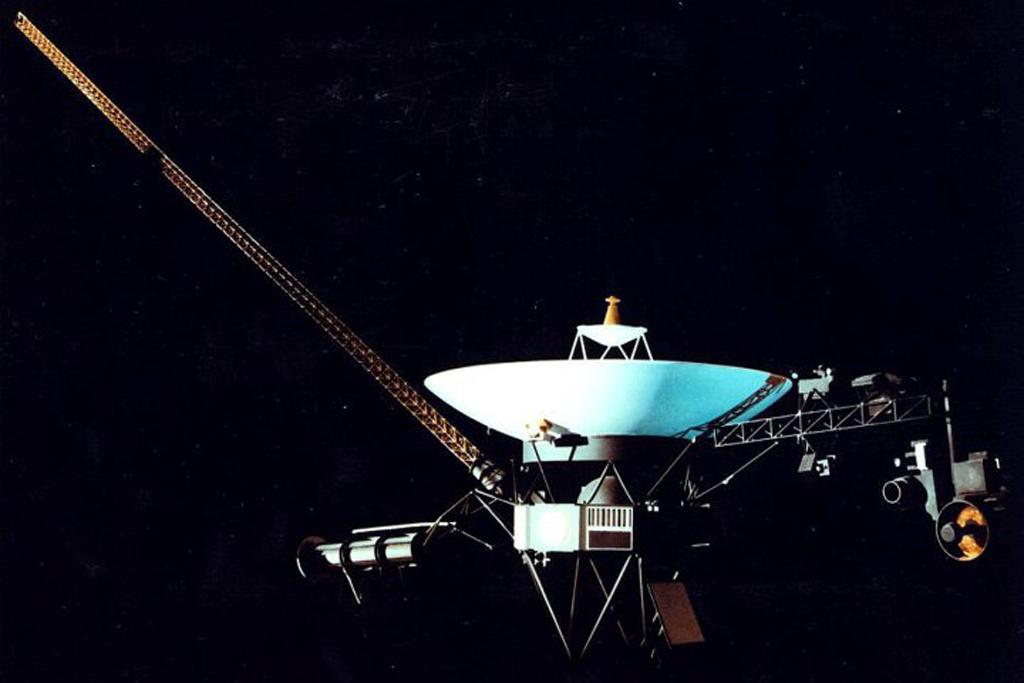
The Voyager I spacecraft
New scientific findings suggest Voyager I is very close to leaving the solar system.
The study set for publication in the journal Geophysical Research Letters initially suggested that Voyager I became the first man-made object to reach interstellar space on Aug. 25, 2012.
More from GlobalPost: Voyager I approaching edge of solar system, scientists say
Drastic changes in radiation levels were recorded at that time, and galactic cosmic rays (cosmic radiation from outside the solar system) spiked to levels not seen since Voyager's launch in 1977, the American Geophysical Union said today.
More from GlobalPost: 'Magnetic highway,' new layer at solar system's edge, discovered by Voyager I
But NASA officials were skeptical, and later released a statement to TIME via email saying Voyager had not left the solar system.
The spacecraft has reached a new area of space called the "magnetic highway," but is waiting for a dramatic change in the direction of the magnetic field before placing Voyager in interstellar space, officials at NASA's Jet Propulsion Laborary told Fox News.
Thirty-five years after its launch, Voyager I is by far the furthest man-made object from the sun at an estimated 11 billion miles away.
Every day, reporters and producers at The World are hard at work bringing you human-centered news from across the globe. But we can’t do it without you. We need your support to ensure we can continue this work for another year.
Make a gift today, and you’ll help us unlock a matching gift of $67,000!